Finch Takes Sleeping Pills and Goes to the Emergency Room
All the Bright PlacesTheodore Finch’s sleeping-pill crisis turns an attempt to disappear into a desperate, unfinished act of self-preservation. After swallowing half the contents of a bottle, he experiences the pills as a darkening bodily heaviness, forces himself to vomit, and runs to the emergency room on National Road. He asks staff to get the pills out of him; later, awake but weak, he slips away rather than remain for questions or contact with his family. The episode makes both impulses visible: the wish to surrender and the effort, undertaken while impaired, to stay alive.
Background and Crisis
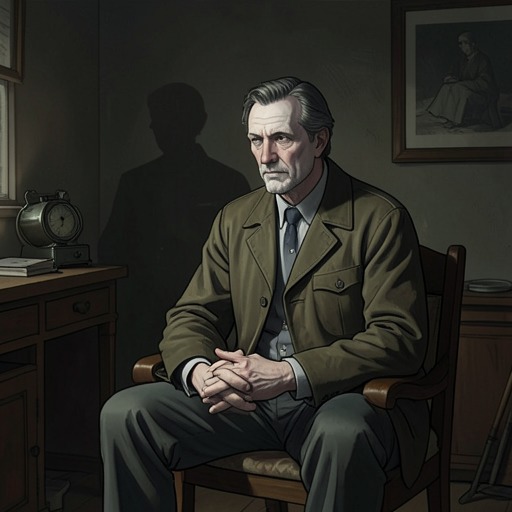
At dinner, Linda Finch and Decca Finch are quiet after the usual questions about what they learned that day. Theodore Finch, too, says nothing; as he observes, no one notices that he is busy thinking. The silence is not presented as a direct explanation for what follows, but it places the crisis inside an ordinary family evening, with distress unspoken around the table. Afterward, Theodore Finch finds sleeping pills in his mother’s medicine cabinet, takes the bottle to his room, and swallows half its contents, washing them down at the bathroom sink.
The preceding thoughts sharpen the danger without supplying a diagnosis: his mind repeats the word bipolar, then cycles through judgments that he is broken, a fraud, and impossible to love. At the same time, he frames the act through a literary test, wondering what Cesare Pavese felt and whether death might carry any “valiant acclamation.” The expectation is quickly undercut. As the pills take effect, Theodore Finch recognizes that there is no triumph in the experience; he describes it as being pressed into the floor by a black fog. The imagined drama gives way to physical incapacity.
Taking the Pills and Reversing Course
The pills first make movement difficult. Theodore Finch can barely lift his head, and his feet seem distant. Their imagined command, “Stay here. Don’t move. Let us do our work,” gives the sensation a voice, but the narration also makes clear that he knows the heaviness is arriving too quickly. He calls the state sleep, not the release he had tried to imagine: a haze of blackness bearing down on his body.
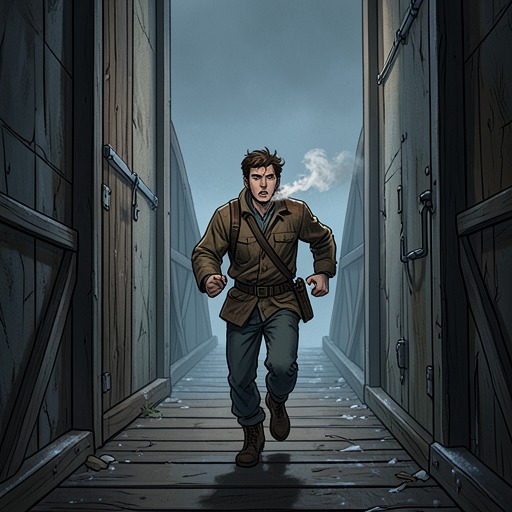
He nevertheless gets himself off the floor and into the bathroom. There he puts a finger down his throat and vomits, trying repeatedly even though little comes up. He then pulls on his sneakers and runs. The contrast is stark: his limbs feel heavy and he likens his progress to moving through quicksand, yet he is still breathing and determined. Vomiting does not end the emergency, and the effort to run does not mean he is physically well; these are the actions by which he reverses course and seeks help.
Emergency Room and False Identity
Theodore Finch follows his regular nighttime route along National Road, but changes what he does when he reaches the hospital. Instead of passing it, he crosses the parking lot, pushes through the emergency-room doors, and tells the first person he sees, “I swallowed pills and can’t get them out of me. Get them out of me.” The blunt request is the crisis’s clearest turn: after choosing and swallowing the pills, he directly asks another person to intervene.
Staff respond calmly. A woman puts a hand on his arm and speaks to a man behind him; then the man and another woman lead Theodore Finch to a room. He goes black and wakes later feeling empty but awake. A woman tells him they need paperwork and explains that staff checked him for identification, but he had none. On the form, the name and age are already filled in: Josh Raymond, age seventeen. The mismatch between the name on the page and the person completing it produces a sharp reversal. Theodore Finch starts shaking harder, realizes he is laughing, and thinks, “Good one, Finch. You’re not dead yet.” The laughter does not erase the danger; it marks his recognition that the attempt has not killed him.
Escape and Significance
Once the nurse has left, Theodore Finch puts on his clothes, walks out of the room, descends the stairs, and leaves the hospital. He expects that staff will next send someone to assess him and ask questions. He also anticipates that they may find his parents; if they do not, he imagines forms and phone calls leading to his being prevented from leaving. His departure is therefore not evidence that the crisis has passed. It is a deliberate escape from the scrutiny and intervention he expects, immediately after he has sought medical help.
The attempt to flee nearly fails, but Theodore Finch is too quick for the people who might stop him. He is too weak to run, so he walks all the way home. That final distinction matters: the episode ends not with recovery or a settled decision, but with a living, exhausted person moving away from the emergency room under his own power. The sequence holds two opposed actions together—asking strangers to remove the pills, then leaving before they can question him. Its significance lies in that unresolved contradiction. Theodore Finch’s plea makes his wish to survive unmistakable in the moment, while his fear of being kept there carries the danger forward rather than closing it.