Finch and Violet Team Up to Wander Indiana
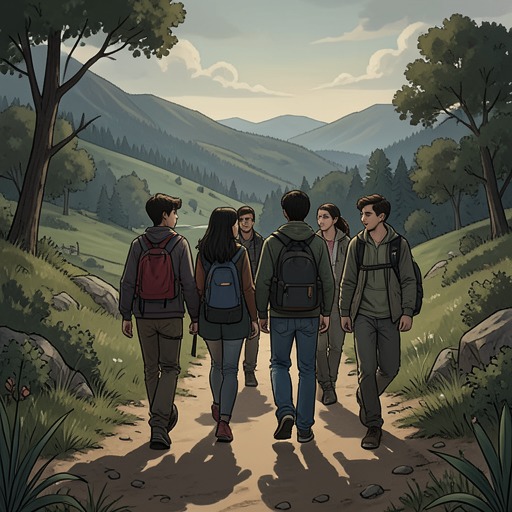
All the Bright PlacesTheodore Finch and Violet Markey Team Up to Wander Indiana when Finch makes a graded school assignment into a reason to travel together. What begins as an invitation to visit Indiana landmarks becomes a partnership organized around curiosity, shared attention, and the conviction that overlooked places can matter. Its rules give Finch and Violet a route through the state; the journeys, in turn, give their relationship a language of its own.
The Assignment and Finch’s Choice
Mr. Black asks the class to report on at least two, preferably three, wonders of Indiana. Students are to visit their chosen places, take photographs and video, investigate their histories, and explain what makes them worth appreciating. Linking the sites is encouraged, and the class has the rest of the semester to complete the work. The project counts for thirty-five percent of the final grade, and students work in pairs.
Finch raises his hand to ask whether they can choose their partners, then names Violet. He makes the choice before arranging it with her, so his proposal is an audacious beginning rather than a mutual decision already secured. After class, he asks her directly to work with him. His approach turns a formal assignment into an opening between two students who might otherwise have no reason to set out together.
When Violet asks what he means by saying that their mountain is waiting, Finch explains the appeal as he sees it: the project requires them to go somewhere, but his map also seems to want using. They can visit places that might otherwise go unseen, including small ones that few people would think important. Even if a place means little to anyone else, he suggests, it could come to mean something to them simply because they have been there and paid attention. His invitation joins the literal task of leaving school and traveling with an appeal to get away from the ledge where Violet has withdrawn.
Rules for the Road
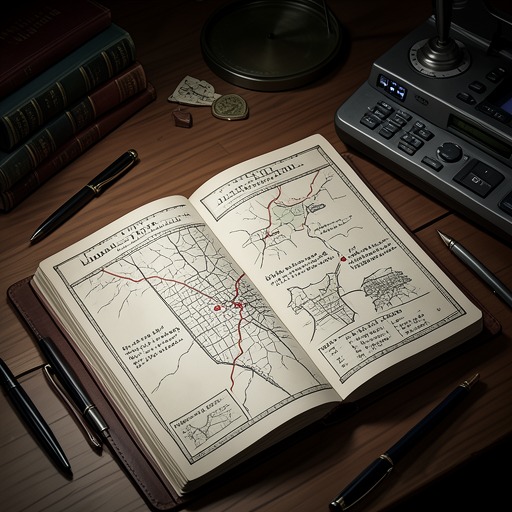
Finch sets out a method for the wanderings that resists turning them into a checklist. His first principle is that life already has too many rules, so the group should think of its practical instructions as guidelines. They must not use their phones to navigate; instead, they are to read actual maps. The restriction makes getting somewhere part of the experience rather than a problem solved instantly by technology.
Finch and Violet are to alternate in choosing destinations, while remaining open to wherever the road leads. The possible stops can be grand, small, bizarre, poetic, beautiful, ugly, or surprising, but should never be ordinary. The rule matters because it makes uncertainty part of the project: the itinerary is not simply a sequence of famous attractions, and neither partner has complete control over what the journey will become.
At each site they leave something behind, like a private offering. Finch compares the practice to geocaching but separates it from the game and its GPS-based search. To him, taking something from a place creates a reason to give something back; leaving an object also proves that they were there and leaves a part of them in the landscape. The ritual turns otherwise temporary visits into material traces of their shared time.
Places Made Through Visiting
Their first high-point destination tests the difference between a place’s designation and its appearance. At Hoosier Hill, they walk through a grove of winter trees and follow a narrower dirt path into a brown clearing. A bench and picnic table stand nearby; the sign identifies the Indiana high point and gives its elevation as 1,257 feet. The marker itself is a wooden stake among a pile of stones, no larger than a pitcher’s mound. Violet finds the scene underwhelming. The contrast between the official status of the site and its modest physical presence makes the visit an instance of Finch’s interest in places that do not need spectacle to count.
At Bookmobile Park, just outside Bartlett on a country road bordered by cornfields, the landscape offers a different surprise. Seven bookmobiles—trailers of different makes, models, and years—stand in a line, each advertising a category of books. Violet leans forward as they approach and recalls family bookstore hunts in California, when she, her parents, and Eleanor searched multiple stores for books each family member had chosen. She is out of the car and heading toward the first trailer before Finch. The stop therefore brings a piece of Violet’s earlier family life into the shared journey, connecting the project’s unfamiliar roadside setting with a practice she remembers from before.
On another outing, Finch and Violet climb Purina Tower by its steel ladder, passing roughly twenty-five thousand imagined steps to reach the top. A Christmas tree remains planted there all year. Beside it, Finch spreads a blanket, and they huddle together above the lights and dark patches of trees. Violet sees stars in the sky and stars on the ground and calls the view lovely. Finch treats the word as worth using and says the town feels as though it belongs to them. The scene shows how their visits work at a smaller scale than research or sightseeing: the place becomes significant through what the two of them notice and share there.
From Shared Itinerary to Private Memory
The project continues to gather meaning through objects and physical experience. On the first warm day, Finch takes Violet to the Blue Hole, a three-acre lake on private property near Prairieton. He brings their offerings—the stubs of her SAT pencils and four broken guitar strings—and leads her down the embankment to the round pool, ringed by trees. He imagines the silence and privacy as if they were the only two people on earth. The visit combines the project’s practice of leaving something behind with Finch’s wish to create a space that belongs, for a while, to the two of them.
Later, after Finch’s disappearance, Violet returns to the Blue Hole alone. She passes no-trespassing signs, descends to the same water, and recognizes its blue by comparison with Finch’s eyes. The site that had held a shared visit now meets her as a place of absence. Her return demonstrates how the project’s locations persist beyond the school assignment: visiting has attached memory to terrain, and the same landscape can hold both intimacy and loss.
The partnership’s significance lies not in completing a list of wonders but in the attention its method asks of both travelers. Finch proposes that places need not be famous to deserve notice, while alternating choices and uncertain roads leave room for Violet’s participation and memories. Their offerings make presence tangible; their later associations make the landscape more than scenery. What starts as a two-person school project becomes a shared geography whose meaning changes as their relationship changes.