Finch family home
All the Bright PlacesThe Finch family home is not simply a backdrop to Theodore Finch’s family life: its rooms mark the distance between the household he grew up in and the new family his father has made, while its basement, garage, and closet become distinct settings for conflict and crisis. A visit there brings Finch face to face with Ted Finch’s violence, and a later visit by Violet Markey shows that Finch’s private struggles have remained largely separate from the life he shared with her.
Household and layout
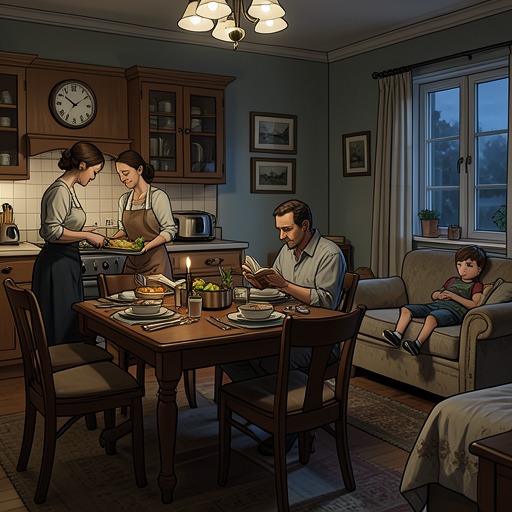
When Theodore Finch arrives with his sisters Kate Finch and Decca Finch, Rosemarie greets them and brings them into the living room. Josh Raymond is there playing with a battery-operated helicopter, an unfamiliar kind of toy in Finch’s family: while growing up, the children were not allowed toys that talked, flew, or made noise. Their reaction to the helicopter makes the household’s changed circumstances immediately visible. The children have returned to a home where their father now lives with a new wife and young child, and Finch notices that the old family’s expectations no longer quite fit the space.
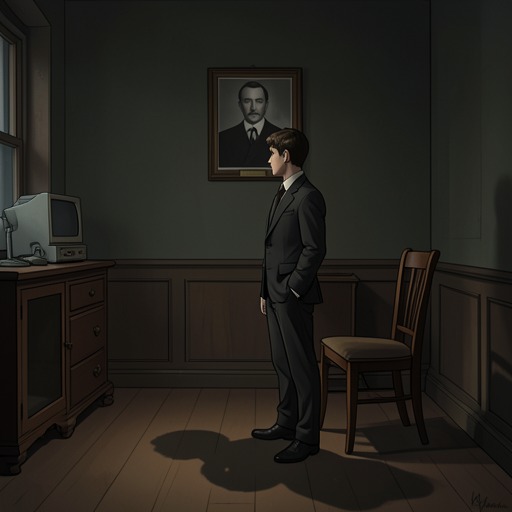
The basement sharpens that contrast. It is carpeted and painted, brightly lit, and arranged around Ted Finch’s old hockey trophies, framed jersey, bookshelves, and a large flat-screen television. The bookshelves hold books despite Finch’s observation that his father does not read. Ted Finch is in front of the television watching a game, with a beer and remote at hand. Finch has come downstairs because he understands his father’s withdrawal as one of the moods his mother, Linda Finch, has taught him to expect. The room is comfortable and furnished, but its arrangement also gives the father a place apart from the family upstairs.
Confrontation in the basement
Finch does not wait for Ted Finch to come up to dinner. He places himself in his father’s line of sight and tells him the family is waiting. He also refers pointedly to the people upstairs as Ted Finch’s original family, set against his new wife and child. Finch says he has spoken to his father this way only rarely, and that the confidence of his Badass Finch persona leaves him unafraid in the moment. The exchange briefly reverses their usual relation: instead of avoiding his father’s mood, Finch challenges him directly.
The reversal does not last. Ted Finch breaks his beer bottle against the coffee table and lunges at his son, slamming him against the wall. Finch gets away before his father can grab him again and goes upstairs. By the time Ted Finch reaches the dinner table, the presence of Rosemarie and Josh Raymond appears to make him compose himself. He comments on the food, kisses Rosemarie, and sits down; he does not speak to or look at Finch for the rest of the visit. The family’s meal resumes, but the silence between father and son carries the basement confrontation into the dining room.
The garage and the retreat indoors
After the visit, Finch hugs and kisses Linda Finch, an unusually affectionate gesture in a family that is not accustomed to showing affection. He tells her he loves her and leaves for the garage, climbing into Little Bastard. Once the engine is running, he notices that his hands are shaking and connects his anger toward his father with earlier violence in the family: when Finch was ten, his father sent Linda Finch to the hospital, and a year later the violence was directed at Finch. With the garage door still closed, Finch sits at the wheel considering how easy it would be to remain there. The home’s garage thus becomes a threshold between departure and a more dangerous possibility; the evidence establishes the crisis without describing an outcome in that moment.
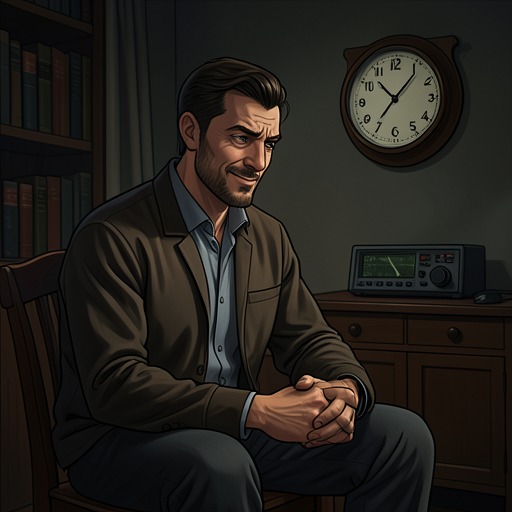
In a later period of withdrawal, Finch goes into his closet and tries not to make noise, fearing that the darkness might wake and harm him or people he loves. The closet offers concealment, but not reassurance: his attention is fixed on keeping the darkness asleep. The following morning, he checks the shared household voicemail and hears an urgent message for Linda Finch from Robert Embry, his counselor at Bartlett High School, asking her to call about Theodore. Finch listens to it three times, deletes it, and returns upstairs to the closet rather than leaving home. He remembers that he has been expelled, but the thought does not make the retreat feel like a choice freely made; he believes that leaving will mean he dies.
Violet Markey’s visit
Later, Violet Markey drives to Finch’s neighborhood after a long period in which she has not been sure she could drive again. At first she brakes repeatedly, but a memory of Eleanor reassuring her as a new driver helps her continue; by the time she reaches the neighborhood, she is driving smoothly. At the door, she meets Finch’s mother for the first time. Linda Finch’s bright-sky-blue eyes remind Violet of Finch’s, and Violet introduces herself by name and says she has come to see him.
Linda Finch welcomes Violet inside, believing Finch should be home from school. She does not know that he has been expelled. The missed information is revealing in its own right: Violet has reached the family home, but Finch’s school crisis has not reached his mother through the counselor’s message, which Finch deleted. The visit brings Violet into contact with the household Finch has kept apart from their relationship, while exposing how much of his crisis remains unshared even within his family.
Narrative significance
The home’s spaces register shifting degrees of contact. The living room and dinner table hold the visible routines of family life; the basement is where Finch confronts his father; the garage frames a moment when anger and danger converge; and the closet becomes a hiding place from a darkness Finch fears. These are not interchangeable settings. Each marks a different response to the family’s history: accommodation, confrontation, withdrawal, or attempted refuge.
The contrast between Finch’s childhood rules and the noisy helicopter, and between the old family and Ted Finch’s new household, makes domestic change tangible without resolving the older conflict. Later, Violet’s arrival at the door establishes a new point of contact, but it does not undo Finch’s isolation or repair the gaps in what his family knows. The Finch family home therefore gathers the novel’s tension between being physically surrounded by family and remaining alone with a crisis.