Finch's closet fort
All the Bright PlacesFinch's closet fort is Theodore Finch’s walk-in closet remade as a shelter for periods when he cannot face the world outside. Furnished with a comforter, creative materials, supplies, and reminders of Violet Markey, it is at once a practical refuge, a place where Finch organizes his thoughts, and a sign that retreat has become a serious part of his struggle to endure.
Construction and Furnishings
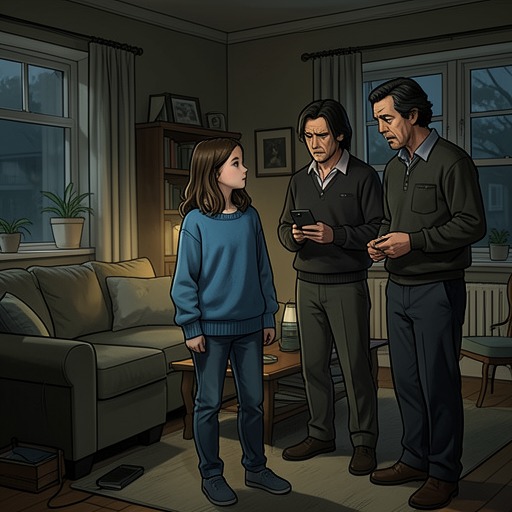
Finch first makes the closet habitable by pushing his hanging clothes to one corner and laying his bed’s comforter on the floor. He calls the warm, enclosed space cave-like, a description that makes its smallness part of its appeal: the closet is not merely somewhere to hide but somewhere arranged to feel sheltered. He places a jug of healing water from Mudlavia at the foot of the comforter and props Violet’s picture against the wall. The photograph shows her at Blue Flash. Beside it, he sets a license plate he took from the scene of the accident. The objects connect the enclosure to places and events beyond it, so that withdrawal does not erase his attachments; it gives them a visible place inside the retreat.
When Violet later sees the closet, its furnishings have accumulated into something closer to a room. Along with the blue comforter and the photograph and license plate on the wall, she finds a guitar, a computer, notebooks of staff paper, pens, stacks of Post-its, pillows, a water jug, and energy bars. The arrangement combines the materials of Finch’s creative life with objects and provisions that make staying inside possible. Finch jokes that other people might call the place an office, but he prefers fort. The distinction matters: an office would describe its work surfaces and tools, while fort describes its function as a defended, private space.
Retreat and Survival Routine
The closet becomes the setting for Finch’s deliberate effort to get through a period of distress. He calls the routine Finch Survival Boot Camp and says he has been through it before. On this occasion he settles in for the night, turns out the light, balances his laptop on his knees, and puts an unlit cigarette in his mouth because the air already feels too close. His plan is not to emerge on a schedule. He intends to stay for as long as he needs, as long as it takes. The practical details make the retreat concrete: the laptop gives him something to do in the dark, while the comforter, water, and later-discovered energy bars support an extended stay.
The name of the routine links the closet to Finch’s account of surviving quicksand. The principle he draws from that danger is to remain still rather than panic and pull himself under. Applied to his own state, stillness becomes a way of enduring until the feeling changes, not evidence that the crisis has already passed. The closet supplies a bounded place for that waiting, but the comparison also preserves the danger in the method: remaining inside may help him survive the immediate period, yet it does not make the underlying distress disappear.
Violet’s Visit and the Fort’s Rules
Finch allows Violet inside because, as he tells her, she is not just any girl. The exception makes the fort private without making it wholly separate from intimacy. They sit side by side on the blue comforter, their shoulders touching and their backs against the wall. From that position, Violet can see the papers Finch has put up opposite them. He says he thinks better there because the house can be loud, with Decca Finch’s music and his mother yelling at his father over the phone. He writes down Violet’s description of her home as a house without yelling and adds it to the wall.
Finch invites Violet to write on Post-its, explaining that positive thoughts belong on the wall while negative ones go on the floor in a heap of ripped-up paper. The practice gives the room a simple physical distinction between what he wants to keep in view and what he wants to acknowledge without preserving. He does not describe negative thoughts as unreal or forbidden; he says they need to be put down, but do not need to hang around after that. In this sense, the fort is not only a hiding place. It is also a workspace for giving thoughts temporary form and deciding what remains around him.
What the Closet Reveals
The supplies and note-making system might make the fort look like a self-sufficient retreat, but Violet’s recognition of its cost changes how the space reads. Looking at the comforter, pillows, water jug, and energy bars, she asks whether Finch is living there. He says he has been in the closet before and expects that eventually he will wake up and feel like coming out. His smile seems hollow to Violet. The disclosure reveals that this is not simply an inventive hideout for one night: Finch has used it during earlier periods and may remain there until his capacity to re-enter ordinary life returns.
He tells Violet that he has spoken with a counselor at school, though he has not really talked with his parents or Kate Finch. He also asks Violet to keep his retreat secret because he has kept hers. Their exchange makes the closet a place of trust, but the secrecy leaves Violet carrying knowledge of how far Finch has withdrawn. Afterward, she enters her own, larger closet and tries to imagine living there without being able to come out. Its hard, cold floor does not offer the comfort she saw in Finch’s blue-furnished space; leaving it makes her feel able to breathe again. That contrast does not resolve his situation. It shows the difference between visiting a private shelter and needing one, and it makes the fort’s warmth inseparable from the confinement it contains.