Hooded crane
All the Bright PlacesThe Hooded crane is a rare, far-travelled bird that Theodore Finch and Violet Markey encounter beside a river in Indiana. Its presence turns an isolated riverbank sighting into a small lesson in how to understand being far from home: Finch insists that the bird is not lost, but wandering.
Appearance and Identification
As Violet Markey follows Theodore Finch down the river embankment, she initially cannot make out what he is pointing toward across the water. The bird moves into view: about three feet tall, with a red crown on a white head and a charcoal-gray body. It splashes in the water, then pecks along the opposite bank, strutting in a way that Violet compares to a man.
Finch identifies it as a Hooded crane and describes it as the only one in Indiana, perhaps the only one in the United States. He explains that Hooded cranes winter in Asia, making this individual roughly seven thousand miles from home. The scene presents those details through Finch’s identification rather than an independent account of the bird’s range.
The River Sighting
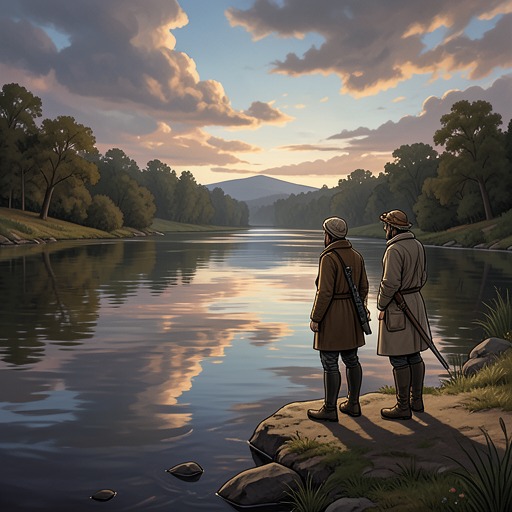
Finch has been watching the crane for about a week. He tells Violet that when he cannot stand being at Bartlett High School, he comes down to the river; sometimes he swims, and sometimes he simply sits. The crane has become a familiar presence during these visits, familiar enough that Finch had worried it might be injured.
The bird’s behavior eases that concern. Standing in the shallows, pecking at the water, and then wading deeper to splash, it looks to Finch like a child playing in a swimming pool. Violet calls it lost, but Finch rejects that interpretation: “He’s wandering.” The distinction comes from watching what the bird does, not merely measuring how far it is from home.
Meaning in the Scene
The crane’s journey from Asia to Indiana gives the encounter its striking distance, while its ordinary splashing and pecking keep it present as a living creature rather than just a symbol. Finch’s account links it to his own habit of leaving the high school for the river, where he can swim or sit apart from the pressure he feels there. His recognition of the crane’s repeated presence also shows his attentiveness: he has noticed it over several days and wondered whether it needed help.
By calling the bird a wanderer rather than a lost animal, Finch offers Violet a more open reading of displacement. The moment does not establish that the crane is safe or explain why it is there; it shows Finch interpreting its visible behavior as purposeful movement. In the larger exchange, that brief act of naming makes wandering feel different from being stranded.