Mudlavia
All the Bright PlacesMudlavia is a former Indiana resort whose ruined buildings and still-flowing springs become the destination of Theodore Finch’s private search for relief. The place brings together two contrasting meanings: a healing reputation passed along through local lore, and a visibly deteriorating site that cannot promise restoration. Finch’s visit does not establish that the springs cure him; instead, its significance lies in the contrast between the remedy he hopes to find and the modest, immediate experience of reaching the water.
Reputation and Earlier Search
Mudlavia enters Finch’s story after an earlier attempt to address his distress at French Lick. In November, he drove there, drank the water, and hoped it would ease what he describes as the dark, slow churning of his mind. He felt better for a few hours, though he allows that hydration may have been responsible. The short-lived improvement gives the episode an uncertain quality: the visit offered relief, but no dependable answer.
The following morning, still feeling dull and lifeless, Finch asked a worker whether he might have chosen the wrong water. The worker recommended Mudlavia, describing it as the genuine destination for the springs. He associated the resort with Al Capone and the Dillinger gang, said the buildings had burned in 1920, and maintained that the waters continued to flow. He also described going there when his joints hurt. These claims reach the reader as the worker’s account, not as independently confirmed history; their importance is that they give Finch a specific place to pursue after French Lick disappoints him.
Finch did not go immediately. By the time he returned from French Lick, he had run out of energy for further travel, and the journey was postponed. When he eventually sets out for Mudlavia, he distinguishes the trip from the couple’s shared wanderings: he considers it serious personal business and does not bring Violet Markey. The separation marks this as an effort Finch undertakes alone, rather than another excursion whose meaning is made through companionship.
The Journey and the Ruins
The trip takes Finch to Kramer, Indiana, a small community reached after about two and a half hours on the road. Its hills, valleys, and tree-covered terrain contrast with the landscape around Bartlett. The change of setting precedes his arrival at the resort, but it does not prepare him for the place he finds. He had imagined something grand and strange; instead, Mudlavia consists of extensive ruins among thin brown trees.
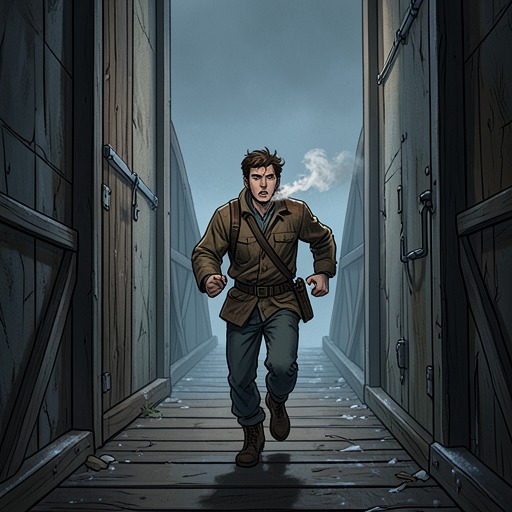
Finch moves through the remains of the hotel, including its kitchen, hallways, and guest rooms. The buildings are crumbling, the walls are marked with graffiti, and weeds and ivy have grown over the site. Winter has not erased the signs of encroaching vegetation. Nature’s gradual return is visible across the grounds, while the ruined structures preserve evidence of a human resort that no longer functions as one.
The condition of the site changes Finch’s expectation before he reaches the springs. The place does not initially feel restorative: its abandoned rooms and damaged walls leave him sad, and he judges it unlike the healing refuge he had sought. That response matters because Mudlavia’s reputation and its physical remains do not match. The promised destination is not an intact spa or a welcoming resort but a broken landscape that Finch must cross to find the water.
Finding the Springs
Outside the former hotel, Finch searches for the springs without knowing their exact location. He walks through leaves, dirt, and snow, then has to stop and listen before choosing the right direction. The search is not a direct passage from arrival to cure; it is a small act of attention within a place that initially seemed to offer nothing useful.
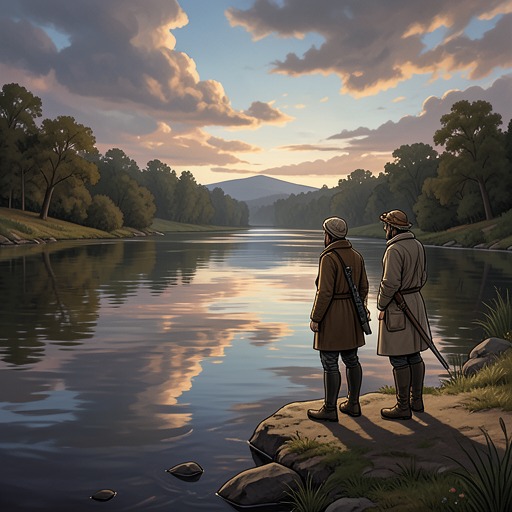
Beyond the trees, he finds a rushing stream that has not frozen over. The surrounding trees are fuller than those elsewhere among the ruins, suggesting to Finch that the water is sustaining them. He follows the creek until the banks rise into rock walls, then enters the stream. He cups water in his hands and drinks; after finding that it does not harm him, he drinks again. He also fills his water bottle and secures it in the muddy bottom so it will not float away.
Finally, Finch lies in the middle of the stream and lets the water cover him. This is the visit’s clearest encounter with the place’s living feature. The ruined buildings remain behind him, while the flowing water is present and accessible. Yet the episode does not say that the springs resolve his distress or produce a lasting recovery. It records what he does at Mudlavia, not a cure. The distinction keeps the scene’s hope limited to an experience of contact and temporary refuge.
Meaning in the Story
Mudlavia extends the book’s recurring use of Indiana places as more than points on a map: a destination acquires meaning through what Finch expects from it and what he actually encounters there. At French Lick he sought a quick repair and felt better only briefly; at Mudlavia, a local recommendation directs him toward a damaged resort whose springs survive its buildings. The contrast makes the site neither a simple failure nor a miraculous answer.
The visit also separates Finch’s private journey from the shared wanderings with Violet Markey. He goes alone because he treats the matter as personal business, and the physical route through the derelict hotel and toward the stream mirrors that inward purpose without explaining or resolving it. Mudlavia’s significance rests in this unresolved tension: its reputation promises healing, its ruins undermine easy faith in that promise, and its flowing water gives Finch something real to reach even when the larger outcome remains unstated.