Nothing ordinary
All the Bright PlacesNothing ordinary is the measure Theodore Finch gives to the shared wandering project with Violet Markey: the pair should remain open to places that surprise them, rather than choosing only what is familiar or convenient. The phrase condenses the spirit of the guidelines: travel without digital shortcuts, take turns choosing where to go, accept the road’s diversions, and leave something behind at each site.
Place Among the Guidelines
Theodore Finch introduces the list by resisting the idea that wandering needs rigid rules at all, since life already contains too many. He calls the three principles guidelines instead, a softer term that leaves room for improvisation. Nothing ordinary is the destination principle within that flexible framework, not a demand for strict planning: the pair alternate in choosing places, but must also be willing to follow where the road leads.
What Nothing Ordinary Means
The standard embraces contrasts rather than a single definition of what makes a place worthwhile. The possibilities include the grand and the small, the bizarre and the poetic, the beautiful and the ugly, as well as whatever proves surprising. Finch explicitly compares that range to life itself. Nothing ordinary therefore names an openness to unevenness and unpredictability, not simply a preference for famous or spectacular attractions.
How the Principle Shapes the Journey
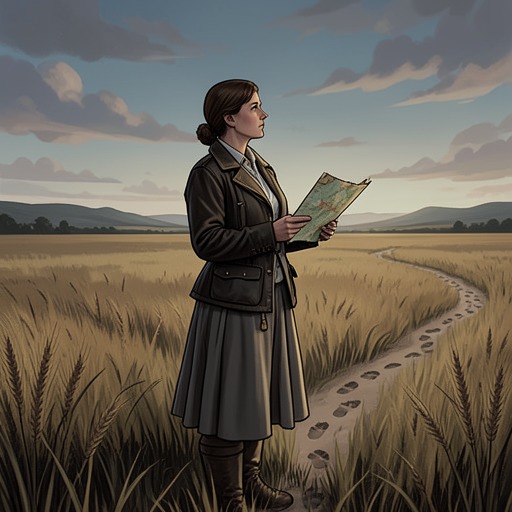
The other guidelines make this openness practical. The pair are not to use their phones to get to a destination; they must navigate old-school, by learning to read actual maps. Alternating who chooses a place gives each traveler a part in shaping the route, while willingness to follow the road prevents those choices from becoming a closed itinerary. Together, map-reading and detours make wandering an active practice of attention rather than a trip directed by a device.
At each site, they also leave something as a private offering. Finch likens the practice to geocaching, but distinguishes it from a game: the pair receive something from visiting a place, so they can give something back. Leaving an object also serves as proof that they were there and as a way to leave part of themselves behind. In that sense, Nothing ordinary is more than a test for selecting destinations; it belongs to a reciprocal way of encountering places, accepting what they offer and marking the encounter in return.