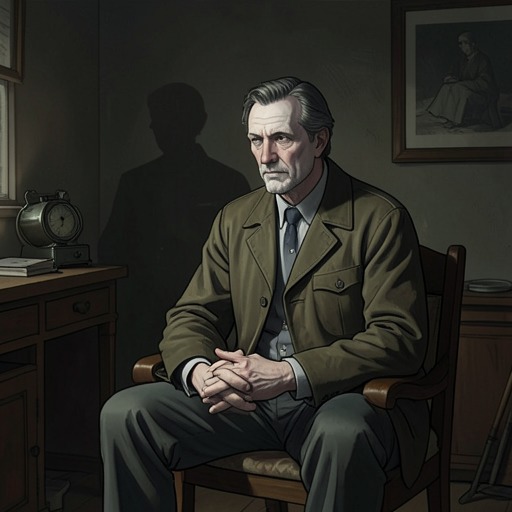
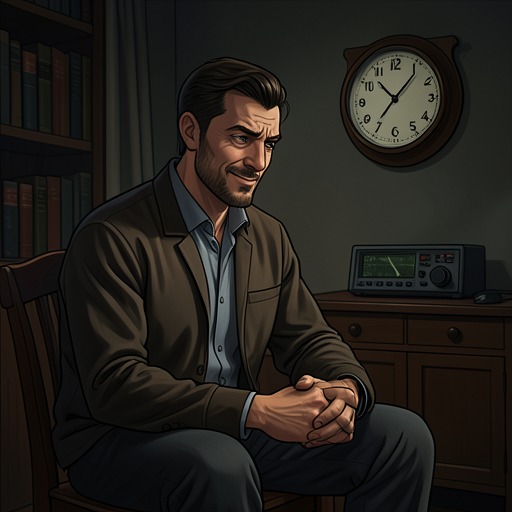
Robert Embry
All the Bright PlacesRobert Embry is one of the adults at school who tries to respond to Theodore Finch’s escalating distress. He asks Finch directly about what is wrong, checks whether he has returned to the bell tower, and emphasizes that concern for him carries both a personal and a legal responsibility. Their exchanges show a difficult balance: Embry offers help as a friend, but he cannot treat Finch’s suicidal remarks as merely private conversation.
Identity and Role
The novel presents Robert Embry in a school counseling role. Finch has a scheduled appointment at the counseling office, where Embry asks what is happening and raises the possibility that Finch’s approaching eighteenth birthday is affecting him. The evidence does not establish a formal clinical diagnosis or give a full account of Embry’s professional background; it does show him attending to Finch’s mental state and discussing symptoms, hypomania, and psychotic episodes.
Finch sometimes refers to him as Embryo, a teasing nickname that sits uneasily beside the seriousness of their conversations. The contrast captures Finch’s habit of deflecting discomfort with jokes, even when an adult is trying to assess whether he is in danger.
Responding to Theodore Finch
During one appointment, Embry notices Finch’s condition and asks what is wrong. When the conversation leads to Finch’s visit to the bell tower, Embry asks whether he was there again that day. Finch says he had gone up to read or try to clear his mind, explaining that the noise below made that difficult. The word again matters: Finch’s presence at the tower is not an isolated detail, and Embry understands it as a possible sign of danger rather than an ordinary place to seek quiet.
Finch answers concern with a joke about whether the school has security cameras in the tower. He then makes light of the possibility that he might kill himself, even suggesting that Embry would be given advance notice. Embry does not let the humor settle the matter. He tells Finch that he wants to help as a friend, while also making clear that the situation carries a legal obligation. The exchange exposes Finch’s use of irony as a shield and Embry’s refusal to mistake that shield for reassurance.
Concern, Limits, and Unfinished Work
Embry’s manner changes when Finch’s remarks reveal how serious the situation may be. He asks directly whether Finch has returned to the bell tower and requires an answer. Later, when Finch rises abruptly and knocks his chair over, Embry initially has to read the movement in the context of their tense conversation. Finch raises his hands in a gesture of surrender and offers a handshake; Embry accepts it, holds on, and tells him that he is not alone. He also insists that their discussion is not over.
This moment gives Embry’s concern a physical as well as verbal form: the handshake becomes a brief effort to keep contact when Finch is withdrawing into isolation. Yet it is not a resolution. The next morning, Finch attacks Gabe Romero at school, choking him before others pull him away. That later violence makes clear that the appointment has not ended Finch’s crisis, without proving that Embry’s intervention caused or could have prevented what happened.
Connection to Violet Markey
Robert Embry’s contact with the students is not limited to Finch. Violet Markey later shows her mother a book Embry had given her. The scene supplies little explanation of the gift, but it establishes a separate point of connection between Embry and Violet and places him among the adults whose support reaches beyond the immediate crisis involving Finch.
Narrative Significance
Embry’s role is defined by the tension between care and duty. He speaks to Finch as a person he wants to help, yet he also names the legal responsibilities that constrain their conversation. Finch’s jokes, evasions, and dangerous behavior prevent reassurance from being straightforward; Embry’s repeated questions register the risk without offering a simple cure. Through their encounters, the novel presents help as an act of attention and follow-through, while also showing how much remains unresolved when a distressed person cannot or will not be reached by one conversation.