The Awake and the Asleep
All the Bright PlacesThe Awake and the Asleep is Theodore Finch’s name for an experience that is not ordinary wakefulness followed by nightly rest: it is a recurring alternation between periods of intense awareness and long, involuntary blankness. The terms give shape to an experience Finch struggles to explain, while underscoring its central contradiction: remaining awake means staying present in the world, yet the periods of wakefulness can bring him face to face with thoughts of death.
Meaning and Distinction
For Finch, the Asleep is not a normal night’s sleep. It is a prolonged shutdown without dreams or an ordinary sense of time passing. After one such episode, he realizes he has no memory of much of the winter before the Sunday when he woke; the blank period has swallowed Thanksgiving, Christmas, and New Year’s. On the sixth day of being awake again, he is returning to school for the first time since November 14. The calendar measures an absence that he cannot remember living through.
He describes the transition as abrupt: his mind slows and circles before switching off, and later he compares the descent into sleep to a long drop from the Awake, with everything stopping at once. That language makes the states feel less like a chosen routine than a discontinuity in experience. He can be alert again without feeling restored; after the winter episode, he feels unusually empty. The distinction therefore concerns not simply whether Finch is conscious, but whether he experiences himself as present and continuous.
The contrast is also emotional and bodily. In a message exchange with Violet Markey about Virginia Woolf, Finch recognizes the description of a mind that surges through different intensities and then sinks into mud as a description of himself. He characterizes his experience as the Awakes and Asleeps with no in-between. The phrase compresses an unstable range of feeling into two sharply opposed conditions, leaving little room for a gradual or predictable passage between them.
Recurrence and Disruption
The winter shutdown is presented as part of a pattern, not an isolated illness. Finch says the blanking out and waking happen repeatedly, but this time the absence lasted through the holidays and left him feeling worse than before. He cannot identify what made this episode different. The lack of an explanation is itself significant: the expression names a recurring condition without making its causes or timing legible, even to Finch.
The pattern affects school and daily life. Finch says he returned after the long absence and, at another point, explains to friends that he had stayed away from school and driven onto the interstate instead. He does not explain the Asleep to them, seeing no practical way to make the experience understandable. The states thus register not only as private episodes but also as interruptions that others may notice without knowing what has happened.
There are indications that an episode may not always arrive without warning. Finch has learned to attend to changes in sound, headaches, and the way spaces seem to expand or contract. Crowded hallways and the noisy gym are especially difficult for him. These perceptions do not provide a reliable schedule or a clear diagnosis; they are signs he watches for while trying to recognize a transition that can otherwise feel sudden.
Secrecy, Labels, and Relationships
Finch’s difficulty describing the Asleep is connected to an earlier experience of being exposed and labeled. Years before, he asked Gabe Romero whether he experienced unusual perceptions and thoughts about death, and invited him to test those experiences together. Gabe told his parents; the concern passed through a teacher and the principal to Finch’s parents, and news spread through school. Finch became known by a demeaning label. Although he later grew fourteen inches in a summer, he found that physical change did not make the social label disappear. He came to believe that it was safer to act as though he were like everyone else.
That history helps explain why Finch keeps the Asleep from his friends. With Charlie Donahue and Brenda Shank-Kravitz, he values being able to come and go without having to account for himself. Their acceptance gives him room to avoid an explanation, but it does not mean they understand what the two states mean to him. The expression remains an inward vocabulary for experiences that he withholds from people around him.
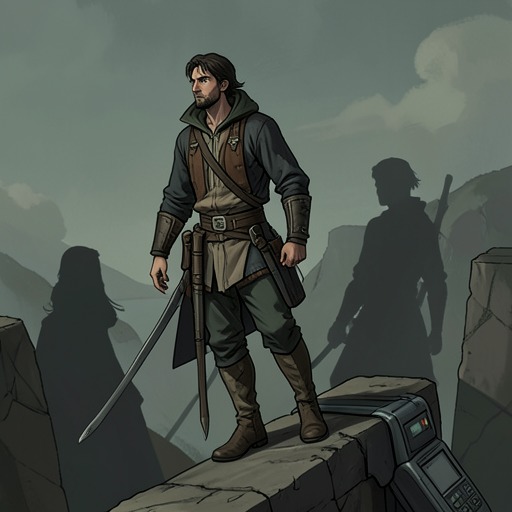
At school, Finch’s account of the bell tower also shows how difficult it is for others to distinguish his intentions from his visible actions. He tells Mr. Embry that standing on the ledge is about control and avoiding another descent into sleep, not a wish to die. Finch wants to stay alive, but believes that a counselor looking at his record would not believe him. His account makes the Awake a precarious state: an effort to remain here, accompanied by thoughts that others may interpret differently.
Efforts to Stay Present
Finch tries to resist the Asleep through action. After an unsuccessful late-night attempt to see Violet, he stays up making a list called How to Stay Awake. He considers ordinary stimulants but distinguishes his aim from merely postponing sleep for a few hours: he wants to remain present over the long term. The first practices on the list are running and writing, including putting unwanted thoughts onto paper. The list turns the phrase into a project, even though it cannot guarantee that the episodes will stop.
Running also becomes a way to push back against words Finch has heard about himself since childhood. He runs to keep those insults from taking hold, repeating to himself an intention to stay awake and make the next time different. The effort is both physical and verbal: movement counters the words that threaten to define him, while the repeated resolve supplies a provisional account of what he is trying to do. The Asleep is not simply resisted by will, however; the recurrence of blank periods means the resolve is never proof of control.
The expression’s force comes from that unresolved opposition. Finch’s Awake can include a frightening intensity of thought, while the Asleep offers not ordinary rest but an absence he cannot remember. He may try to anticipate its arrival, even rearranging his room while considering suicide, but his own account gives no dependable way to prevent the transition. The Awake and the Asleep therefore functions as both a personal vocabulary and a measure of Finch’s uncertainty: it lets him name the divide in his experience without explaining it away, and makes his repeated effort to stay present visible without turning that effort into a simple victory.