The Great Manifesto
All the Bright PlacesThe Great Manifesto is Theodore Finch’s name for the desire to exist meaningfully, count for something, and remain in memory. Drawn from Cesare Pavese’s writing, the idea gives Finch a language for his search for significance; a high-speed drive makes that search feel briefly immediate, while Violet Markey’s later reassessment reveals how little a grand ideal can explain or repair. Across those appearances, the phrase changes from an exhilarating personal creed into an unresolved question about memory, love, and what survives a person.
Origin and Formulation
On the seventh day of his Awake, Finch recounts Pavese’s words about the urge to be, to matter, and to remain a memory. He also recounts that Pavese died by suicide five months after writing them. Finch distinguishes himself from the poet’s account of a valiant death, but says that he understands the desire to be and to count for something. That distinction matters: the attraction lies in the ideal of significance, not simply in a wish to imitate Pavese’s fate. Finch takes a statement about mortality and remembrance and turns it into a personal framework for measuring whether he is fully present in his life.
The name becomes concise enough to serve as both destination and self-description. Later, when Violet asks what his own epitaph would say, Finch answers, “Theodore Finch, in search of the Great Manifesto.” Asked what that means, he explains the phrase as the urge to be, to count for something, and to remain a memory if death comes. He can articulate the ideal more readily than he can explain his own absences: when Violet asks why he missed school, he dismisses the issue as headaches, while privately describing experiences of sound, color, and light that can overwhelm him. The manifesto thus supplies a large, declarative answer to a question his everyday explanations leave unresolved.
The Drive as Enactment
On the same day, Finch drives his mother’s Saturn VUE, Little Bastard, toward Violet’s house along the farm road parallel to National Road. He accelerates through successive speeds and sets himself an absolute threshold: one hundred, not ninety-seven or ninety-eight. As he approaches it, the pursuit of the manifesto becomes an immediate test of sensation, resolve, and danger. He imagines the drive as a route toward the Great Manifesto, making the abstract wish to count for something feel, for a moment, like forward motion itself.
The scene turns on his decision to lift his foot before the car’s momentum carries him off the road and into a ditch. He emerges uninjured and notices that his hands are steady; looking around, he affirms, “I am here.” The phrase is not the same as a permanent answer to his search, but it gives the scene a sharply limited achievement: at that moment, Finch registers his own presence rather than disappearing into the imagined culmination of the drive. The episode places the manifesto beside a concrete choice to stop. Its language reaches toward lasting recognition, while the scene’s decisive fact is smaller and immediate: Finch remains alive and present.
A Shared Project, and a Private Ideal
The manifesto also sits beside Finch’s developing connection with Violet, though it does not initially make that connection easy to read. In a message, he writes, “You make me feel gold, flowing.” He waits for a reply, then checks the unchanged date of Violet’s website, which she had run with her sister. His interpretation is stark: “I get it,” he thinks; he is not gold or flowing, but standing still. The passage sets his desire to be seen against the uncertainty of waiting for another person to respond. For Finch, the language of movement and significance can turn quickly into a measure of whether he has reached someone.
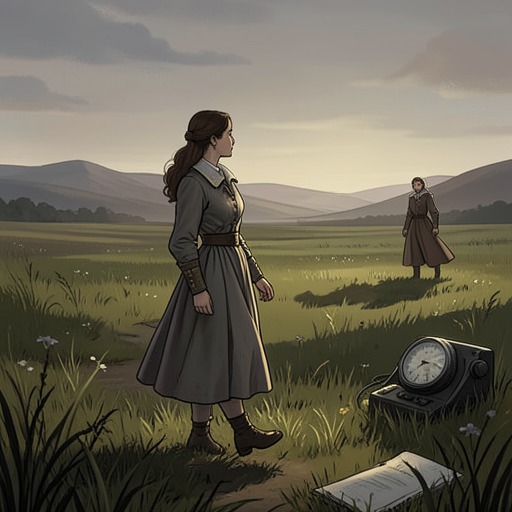
Violet answers by setting practical rules for their wandering project: they will avoid bad weather, travel by walking, jogging, or bicycle rather than car, and stay near Bartlett. Finch agrees and suggests that they write about the wanderings so they will have something besides pictures to show for them, volunteering Violet to do the writing. The exchange gives the manifesto a quieter counterpoint. Instead of a single spectacular proof of significance, the project makes meaning through shared places and a record of having gone there. Yet Finch’s description of himself as a seeker remains his own, and the phrase does not erase the distance that can persist even between people making plans together.
Memory and Reversal
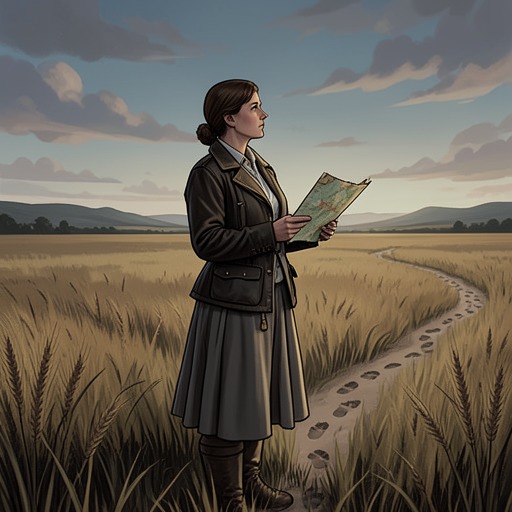
After Finch’s death, the manifesto returns in Violet’s attempt to understand what his life and their relationship meant. In her writing, she recalls Pavese’s sentence, “We do not remember days, we remember moments.” She then remembers running on her way to a flower nursery and remembers Finch smiling and laughing when he was at his best and she saw him as whole. The abstract promise of remaining a memory narrows here into particular recollections: a journey, an expression, and a moment of shared regard. Memory is no longer only the grand future Finch imagined; it is also the fragments Violet can hold after his absence.
Violet finally rejects the idea that the manifesto was what their wandering had been heading toward. She writes, “So I guess there was no Great Manifesto after all, even though you made me believe there was. I guess there was only a school project.” Her words turn the phrase back toward the relationship and its limits. The project was real, but it could not deliver the lasting explanation or rescue that the name seemed to promise. Violet says Finch changed her life by showing her Indiana and drawing her out of her room and into the world, then contrasts that gift with the finality of his leaving. Her closing question about why she could not save him makes the gap between meaning and outcome explicit.
The expression therefore accumulates a double force. For Finch, it names a pursuit of presence and remembrance; for Violet, it becomes a promise that cannot withstand bereavement as an explanation of what happened. The story preserves both meanings without reconciling them. Its lasting images are not a completed manifesto but the interrupted drive, the shared wandering project, and the moments Violet remembers.