The Waiting Place
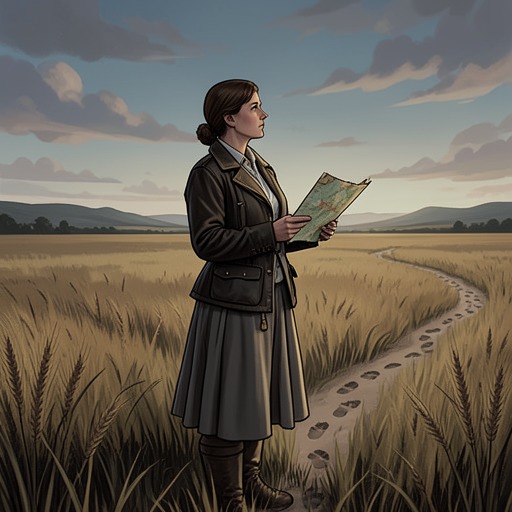
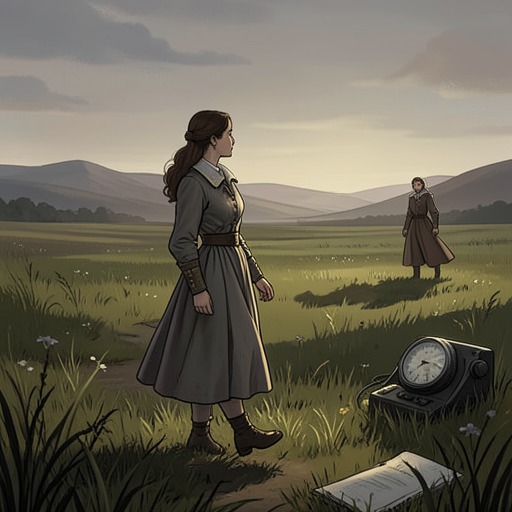
All the Bright PlacesThe Waiting Place names the passive condition Theodore Finch sees as a danger in ordinary life: waiting for something to change while daily routine replaces attention and action. The idea moves from a children’s book Finch recites to Violet Markey into his criticism of people who overlook the small things around them, and finally into his urgent challenge to Violet not to let survival become mere existence. Its counterpoint is not grand achievement but direct participation in life: looking, moving, choosing, and noticing what is already there.
The phrase and its first appearance
At Bookmobile Park, Finch and Violet read together from a book whose account of dark, useless, and waiting places changes the mood of their visit. Finch gets to his feet and acts out the passage from memory; as the words turn serious, he recites them, then shifts into song. The scene makes the idea theatrical rather than abstract: the Waiting Place is something Finch can embody and then break out of through movement and play.
The pair carry that movement into their own version of flip-flapping, leaping over beanbags, a rug, and other books. They sing the book’s closing lines together and collapse on the floor laughing. The sequence sets bodily play against the stillness of the place they have just heard described. The contrast makes the Waiting Place more than a literary reference: it is a condition the scene actively refuses, if only for a moment.
Small things as an alternative
At the top of Purina Tower, Finch and Violet sit beneath a blanket beside the Christmas tree that remains there all year. Below them, lights and dark patches of trees blur the boundary between earth and sky. Violet calls the view lovely, and Finch treats that small word, and the town spread out beneath them, as something they can claim together. The tower scene turns attention outward: what might seem ordinary from a distance becomes vivid when they stop long enough to see it.
Finch makes the connection explicit when he says, “The problem with people is they forget that most of the time it’s the small things that count. Everyone’s so busy waiting in the Waiting Place.” The phrase criticizes a way of living, not simply a delay before a particular event. In his account, people become so occupied with waiting that they miss the view, the place, and the shared moment immediately available to them. His argument sits beside Violet’s uncertainty about whether writing remains her calling: neither life nor identity, he suggests, has to be treated as already settled.
From metaphor to challenge
The metaphor becomes personal when Finch confronts Violet with the difference between surviving and living. After her accident, he sees her as having retreated into repetitive routine rather than re-engaging with the world. He tells her not to be “a waiting person” and describes the cycle as “Get up. Do this. Do that. Lather. Rinse. Repeat.” His language connects the Waiting Place to avoidance: repetition can keep a person from thinking about what has happened, but it can also keep that person from acting or feeling beyond it.
Violet resists his claim, shoving and striking him while insisting that he cannot know how she feels. Finch holds his ground and urges her to let out what she has been carrying. The exchange gives the expression a sharper edge than the playful reading scene: rejecting the Waiting Place is not presented as an easy decision or a cure for grief. Finch’s challenge is that Violet has survived a terrible accident, but survival alone has left her merely existing. His metaphor asks for movement without pretending that pain has disappeared.
Places that resist expectation
The wandering locations around the expression give its contrast between passivity and attention a physical form. At Hoosier Hill, Violet finds a brown circle of winter trees, a bench, a picnic table, a sign marking the Indiana high point at 1,257 feet, and a small wooden stake set among stones. The modest marker disappoints her expectation of a dramatic summit. Yet the anticlimax also suits the idea’s attention to scale: a place need not look extraordinary to become worth encountering.
At Bookmobile Park, seven book trailers stand in a line amid cornfields outside Bartlett. Their unexpected appearance interrupts the ordinary landscape and draws Violet toward them before Finch has even left the car. At Purina Tower, a climb up the steel ladder leads to a view of lights and trees that seems beautiful precisely because the pair take the time to look. These settings make the metaphor spatial without reducing it to a single destination: attention can transform an unremarkable marker, a row of trailers, or a familiar town into an experience rather than a backdrop.
The Blue Hole offers a more complicated contrast. Finch leads Violet to the private, tree-ringed pool on the first warm day, describing the place through local stories of a bottomless lake, a whirlpool, and people who disappeared. He also wishes, in that secluded setting, that they could be alone in the world. Later, Violet returns to the blue water and recognizes it as the place where Finch’s eyes come to mind; the serenity nearly turns her back, but she continues. On another search, she follows the road to Taylor Prayer Chapel, stops beside its small white building and wooden cross, and wonders whether Finch came there before he died. These later visits do not resolve the loss. They show how a place can call for attention while holding questions that remain unanswered.