Theodore Finch’s suicidal crisis
All the Bright PlacesTheodore Finch’s suicidal crisis is not presented as a single disclosure or a neatly explained turning point. It emerges through recurring anger, signs that his sense of control is becoming unreliable, and thoughts that expose how seriously he has considered dying. His attempts to contain the crisis do not make it disappear; the people around him see only parts of it, and Violet Markey is left to confront both its consequences and the limits of what she can know.
Warning Signs and Self-Control
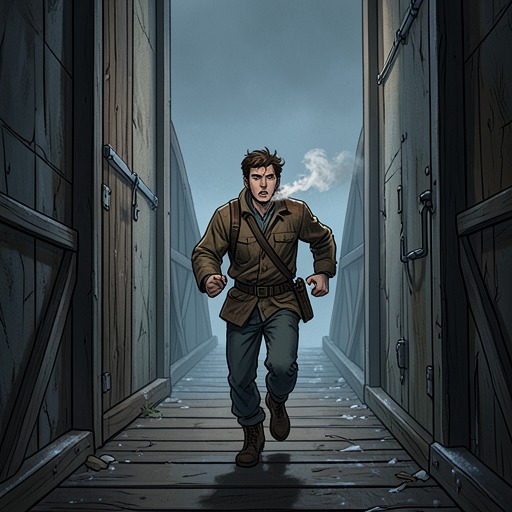
An early glimpse of Finch’s volatility comes when Gabe Romero, his sworn enemy since middle school, knocks the books from his hands. Finch recognizes the old anger that rises in response and connects it to the previous year, when he threw a desk at a classroom chalkboard. The distinction matters: Gabe Romero has encouraged others to believe the desk was thrown at him, but Finch says that was not what happened. The episode shows anger as a recurring force, while also revealing how conflict and rumor shape the way other people interpret Finch’s behavior.
This time, Finch counts to sixty instead of acting on the anger. He concentrates on avoiding detention and expulsion, and on remaining quiet and still. The effort is deliberate restraint, not evidence that the anger has vanished. His repeated insistence on controlling his conduct sits beside the sense that an intense reaction can return with little warning, making self-control a continuing task rather than a settled change.
Finch also describes warning signs that precede periods of difficulty. Sound and headaches can alert him, but he has learned to watch for changes in how space looks and feels. Crowded school corridors are hard to manage because people move in many directions; the gym is worse, with its packed crowd and shouting, and can leave him feeling trapped. These details locate part of his crisis in ordinary school settings: places other students pass through routinely can become difficult for him to navigate, and recognizing a warning does not mean he can simply dismiss it.
Seeking Help and Concealing Risk
Finch finds Life Is Life online, a support group for teenagers who are thinking about suicide, have attempted it, or have survived an attempt. It meets on the grounds of an arboretum in a nearby Ohio town. In the group’s round of personal accounts, Finch realizes he is the only participant who has not made what he considers a genuine attempt to kill himself. Rather than taking that difference as a reason to recognize his own danger, he feels superior and privately imagines that, if he tries, he will not fail. The contrast between the group’s stated purpose and his response makes the visit especially revealing: he is physically present among people seeking help, but his thinking turns their survival into a comparison that intensifies rather than settles his own risk.
The account does not establish that attending the group resolves Finch’s crisis. It instead shows both an opening toward support and the persistence of thoughts he does not readily share. The people in the room have stories, and they are alive and trying to get help; Finch notices those facts, yet remains separated from their experience by his belief that a future attempt would be different. His participation therefore marks contact with help, not a clear recovery.
Withdrawal and Violet Markey’s Alarm
During a later encounter in Finch’s closet, he abruptly loses his smile and says he cannot help what is happening. His voice becomes cold, and he remarks that the closet feels tighter than he had thought. The exchange makes withdrawal legible through a change in tone and a change in his description of the enclosed space. What had seemed to offer room now feels constricted; the scene gives Violet Markey a warning, but not a reliable way to prevent what follows.
Finch’s writing in The Waves offers another view of his state. The passage dwells on a wish for the blue, the hole, and the present moment to remain, then shifts toward images of darkness, preparation, and movement. Its closing image holds rootedness and flow together. The text does not supply a straightforward explanation of Finch’s intentions. Instead, the desire to preserve a moment sits beside language of readiness and change, leaving the passage resonant with the crisis without settling what he will do.
After Finch leaves the closet, Violet believes her actions may have driven him out. She thinks that telling her parents about his situation broke his trust and that he would not have left otherwise. Her guilt shapes her decision to go herself, rather than send Kate Finch, Decca Finch, or his father. She also believes Finch would want her to be the one who came. These are Violet’s convictions in a frightening moment, not proof that she caused his departure; the distinction becomes central to how the crisis is understood after his death.
Death, Uncertainty, and Aftermath
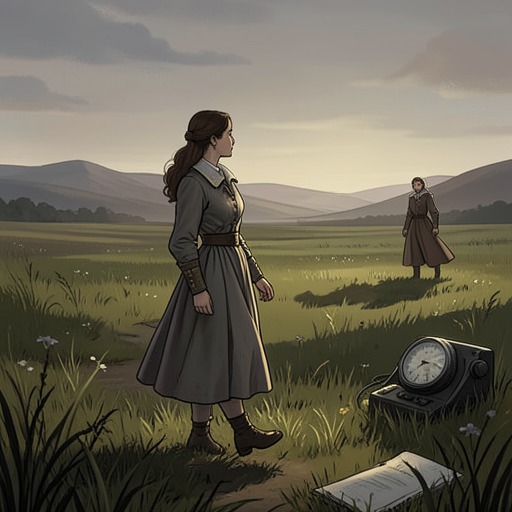
When Violet calls emergency services, she still believes Finch is not dead and has found another world. Later, at his funeral, she stands in Finch’s black T-shirt and considers the family’s description of his death as an accident. They have no proper note, and the preacher speaks of a young life ended and unrealized possibilities without naming suicide. Violet rejects the accident explanation in her own thoughts, but she cannot decide whether Finch felt he had a choice or whether he was seeking something other than death. The crisis thus ends without giving Violet the certainty she wants about Finch’s final intention.
The funeral’s language also exposes the difficulty of speaking plainly about suicide. Violet reflects on the implications of calling someone a victim: the word can suggest an absence of choice, while Finch’s state of mind remains inaccessible to her. Elsewhere, a speaker acknowledges that more might always have been done, but calls that question ultimately pointless. Together, these reflections resist a simple account in which one person’s action explains the outcome. Finch’s crisis is shown through specific warnings, attempted restraint, and contact with support, but its final meaning cannot be reconstructed with certainty, and Violet’s grief must continue without a definitive answer.