Theodore Finch’s undiagnosed mental illness
All the Bright PlacesTheodore Finch’s undiagnosed mental illness is presented not through a formal diagnosis but through a conflict over how his distress is understood: Finch rejects being reduced to symptoms, while the counselor who knew him later says he should have had more help. The evidence leaves the nature of his condition unspecified, preserving the difference between acknowledging suffering and claiming a diagnosis the story does not provide.
A Person Against Diagnostic Labels
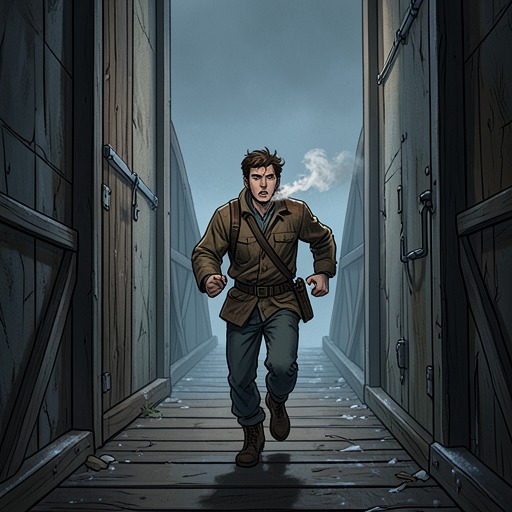
In a confrontation with Violet Markey, Finch recites the labels attached to him: freak, weirdo, troublemaker, moody, angry, unpredictable, and crazy. He counters them by insisting that he is not a compilation of symptoms, a product of bad parents and an adverse chemical makeup, a problem, an illness, or someone to be rescued. His insistence does not explain what condition he may have; it makes clear instead that no list of symptoms or explanations can stand in for the person himself.
The distinction matters because Finch neither presents himself as untouched by difficulty nor accepts that difficulty is his whole identity. His language names the forces others might use to explain him, then refuses their power to define him completely. The passage supports a reading of his experience as serious and complicated, but it does not identify a specific disorder or establish that one was diagnosed.
Distress in the Closet
The exchange unfolds in the confined space of Finch’s closet. He tells Violet that he would give anything to live as she does, imagining her as free from worry and fortunate to have a future after Eleanor Markey’s death. Violet challenges that assumption: she is still grieving and resents being treated as lucky simply because she survived. Finch’s harsh smile and her answer expose how each misreads the other’s burden even while they are close.
Finch then turns the conflict toward their own history, suggesting that Violet may regret choosing that particular ledge on the day they met. When she asks him not to act this way, his anger gives way to a coldness he describes as worse. He says he warned her this would happen and that the closet feels tight, as if there is less room than he thought. The shrinking space gives the scene a concrete form for his withdrawal, but the passage does not name a diagnosis or explain the change in his state as a clinical episode.
Recognition After His Death
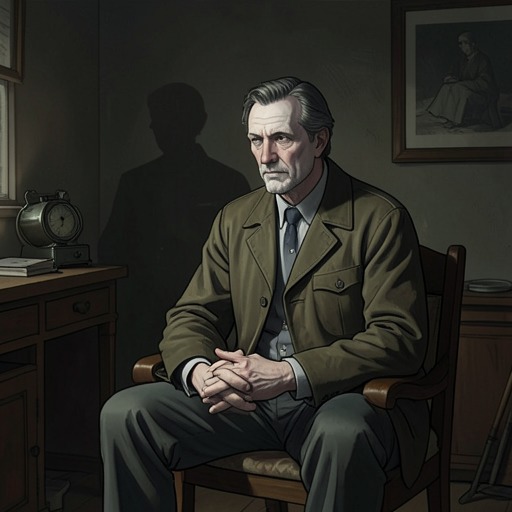
After Finch’s death, Violet Markey seeks out Mr. Embry because he had been Finch’s counselor. She arrives already blaming herself: she wonders whether suggesting the A Street Bridge route contributed to Eleanor’s death and whether a different choice could have changed what followed. Mr. Embry says Finch was a good, troubled kid who should have received more help, then admits that he feels responsible. His words acknowledge both Finch’s need and the failure of support without clarifying what diagnosis, if any, had been considered.
Mr. Embry urges Violet not to bottle up her grief and reminds her that being closest to Finch does not make her responsible for him. He places Finch’s death beside Eleanor’s, distinguishing the circumstances: Eleanor had no choice, while Finch may have felt that he had none, even though Mr. Embry says he did. That distinction is carefully qualified rather than offered as a full explanation of Finch’s state of mind. The scene shows the counselor reconsidering past conversations and meetings, while Violet describes seeing reminders of Finch everywhere and cannot bring herself to mention it to him.
What the Narrative Leaves Unresolved
The account holds two truths together: Finch resists being treated as a diagnosis, and people who knew him recognize that he needed more help. Neither his forceful self-definition nor Mr. Embry’s regret supplies a clinical explanation. The gap is significant: the story attends to the harm of reducing Finch to a label, but also to the consequences of distress that remained inadequately addressed.
By keeping the condition unnamed, the narrative limits what can responsibly be claimed about Finch’s mental health. Its emphasis falls instead on the difference between explaining a person and supporting one, and on the painful burden of responsibility that survivors try to assume after a death. Violet’s guilt and Mr. Embry’s own sense of responsibility show that Finch’s crisis leaves questions among those around him; they do not make either of them its cause or provide a definitive account of his choices.