Violet tells her parents about Finch’s crisis
All the Bright PlacesViolet tells her parents about Finch’s crisis at the moment when private fear becomes an appeal for adult help. After a painful exchange with Finch, she leaves him behind and returns home to interrupt her parents’ quiet evening. Her account makes clear why she cannot treat his danger as someone else’s problem: Finch once saved her at the Bartlett High School bell tower, and she loves him. The disclosure changes the scene from secrecy and alarm into a family response, though the immediate aftermath gives Violet no certainty that Finch will be safe.
From the Closet to the Family Room
The conversation begins with Violet leaving Finch in his closet. His voice has turned cold, and he says the closet feels too tight, as though there is less room than he had thought. Violet stands and tells him that she can help with that; then she slams out, knowing he cannot follow her. Even as she tells herself, “If he really loves you, he’ll find a way,” the departure carries an unresolved tension: she has left him physically, but remains focused on what his withdrawal might mean and whether he can be reached.
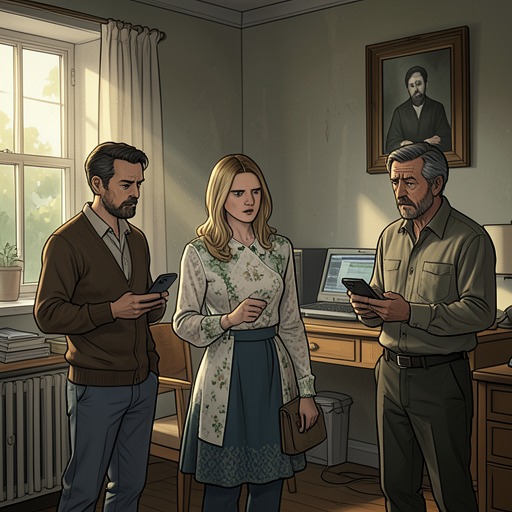
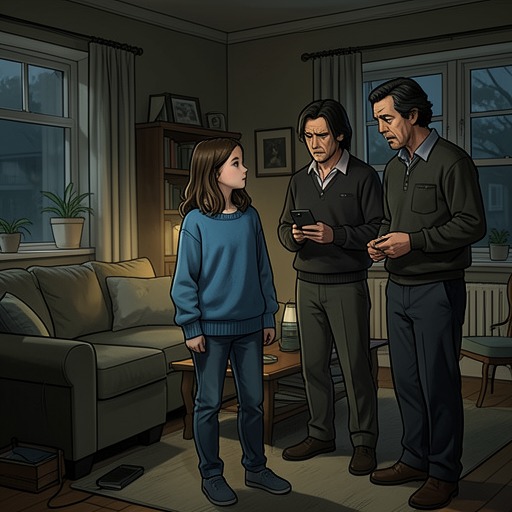
At home, her parents are watching television in the family room. Her mother gets up to make room for her, and Violet announces that there is something they need to know. Her mother sits back down in the same spot; her father switches off the television. The small actions mark a sudden change in the household’s attention. Violet recognizes that her arrival has interrupted a peaceful, happy evening and that her parents can hear from her voice that the news will be bad. Her anxiety includes the knowledge that she is bringing them into danger and worry, not simply asking for a conversation.
The Rescue She Remembers
Violet explains that on the first day of school after Christmas break, she climbed onto the bell tower ledge. Finch was there too, and he talked her down when she realized where she was, became scared, and could not move. She tells her parents that she might have fallen if he had not been there. The account supplies the history behind her urgency: her request to help Finch is bound to a moment when he helped her survive a frightening situation.
She immediately distinguishes that memory from the present. Finch is “up on that ledge” now, but not literally; he is in crisis, not physically standing on the tower. Violet anticipates that her father might reach for the phone and clarifies what she means before he can act on a misunderstanding. Her wording turns a private analogy into information her parents can respond to: Finch is in danger, and the danger is serious enough that she does not want to manage it alone.
Confession and Appeal
When her mother asks whether she has been seeing Finch, Violet answers yes. She apologizes and acknowledges that her parents are angry and disappointed, but does not let that anticipated judgment displace the immediate need. She says she loves Finch and that he saved her. The disclosure therefore reveals both a relationship she has kept from her parents and the personal history that makes her plea for him especially urgent.
Violet asks them to tell her later how unhappy they are with her and how she has let them down; right now, she needs to do what she can to make sure Finch will be okay. The order matters. She does not claim that her actions have been beyond reproach, nor does she ask her parents to approve of the relationship before helping him. Instead, she separates the possible reckoning over her choices from the crisis at hand. Her appeal is a choice to risk their disappointment rather than let fear of it keep her silent.
Parental Response and Immediate Aftermath
Violet tells her parents everything. Her mother then phones Finch’s mother and leaves a message. When she returns to the conversation, she tells Violet that she and Violet’s father will work out what to do and mentions a psychiatrist at the college, a friend of Violet’s father, who is talking to Finch now. The scene thus moves beyond disclosure: Violet’s parents begin contacting Finch’s family, and professional help is already part of the response described to her.
Her mother does not pretend that the secrecy has caused no hurt. She confirms that Violet’s parents are disappointed, but also says she is glad Violet told them and that Violet did the right thing. The answer holds disapproval and care together rather than making one cancel out the other. For Violet, speaking up has not removed the danger or resolved her parents’ feelings, but it has brought the crisis into the open and made it a shared responsibility.
Violet lies awake for at least an hour, too upset to sleep. When she drifts off, her dreams are troubled; she wakes, falls asleep again, and hears the faint, distant sound of rocks hitting a window. In the dream she decides the sound is not real and does not get out of bed. The scene leaves the consequences of her disclosure unsettled: the family has begun to act, but Violet remains anxious, and the dreamlike sound of a possible signal does not become a waking encounter with Finch. Her telling is a decisive act of care, not a guarantee of rescue.