Violet’s First Car Ride Since the Accident
All the Bright PlacesViolet Markey’s first car ride since the accident is both a practical journey and a fragile threshold: Theodore Finch asks her to enter a car, while she must face the memories and fear that make doing so difficult. The ride carries them beyond her familiar bicycle radius to Bookmobile Park, but its decisive movement is Violet’s willingness to travel at all—and to speak, inside the moving car, about the crash that killed Eleanor Markey.
The invitation and the boundary
Before the drive, Finch and Violet have wandered only within the area reachable by bicycle. When Violet has a turn to choose their next destination, she gives Finch a rough route and heads toward her driveway. She has not brought her bike. Finch asks her to consider the car, arguing that driving will open up places they cannot reach on foot or bicycle. He promises not to ambush her by starting the engine while she is inside and offers to stand far away from the vehicle as she decides.
Violet resists not simply because of the car but because Finch’s insistence feels like another instance of his deciding what she needs. She tells him that he pushes people into things without listening, then accuses him of assuming he knows what is best for her. Finch answers that her small, repeated circuits do not look like freedom to him: he sees someone who used to be adventurous now staying within a few miles because she is afraid to venture farther. His language is forceful, and the disagreement makes the invitation a conflict over agency as much as transportation. Violet finally brushes past him and climbs into the passenger seat herself; the choice is hers, even though his challenge has helped bring her to it.
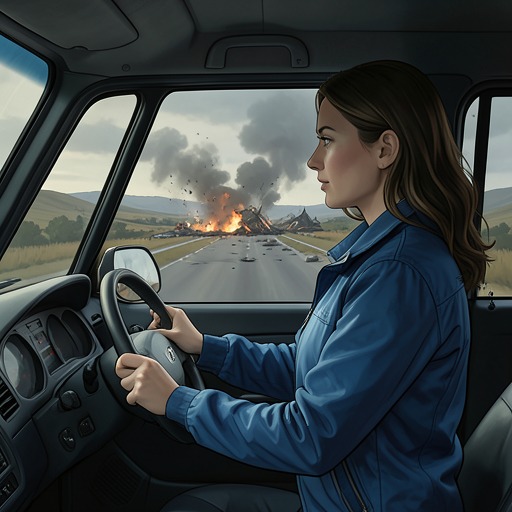
The car’s interior makes the offer tangible rather than abstract. Its center console holds pencil stubs, scraps of paper, cigarette butts, a lighter, and guitar picks; a blanket and pillow lie in the back. Violet notices them. Finch reassures her that the plan is not to seduce her, then waits while she buckles her seat belt and shuts the door. He does not climb in and drive immediately: he stands on the lawn until she has entered and closed herself inside, preserving the pause in which she can still refuse.
A drive governed by trust
Finch begins at barely twenty miles per hour and moves through Violet’s neighborhood block by block. At each stop sign and traffic light, he checks how she is doing. Violet answers that she is fine. When they reach National Road, Finch increases the speed, but the drive remains measured against the limits he has promised. Earlier, he swore not to exceed thirty miles per hour through town or fifty on the interstate, and said they would stop whenever Violet wanted. The repeated check-ins turn those assurances into a practice: he must keep asking, and she can respond from the passenger seat.
As they travel, Finch talks about his childhood habit of running in circles around the living room until he wore a ring into the carpet. His father eventually tore up the rug, leaving exposed concrete and patches of glue behind. The memory gives Violet something else to listen to while the car moves, and links the present ride to Finch’s own experience of restless movement. When Violet urges him to go faster, he says he will keep to forty, then brings the speed up to fifty. He is exhilarated by having persuaded her into the car, but the scene does not treat speed as uncomplicated freedom: the promise of restraint remains part of what makes the journey possible.
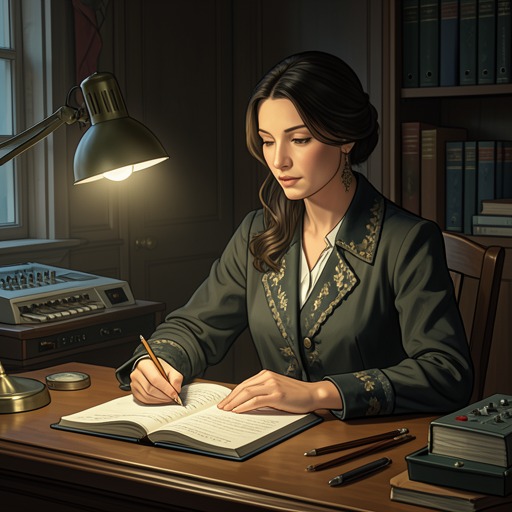
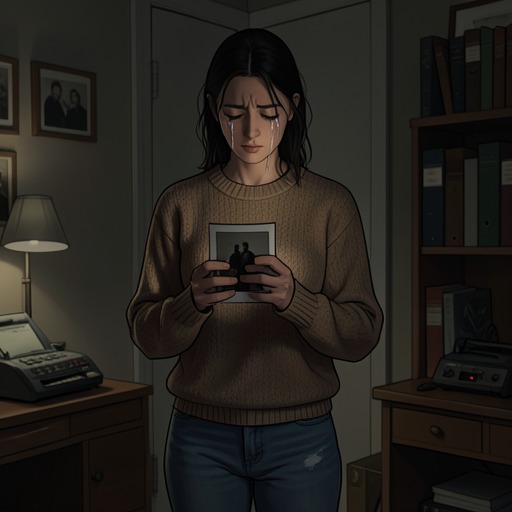
The excursion also changes the kind of conversation they can have. Finch asks about Violet’s accident, and she looks out the window before answering. The car carries her away from the house and familiar streets while giving her a moving view to hold as she speaks. She explains that she remembers leaving a party after Eleanor had argued with Eli Cross, who had been dating her. Although Violet had been the passenger, she was the one who told Eleanor to take A Street Bridge. She remembers the warning sign about ice, the car sliding, Eleanor saying she could not hold on, the plunge through the bridge, and Eleanor screaming. Violet next remembers waking in the hospital three hours later. The route she once suggested is therefore not just a detail of the crash: it is part of the responsibility she has been carrying since it.
Asked to describe Eleanor, Violet does not reduce her sister to the accident. She remembers her as smart, stubborn, moody, funny, sometimes mean-tempered, sweet, and protective; yellow was her favorite color. They fought, but Eleanor had always stood by Violet, and Violet could tell her anything because Eleanor did not judge. Violet names her best friend. The disclosure gives the ride a second purpose: Finch’s invitation has brought Violet into a car, but his questions also create room for her to remember Eleanor as a whole person and to articulate the bond that the crash ended.
Bookmobile Park and a recovered pleasure
On the country road outside Bartlett, Bookmobile Park rises unexpectedly from flat land lined with cornfields. Finch notices the trailers as they appear in the landscape. Violet leans toward the dashboard, then recalls that in California her parents, Eleanor, and she used to go on bookstore hunts. Each person chose a book to find, and the family could not go home until they had found them all; on some days they visited eight or ten stores. Her memory makes the destination more than a curiosity. It connects the outing to an earlier version of family life in which Violet and Eleanor shared the pleasure of searching for books.
Violet is out of the car before Finch and heads across the gravel and field toward the first trailer, a 1950s Airstream. There are seven trailers, different in make, model, and age, lined beside the corn; each offers a particular category of books. Violet climbs into the first one and meets Faye Carnes, a short, round woman with bleached yellow hair, warm eyes, and a creased face. The exchange quickly gives way to exploration. Violet chooses books, and Finch joins her as they look through the other trailers and add to their pile.
During the visit, Violet catches Finch’s eye and smiles as if she is considering what she feels about him, then looks away when he returns the smile. This small exchange belongs to the outing’s changed atmosphere: the journey that began with an argument about whether Finch listens has become a shared activity in which Violet is eager to explore and he follows her lead. Finch and Faye disagree over the change, each trying to persuade the other to keep it. Faye ultimately insists, and Finch takes it; when he later returns to the first trailer, he slips an extra twenty dollars and the change into the old register on its makeshift counter.
When more children arrive, Violet and Finch say goodbye to Faye. Violet calls the visit wonderful. Finch says it does not count as a wandering, while Violet points out that it is one more place and that this is what they needed. The disagreement closes on a difference in emphasis, not a reversal of the experience: Finch is measuring the outing against their project, and Violet is counting a newly reached destination. Her first car ride since the accident has taken her beyond the few miles she has repeatedly traveled, brought her into a place she explores eagerly, and ended with her treating the journey as an addition rather than a threat.
Significance of the journey
The episode gives the car two opposing meanings without making either disappear. For Violet, riding in one carries the weight of the accident and the loss of Eleanor; for Finch, a car extends the range of their wandering and connects them to places unavailable within bicycle distance. His insistence initially threatens to repeat the very loss of control Violet objects to, so the drive depends on concrete limits: her right to stop, his restrained speed, and his repeated questions about how she is doing. The trip advances only when Violet crosses the threshold into the passenger seat on her own.
The conversation en route makes that movement emotionally consequential. Violet does not merely tolerate transportation; she recounts the crash in detail and remembers her sister through affection as well as guilt. At the destination, she moves quickly from the car into the trailers, reviving a family ritual and participating in a new shared discovery with Finch. The outing therefore marks a modest but real change: the accident remains present, but it no longer determines every possible destination. Violet can carry its memory with her and still choose to go somewhere new.