Words and labels
All the Bright PlacesWords and labels are not neutral in Theodore Finch’s world: they can wound, mislead, or make room for belonging. The idea takes practical form in separate piles of cut-out words and in a wall of handwritten notes, then becomes more painful in a support group where people describe themselves through diagnoses and stigma. Across these scenes, Finch’s method is not to pretend that hurtful language does not exist, but to bring it into view, decide where it belongs, and resist letting it stand for a whole person.
Sorting the Harmful from the Good
While Theodore Finch and Decca Finch work through books, he asks whether words can be unpleasant without being categorically mean. Decca accepts the distinction, and he begins to collect words, sentences, and eventually a whole page. The growing pile beside his shoe is not simply a collection of insults: Decca takes the unhappy, angry, bad, and unpleasant language for herself, keeping it apart from the books’ good words. The physical act of cutting and gathering gives an otherwise diffuse emotional threat a visible boundary.
When Theodore Finch asks why they are doing it, Decca explains that the bad words should not be mixed in with the good, because they can trick a reader. He understands the principle through the Bartlett Dirt, whose cruel language targets him and other students considered strange or different. In this scene, the danger lies not only in an insult’s immediate sting but in its capacity to arrive unexpectedly among more ordinary words. Separating the hurtful language makes it possible to watch it rather than be surprised by it.
After Decca leaves to look for more books, Theodore Finch searches the discarded pages for words he wants and leaves them on her pillow to spell MAKE IT LOVELY. He then carries away the unwanted books. The gesture turns their sorting exercise into an exchange: Decca has gathered the bad words, while Finch selects a brief instruction that redirects attention toward making something better. The account ends by noting that something in his room is different, linking the handling of language to a change in the space around him without specifying more about that change.
The Wall and the Floor
Later, Theodore Finch shows Violet Markey how he records thoughts on Post-it notes. Positive words go on the wall; negative ones are placed on the floor in a heap of torn paper. He presents the practice as a way to get difficult thoughts down without letting them remain in the room. His warning that words can be bullies is grounded in the account of Paula Cleary, who was targeted with degrading names after moving from Ireland and beginning to date someone the other girls liked. The bullying continued until she died by suicide. The example gives the metaphor a concrete social consequence: language can become sustained pressure, not merely an unpleasant phrase.
Violet Markey tests the system by writing Bully and Mean girls, then adds Accidents, Winter, Ice, and Bridge. She tears each note apart. Those last words connect the exercise to painful associations in her own life; her action shows that the wall-and-floor distinction is not an abstract game but a way to handle words that carry personal weight. The notes are destroyed rather than kept on display, making the practice a deliberate removal from sight after recognition.
Theodore Finch sorts words according to the same rule. Welcome and Belong go on the wall, while he shows Violet Markey Freak before destroying it and keeps Label off the wall. Warmth, Saturday, Wander, You, and Best friend join the positive notes; Cold, Sunday, Stand still, and Everyone else go into the heap. The lists make the sorting more than a division between pleasant and unpleasant sound: they separate invitations to connection and movement from words associated with exclusion or confinement. The notes do not erase the negative terms; their tearing marks a decision about whether those terms should remain present.
Names, Diagnoses, and Stigma
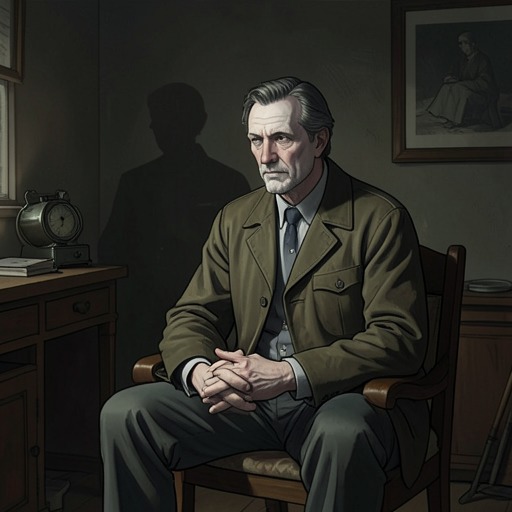
The contrast between a word and a person becomes sharper when Theodore Finch attends a support group. As people take turns speaking, he realizes that he is the only one present who has not made a serious suicide attempt. The recognition briefly makes him feel superior, a reaction he knows is misplaced, and he thinks that if he ever truly tries, he will not miss. Yet what stays with him is the pain of listening to people who are there seeking help, alongside the absence of those who did not survive. The scene places his private thoughts beside a room full of people whose experiences cannot be reduced to a single shared story.
The group’s language troubles him because participants name themselves through mental-health conditions and behaviors, as if those labels exhaust who they are. One person has several diagnoses, including anxiety; Theodore Finch does not understand every abbreviation. He contrasts this catalogue with the thought that he is simply Theodore Finch. The distinction is not that illness or distress should go unnamed. Rather, the scene shows how a label can become a social identity that crowds out the person carrying it.
A participant with scars describes the unequal response to her sister’s death from leukemia and her own near-death experience: the family received flowers and sympathy for the first loss, but she was judged selfish and crazy when her life was in danger. The contrast exposes stigma through the different forms of public sympathy and blame attached to physical and mental illness. The story makes Eleanor Markey come to Theodore Finch’s mind as he hears this account, joining the group’s discussion of loss to his own knowledge of bereavement without making the experiences identical.
A Practice of Reordering
The wall-and-floor exercise offers no claim that difficult words can be made harmless simply by tearing them up. Its force comes from giving them a place, and then distinguishing that place from the one reserved for words of welcome, warmth, love, understanding, and forgiveness. When Violet Markey adds You, Finch, Theodore, Theo, and Theodore Finch to the wall, the names accumulate rather than cancel one another. The scene gives identity a plurality of forms while refusing to let the negative category Label define it.
Theodore Finch rearranges the collected words into an order that almost makes sense, then uses his guitar to turn them into a song that includes every word. Violet Markey urges him to write it down so it will not be lost. The movement from scattered notes to an improvised song does not discard the painful vocabulary; it gives the words a new relation to one another. Across the cutting, sorting, tearing, and singing, language is shown as both a source of harm and a medium that can be handled, reshaped, and shared.