
Stories That Carry the Living
All the Light We Cannot SeeThis flow follows storytelling as a way for characters to imagine, endure loss, and communicate when direct explanation fails.
increasing Bearing strength in each event
 decreasing
Bearing strength in each eventdecreasingThe Diamond Legend

The Diamond Legend
A story offered
A guide tells Marie-Laure and the children the legend of the Sea of Flames, with its prince, goddess, and curse.
A question retained
Marie-Laure challenges the story’s logic, but the image of the stone remains in her memory.
The legend becomes a narrative she must later reinterpret rather than a fact she simply accepts.
Jules Verne as Refuge
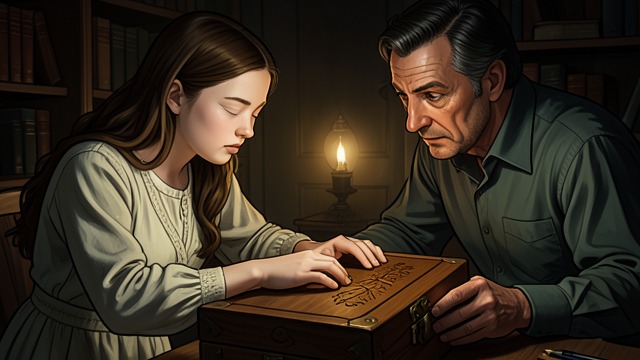
Jules Verne as Refuge
Reading and discovery
Marie-Laure reads Jules Verne in Braille, carrying imagined voyages into the unfamiliar spaces of the Museum and Saint-Malo.
A shared ending
During the siege she reads Twenty Thousand Leagues Under the Sea into the transmitter, making a story into a lifeline for Werner.
Fiction does not erase danger, but it gives fear a form that can be shared.
Flying Couch
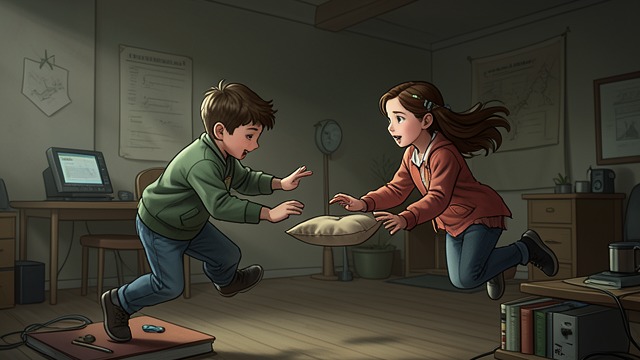
Flying Couch
Imagined journeys
Etienne and Marie-Laure pretend to travel from his study to faraway places, using voices, smells, and movement to make the journeys feel real.
A shared refuge
The game gives them companionship and lets Etienne engage with the world without leaving the house.
Imagination becomes a form of care rather than an escape from responsibility.
Letters That Conceal

Letters That Conceal
Reassuring fiction
Daniel writes that he is safe and well, describing food and work in ways that do not match the uncertainty of his captivity.
A buried message
His final surviving letter points Marie-Laure toward the hidden house within the house, trusting her to solve the clue.
The letters protect their bond while revealing how storytelling can conceal unbearable facts.
Memory Reimagined

Memory Reimagined
Two accounts meet
Jutta brings Werner’s model to Marie-Laure, and the women compare what they know of his character and choices.
A fuller story
Marie-Laure tells Jutta that Werner helped her during the siege. Jutta explains the pressures under which he lived without denying his failures.
Their exchange does not settle every mystery, but it replaces a single public role with a complicated human life.
1934, during Marie-Laure’s museum tour
1938 to 1944, from Paris through the siege
Summer 1940, during Marie-Laure’s first months at the house
1941 to 1943, during Daniel’s captivity
1974, when Jutta meets Marie-Laure
