Etienne carries out a reconnaissance mission and is captured
All the Light We Cannot SeeEtienne LeBlanc’s reconnaissance mission makes his practical knowledge of maps and coordinates an instrument of resistance—and places him in the hands of the occupying forces. With Saint-Malo under bombardment and the arrest of men of fighting age imminent, he agrees to locate German air-defense guns and transmit their positions. He has already reported one battery when he sets out before dawn to find two more; a uniformed man meets him at the ramparts, and Etienne is taken to Fort National. There, his urgent pleas to return to his blind niece meet the indifference of imprisonment and shellfire.
Assignment in a Besieged City
The mission takes shape as the military situation closes in around Saint-Malo. Allied bombs have demolished the rail station, the Germans have disabled the harbor installations, and Etienne hears that wounded German soldiers are arriving in Saint-Servan. He also hears that American forces have captured Mont Saint-Michel, about twenty-five miles away, and that liberation may be only days off. These reports do not make the city safer: they sharpen the urgency of giving the Allies accurate information about the German guns.
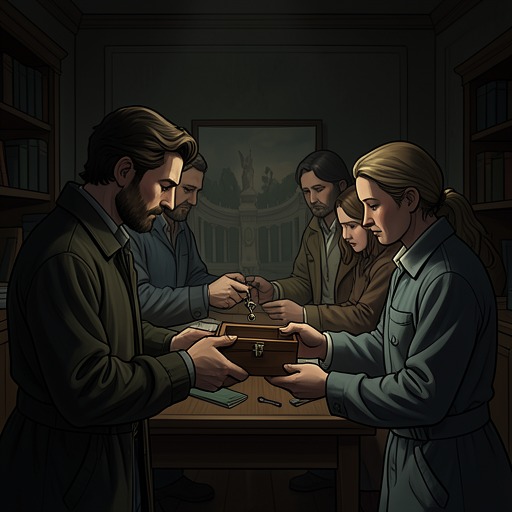
Madame Ruelle asks Etienne to find the locations of the flak batteries and send their coordinates by radio. She cannot do the work herself because she does not understand maps, minutes, seconds, or declination adjustments; Etienne does. His task is not simply to pass along a known position. He must walk the city with a compass and a notepad, identify the guns, calculate their locations, and broadcast the results. He immediately recognizes the danger: carrying out the survey in person could get him shot.
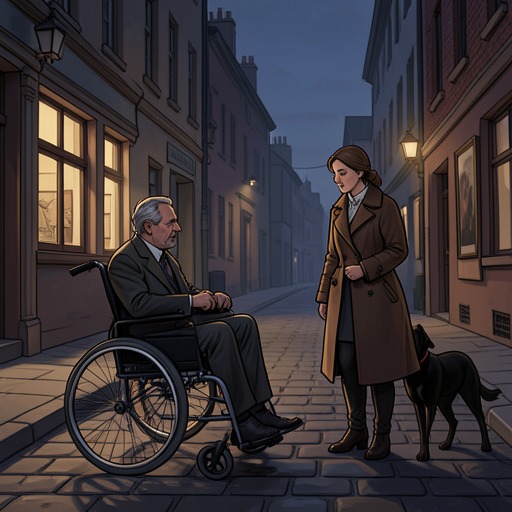
The risk is intensified by an imminent order to detain men in the city. Madame Ruelle warns that men between eighteen and sixty may be interned at Fort National, with papers to be checked and anyone suspected of resistance imprisoned. In a separate account of the restrictions, Monsieur Levitte tells Marie-Laure LeBlanc that men between sixteen and sixty are being ordered to assemble at the château tower before being marched to the fort at low tide. The age limits are not consistent, but both reports establish how rapidly the occupation is turning suspicion into mass detention. Etienne nods to Madame Ruelle, accepting the assignment despite the danger; she sends him out with a loaf under his arm.
The Survey and Capture
Etienne begins with a position he has already transmitted: a cannon on a shelf of rampart beside the Hotel of Bees. Two more locations remain. To calculate the next, he plans to take bearings from two known points, the cathedral spire and the outer island of Le Petit Bé, then use the triangle to determine the unknown position. The method gives him a defined sequence of measurements and calculations to pursue amid the city’s disorder. It also gives his mind something concrete to hold instead of ghosts.
As he leaves, the mission seems to restore his strength. He feels unusually well and glad that Madame Ruelle has given him this final task. He takes the rue d’Estrées, passes behind the college, and heads toward the alley behind the Hôtel-Dieu. In the predawn city, with the sun rising behind fog, his steps feel light. For a moment he imagines himself walking through a vast train carriage toward a bright city. The vision of movement and arrival contrasts with the actual route: he is crossing an occupied city on foot, carrying out dangerous reconnaissance while the threat of arrest hangs over its men.
Near the dark ramparts, a man in uniform limps toward him out of the blackness. The scene breaks off at the encounter; the subsequent account places Etienne among prisoners at Fort National. His capture ends the survey before he can complete the work of locating the remaining batteries. The mission’s practical plan—a compass, a notepad, known points, and a calculated position—has brought him into the reach of the authorities he was trying to undermine.
Fort National and Its Cost
At the fort, Etienne begs his jailers, its guardian, and fellow prisoners to let him go. He tells them that his niece is blind and alone, insists that he is sixty-three rather than sixty, and protests that his papers were unfairly confiscated and that he is not a terrorist. He tries to make himself understood with the few German phrases he can assemble. His appeals meet shrugs and helplessness; across the water, the city is burning, and those holding him have no apparent intention or power to send him back.
Then an American shell strikes the fort. Wounded prisoners howl in the munitions cellar, and the dead are buried under rocks just above the tide line. Afterward, Etienne stops talking. The narrative gives no indication that he is among the wounded or dead; its emphasis is on the shell’s impact on the prisoners and on his withdrawal into silence. The change is stark: the man who had accepted a mission requiring precise observation and transmission now has no words left for the people around him.
His confinement is also shaped by the tide and by the siege outside the walls. There is no pillow or blanket, the latrine is filthy, and food arrives irregularly. The guardian’s wife carries it from the citadel across a quarter mile of rocks at low tide while shells explode in the city. Etienne diverts himself with imagined escape routes—over a wall, through the water, across the shorebreak, then over a mined beach toward a locked gate—but recognizes that each route is absurd. The details make imprisonment more than a pause in the mission: it is a condition imposed by the siege, with even the landscape and the changing tide shaping what escape could mean.
Significance
The episode turns Etienne’s knowledge from a private skill into a form of resistance. His expertise in maps, bearings, and calculation is precisely what Madame Ruelle needs, and the same work that might help the Allies target German defenses exposes him to arrest. The mission also reverses the apparent promise of his predawn departure: he feels strong and purposeful as he sets out, but the encounter at the ramparts leads to the fort, where bombardment and detention strip away his ability to act on behalf of his niece.
The occupation’s power appears here through both administrative threat and physical violence. Men are ordered to assemble, suspected resistors face internment, and Etienne’s explanations cannot secure his release; an American shell then brings the war’s danger directly into the place holding him. His capture thus joins the city’s military struggle to the personal cost of resistance. He accepts the task knowing he may be shot, but the outcome is not a completed survey or a return home: it is imprisonment, his unanswered concern for Marie-Laure, and the silence that follows the strike on the fort.