Henri
All the Light We Cannot SeeHenri, the gifted singer and beloved brother of Etienne LeBlanc, is remembered through a voice that outlasts both a failed recording venture and the war that kills him. His life links childhood creativity to the trenches: the same science scripts he recorded for children become words he whispers to keep Etienne company through nights of terror, and his voice continues afterward in the recordings Etienne plays and transmits.
Voice, Family, and the Recording Project
As a boy, Henri was good at everything, but it was his voice that drew particular notice. The nuns at St. Vincent’s wanted to build choirs around it. Henri and Etienne shared a plan to make recordings and sell them: Henri would provide the voice, while Etienne, in his own account, supplied the brains. Gramophones were popular, yet children’s programs were scarce, and the brothers saw room for their work.
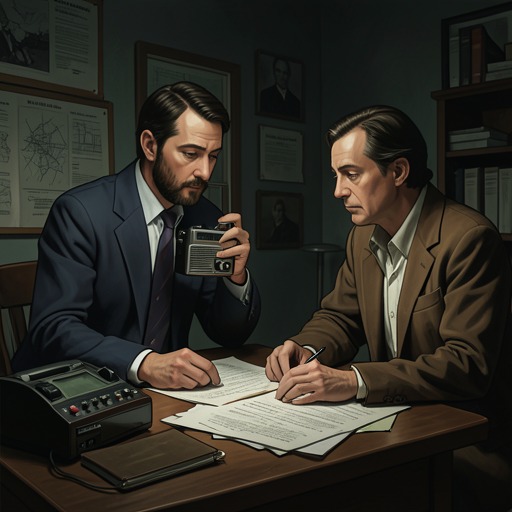
They approached a recording company in Paris, which initially showed interest. Etienne wrote ten science scripts, and Henri rehearsed them; then the brothers began recording. Their nephew Daniel LeBlanc was still a boy and came around to listen. Etienne remembers this collaboration as one of the happiest periods of his life, a shared undertaking in which Henri’s voice and his own technical and intellectual work belonged together.
The War and Henri’s Companionship
The war ended the project’s carefree setting. Henri and Etienne became signalmen, stringing telegraph wires from command positions in the rear to officers at the front. At night, the enemy sent up pistol flares called very lights: parachuted bursts that hung above the trenches, illuminating potential targets for snipers. Sometimes eighty or ninety flares went off in succession. Soldiers froze in the magnesium glare, waiting in the strange quiet for the sound of a bullet.
Etienne describes becoming paralyzed during these moments, unable to move even his fingers or eyelids. Henri stayed beside him and whispered the science scripts they had recorded, sometimes repeating them throughout the night. The stories became a kind of protective screen between the brothers and the exposed, illuminated trench; Henri’s voice, first intended for children listening to gramophones, now helped his brother endure until morning.
Henri’s death gives this memory its stark limit. Etienne survived, while Henri did not. The earlier recording venture and the trench ordeal are therefore joined not simply by the scripts, but by the changed work of Henri’s voice: it begins as part of a hopeful family collaboration and becomes intimate companionship in a situation neither brother can control.
Recordings After His Death
The commercial opportunity disappeared: the Paris company was no longer interested. Etienne nevertheless kept the recordings in use, playing the ten programs every night until most had worn out. He also played Henri’s song, Debussy’s Clair de Lune. The recordings thus persist less as a successful product than as something Etienne repeatedly returns to, preserving his brother’s voice through repeated listening even as the material copies deteriorate.
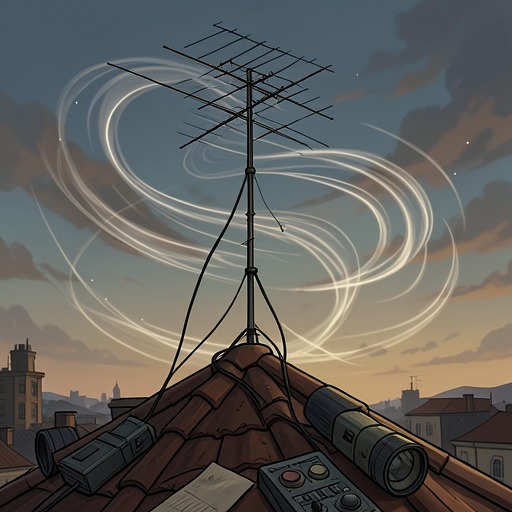
Years later, Marie-Laure LeBlanc hears one of those recordings through headphones in Etienne’s attic. His equipment includes metal boxes, tubes, coils, switches, meters, and a gramophone; once the piano fades, the recording’s voice speaks about the ancient plant matter from which coal formed. Etienne explains that the voice belongs to Henri and that the company’s rejection did not stop him from playing the programs. For the radio transmission, he had placed a microphone in the gramophone’s bell, allowing the recording and Henri’s song to be sent out again.
Narrative Significance
Henri is present in the story through recollection and recorded sound rather than through scenes from his own later life. His biography emerges as Etienne tells Marie-Laure about the attic machine: the account moves from a childhood project to the war, from Henri’s death to the worn recordings that remain. The change in setting alters the meaning of the same voice. A script made for a young audience becomes a companion to a frightened soldier, then a surviving trace that can travel through a transmitter to another generation.
That continuity does not undo Henri’s death. Instead, the recordings hold together the happiness Etienne remembers, the terror they endured, and the loss he names plainly. Henri’s lasting significance lies in this passage from voice to memory: his singing and spoken scripts are both a family creation and the means by which Etienne keeps his brother present, first for himself and eventually for Marie-Laure.