Jardin des Plantes
All the Light We Cannot SeeJardin des Plantes is a garden within the extensive Muséum national d’Histoire naturelle complex, a place where cultivated paths, scientific collections, and institutional routines meet. For Marie-Laure LeBlanc, it belongs to the world her father teaches her to know through touch, sound, and careful attention; as war approaches, the same grounds carry rumors and the scent of danger. Its significance lies not in one isolated scene but in the contrast between a living landscape and a museum increasingly organized around locks, secrecy, and the protection of vulnerable collections.
Setting within the Museum Complex
The garden forms part of a sprawling institution that includes laboratories, warehouses, four separate public museums, a menagerie, greenhouses, and acres of medicinal and decorative gardens. Marie-Laure’s father, Daniel LeBlanc, is its principal locksmith. He estimates that the complex contains twelve thousand locks, a number that conveys both its scale and the practical burden of guarding its many buildings and collections. A daily system of numbered, color-coded keys connects the working life of the institution to its physical layout: employees from zookeepers and office staff to scientists receive keys, must carry them, and may not leave them on desks or take them away from their buildings.
The museum’s security protects objects of exceptional value, from thirteenth-century jade and minerals such as cavansite and rhodochrosite to a Florentine dispensary bowl carved from lapis lazuli. The garden is therefore not an isolated green refuge; it is one part of a complex where gardens, galleries, laboratories, and secured stores coexist. Daniel’s work makes that institutional geography tangible. He oils latches, repairs cabinets, and polishes escutcheons as he leads Marie-Laure through corridors, galleries, libraries, and hothouses, until the museum seems to contain whole worlds within itself.
Marie-Laure’s Education and the Living Grounds
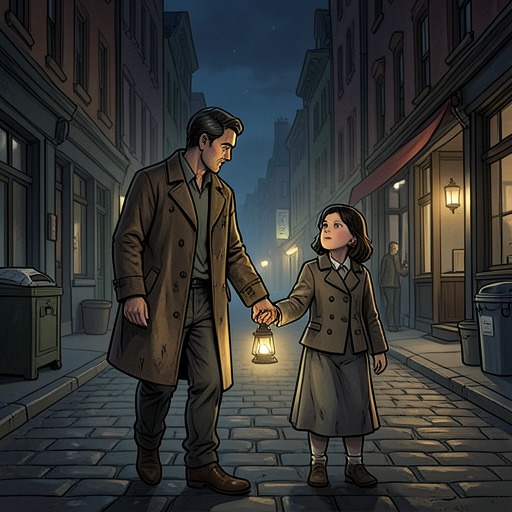
Daniel’s rounds turn the museum and its grounds into a practical education for his daughter. He quizzes her about keys and the locations of displays, and he places unexpected objects in her hands: a lightbulb, a fossilized fish, a flamingo feather. The lessons join classification to sensory discovery. They also make the vast institution legible not as an abstract map but as a sequence of particular objects, rooms, routes, and textures that she can learn to recognize.
Dr. Geffard, an aging mollusk expert whose laboratory lies within the complex, extends that education from the museum’s rooms to the natural histories they preserve. He lets Marie-Laure handle shells from the collection, including whelks, olives, imperial volutes, and spider conchs; the museum holds more than ten thousand specimens, representing over half of the world’s known species. He teaches her shell names, marine evolution, and geological time. Against this immense span, human history appears brief: Dr. Geffard observes that nearly every species that has lived has gone extinct, and that humans may be no different. The garden’s cultivated paths sit within a larger setting of scientific study that keeps both the diversity and the fragility of life in view.
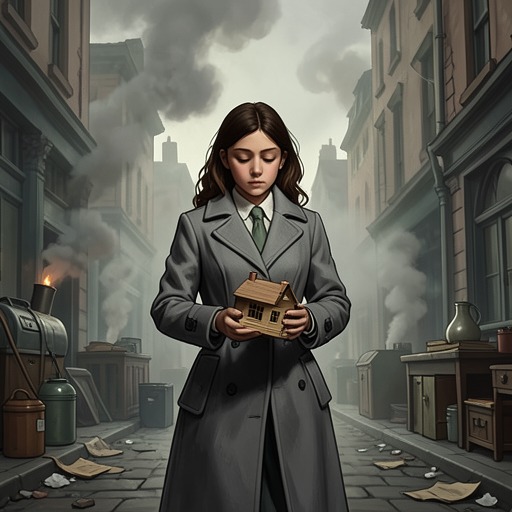
The grounds also appear in Marie-Laure’s gradual development of confidence in navigating the city. After repeated failures on walks with Daniel, she studies a model at home, tracing miniature benches, trees, lampposts, and doorways until the details begin to correspond to the real world. On a snowy Tuesday in March, close to the Seine, she starts the journey home without the familiar dread. This achievement belongs to her growing command of Paris’s spaces rather than to the garden alone, but it resonates with the museum’s broader lesson: close observation can turn an overwhelming environment into a world of identifiable particulars.
Rumors, Seasons, and the Approach of War
As the prospect of invasion grows, the Jardin des Plantes becomes a channel through which uncertainty travels. Rumors rustle along its paths and pass into the museum galleries, reaching even the dusty rooms where elderly botanists study exotic mosses. The stories are extravagant: a gardener claims the Germans possess sixty thousand troop gliders and can march for days without food; others imagine fog pills, rocket belts, and uniforms stronger than steel. Marie-Laure sits by the mollusk display and listens to groups passing, absorbing how fear circulates through ordinary conversation before the approaching forces are present in her immediate surroundings.
The seasonal calm intensifies rather than dispels that apprehension. Through summer, the smells of nettles, daisies, and rainwater drift through the gardens; pear tart burns in the LeBlanc home, and violin music rises from the street below. By early autumn, however, Marie-Laure sometimes thinks she can smell gasoline beneath the wind, as if machinery were moving inexorably toward the city. Later, the museum’s routine changes under the pressure of war: collections must be protected, couriers move objects to country estates, and Daniel works until midnight or later. Crates are padlocked, transport manifests secured, and armored trucks arrive at the loading docks. The garden remains alive with bees and drifting plane-tree seeds, but the institution around it has shifted from orderly custody toward urgent wartime safeguarding.
Occupation, Collections, and the Search
The garden’s institutional surroundings also draw the attention of Reinhold von Rumpel. Before sunrise, he walks up rue Cuvier and turns into the Jardin des Plantes, enjoying the city before the day begins. From there he enters the museum’s Grand Gallery, where two night warders and an assistant director respond to his rank. His passage from garden to gallery makes the museum’s controlled spaces vulnerable to occupation authority: the collections are no longer simply maintained by their custodians but inspected under coercive conditions.
In the Gallery of Mineralogy, von Rumpel sees empty display cases whose felt shelves retain the outlines of removed objects, alongside minerals still on view: yellow topaz, pink beryl, and tourmaline from Madagascar. The scale and catalogued history of the collection impress him, but the visit is also part of his search for the Sea of Flames. Museum staff lead him through a small locked door, down a winding stone staircase, through a second gate, and into an unassuming storeroom. Behind plywood, a combination safe holds a further box. The sequence exposes the layered security Daniel’s profession helps sustain, while also showing how occupation pressure can turn protected access into a means of extraction.
The diamond’s custody remains deliberately uncertain. In the months before the invasion, the museum has three replicas made, but the jeweler who fashioned them used a casting and never saw the real stone. Von Rumpel believes him; three reproductions and the genuine diamond remain difficult to distinguish, while the museum’s account of where each has gone is incomplete from the pursuer’s perspective. Daniel carries one stone out of Paris among the dispersals, uncertain whether it is genuine. In this way, the garden and museum complex anchor a larger conflict over what can be known, hidden, moved, or claimed: a place devoted to observing and preserving the natural world becomes a landscape of guarded doors and contested provenance.