Marie-Laure and Daniel LeBlanc flee Paris
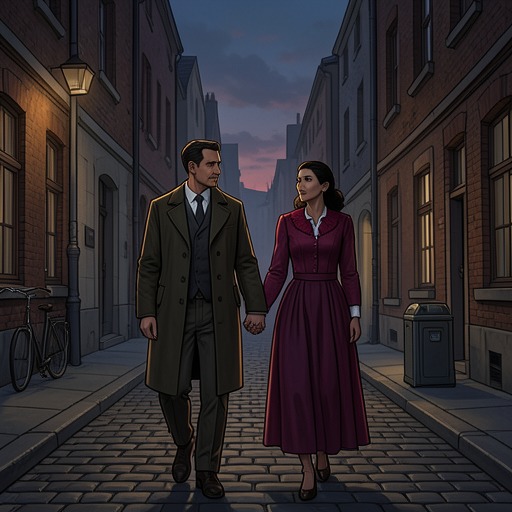
All the Light We Cannot SeeMarie-Laure LeBlanc and Daniel LeBlanc flee Paris as the threat of bombing turns the city’s ordinary spaces into places of hurried preparation and departure. Their escape begins in confusion: Daniel gathers his daughter from the museum, intending to take a train, but the exodus has overwhelmed the railways. Forced onto the roads, they join a mass movement westward whose dangers and delays culminate in Daniel’s arrest outside Vitré. The flight is both a physical departure from Paris and the beginning of their separation under wartime coercion.
The city prepares to empty
The departure takes shape against signs that Paris is bracing for attack. Across the city, people pack china into cellars, sew pearls into hems, and conceal gold rings in book bindings. At the museum, workspaces are stripped of typewriters; halls become packing yards scattered with straw, sawdust, and twine. The preparations convert familiar rooms into temporary depots, while the absence of ordinary work suggests how swiftly daily life is being displaced by the effort to protect people and possessions.
The danger reaches Marie-Laure through both public events and the failure of familiar routines. At the museum she tries to follow her novel, but the sentences break apart into letters and unintelligible bumps. The surrounding halls sound empty enough to frighten her. A warder turns the wireless knobs and finds only hiss and crackle; when he switches it off, quiet settles over the building. Elsewhere, Jutta tells Werner that German airplanes are bombing Paris. The two strands place the city’s danger within the larger war even as Marie-Laure encounters it through bewilderment, silence, and the urgent arrival of her father.
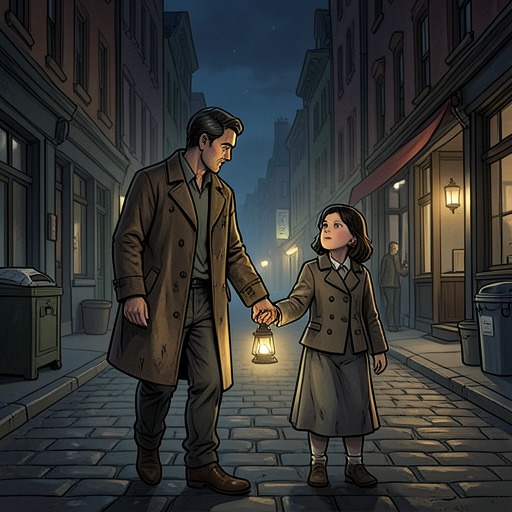
Daniel comes to her with keys and haste. He pulls open the low drawers and jingles rings of keys while Marie-Laure begins to tell him what she has heard. He cuts the exchange short and tells her to hurry. Though it is the middle of June, he buttons her into her winter overcoat before they go downstairs. On the rue des Patriarches, she hears distant stamping that seems to suggest thousands of people on the move. Her cane is telescoped in one fist and her other hand rests on her father’s rucksack; the journey already feels disconnected from logic, like a nightmare.
From the station to the open road
Daniel tells Marie-Laure that the museum director has arranged tickets and that the train will be cooler. But reaching the railway means passing beyond the familiar geography represented by her father’s model. She follows his directions—right, left, then long stretches of paving—and gradually realizes that they are on streets she has never traveled, outside the model’s boundaries. When they reach a crowd dense enough for her to feel its heat, she asks whether they can go in. The crush of people makes the intended passage to safety feel uncertain before the pair even reaches the platform.
At Gare Saint-Lazare, they are amid another throng. Voices echo against a high wall, wet clothes crowd the air, and someone calls names through a bullhorn. Marie-Laure asks where they are; Daniel identifies the station. A baby cries, she smells urine, and she asks whether Germans are there. The brief questions register what the crowd makes difficult: locating herself, understanding the danger, and knowing whether the journey can proceed. The station is not a clear route out of the city but a packed, noisy space in which the promised train offers no immediate escape.
By one in the morning, the gendarmes have lost control of the gates, and no trains have arrived or departed for more than four hours. Marie-Laure sleeps on Daniel’s shoulder. He hears no whistles or rattling couplings and decides at dawn that they will have to continue on foot. Their change of plan is forced by the paralysis of transport, not presented as a chosen walk. Paris thins into low houses, separate shops, and strands of trees as they make their way west.
The exodus on foot
Near Vaucresson, about ten miles west of their apartment, they pick their way through deadlocked traffic on a new motorway. The procession is a cross-section of flight: cars without gasoline, vehicles with wooden axles, furniture strapped to roofs, farm animals crowded onto trailers or walking beside them. A woman bicycles in costume necklaces; another group pushes baby carriages loaded with china, birdcages, and crystalware. A man towing a leather armchair and a black kitten moves no faster than a tuxedoed man pleading for people to let him through. The objects people carry make the exodus at once material and intimate: households try to move themselves whole, but the jam reduces every traveler to the pace of the crowd.
Marie-Laure stays beside her father, cane in hand. Questions turn continually through her mind: how far they have to go, whether there is food, who has fuel. She hears husbands shouting at wives and learns that a child has been run over by a truck farther along the road. In the afternoon, three airplanes race past low and loud. People crouch where they are, scream, scramble into the ditch, or press their faces into the weeds. The danger interrupts the march without stopping the mass movement away from Paris; fear becomes another condition the travelers must negotiate on foot.
By dusk, Daniel and Marie-Laure are west of Versailles. Her heels are bleeding, her stockings torn, and she stumbles every hundred steps. When she says she cannot walk farther, Daniel carries her uphill through mustard flowers to a field a few hundred yards from a small farmhouse. The field has been mown only halfway, with cut hay left unraked and unbaled, an unfinished task that echoes the interrupted departures around them. Daniel takes bread and links of white sausage from his rucksack, and they eat quietly. He lifts her feet into his lap while, to the east, traffic remains visible as a gray line along the road and automobile horns sound in the gloaming.
Arrest and interruption
The escape does not deliver Daniel safely onward. Outside Vitré, hours from Paris, two policemen in plain clothes bundle him off a train while a dozen passengers watch. French interrogators question him in a van and then in an ice-cold mezzanine office; an hour later, German interrogators take over. They display his notebook and tool case, count seven skeleton keys on his ring, and demand to know what the keys and tiny files and saws are for. Daniel explains that the architectural measurements in his notebook are for a model for his daughter and that the keys belong to the museum where he works. The ordinary tools of a locksmith and a father’s craft are treated as possible evidence of conspiracy.
The authorities move him to a cell and question him again the next morning. They appear to suspect him of plotting to destroy the Château de Saint-Malo, though the basis for the accusation is unclear; their French is barely adequate, and they seem more invested in asking questions than considering his answers. They refuse him paper, linens, and access to a telephone. Two days after the arrest, he is driven to a holding pen outside Strasbourg, where roughly thirty other detainees, mostly French but also including Belgians and others, sleep on straw over frozen mud. Daniel watches uniformed schoolgirls pass in double file through the fence slats and hears rumors that the prisoners will be in Germany only for a few months. The flight that began as an effort to escape danger thus becomes a forced passage into detention, with Daniel’s whereabouts and fate no longer under his daughter’s control.