Marie-Laure’s blindness and sensory adaptation
All the Light We Cannot SeeMarie-Laure LeBlanc’s blindness is both a condition of daily life and a way of perceiving the world: streets, shorelines, and written orders reach her through touch, sound, and other people’s actions. Her experiences show the difference between her sensory adaptations and the dangers and exclusions created by the world around her.
Perception and Sensory Knowledge
In occupied Saint-Malo, Marie-Laure LeBlanc passes long hours in Etienne LeBlanc’s study, running her fingers over his seashells and arranging them by size, species, and morphology. She checks and checks again to make sure none has been misplaced. The careful ordering gives her a concrete way to attend to distinctions through touch while the city outside becomes increasingly constrained.
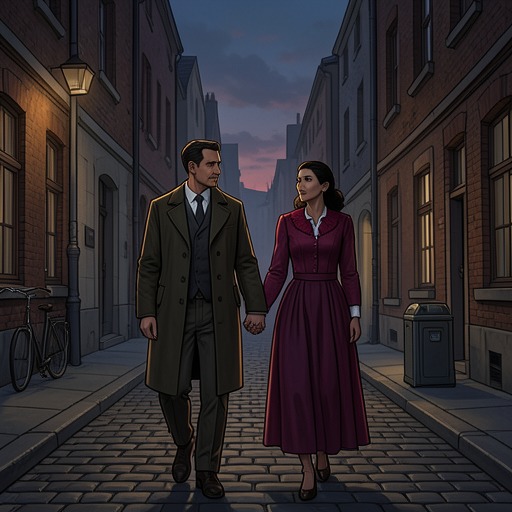
When Madame Manec leads her out through the streets, the cane’s tip catches and vibrates against the irregular cobbles. Rain beads on her scarf, and sound ricochets between the high houses; the familiar city feels like a maze. The scene makes navigation a physical exchange with the environment: surfaces, echoes, and turns supply information as she moves through a place she cannot see.
At the beach, that exchange changes scale. Marie-Laure LeBlanc walks from cold pebbles and crackling weeds onto wet sand, which feels to her like cold silk. She bends to explore shells, barnacles, and strands of wrack with her fingers. As she follows the tide line, the months-old knot inside her begins to loosen. She imagines the coastline and walled city as small as her father’s model, while recognizing that the world beyond the model is more compelling than what it contains. The grains of sand grinding in her fists and the gulls overhead make the shore present through touch and sound; then her father picks her up and spins her three times.
Protection, Fear, and Restricted Movement
Blindness also makes Marie-Laure LeBlanc the focus of other people’s fears. She wants to go out for half an hour on her father’s arm, but he refuses. In the background of that refusal is a remembered warning: “They’ll probably take the blind girls before they take the gimps.” The fear belongs to a world in which vulnerable people may be targeted, but it also narrows her freedom before any immediate danger appears. Madame Manec eventually takes her outside despite the sense of peril that has kept her indoors.
The occupation’s rules reach her through intermediaries as well. When the authorities order residents to surrender their radio receivers at 27 rue de Chartres by noon the following day, Marie-Laure LeBlanc has to badger her father three times before he reads the notice aloud. Anyone who fails to obey is threatened with arrest as a saboteur. The episode makes access to official information part of her everyday circumstances: the order is written, but she depends on someone else to voice it.
Family Separation and Wartime Vulnerability
The arrest of Daniel LeBlanc intensifies the danger of that dependence. Seized outside Vitré while traveling toward Paris, he is questioned by French and then German interrogators, who examine his architectural notebook, tool case, and ring of seven skeleton keys. He explains that he is making a model for his daughter and that the keys belong to the museum where he works. After the Germans continue questioning him and deny him access to paper, linens, and a telephone, he is transferred to a holding pen near Strasbourg. During his confinement, he imagines kissing Marie-Laure LeBlanc once on each eye while she sleeps. The image keeps their bond present across the separation, even as his arrest removes the parent who has been reading official notices to her.
Later, amid evacuation measures in Saint-Malo, Monsieur Levitte tells her that the city gates are locked and that men aged sixteen to sixty are being detained and sent to Fort National. Marie-Laure LeBlanc does not reply. The scene leaves her receiving news of a sweeping restriction through spoken words while the street outside sounds calm. Her blindness is not the cause of the roundup, but it shapes how this wartime order reaches her.
Narrative Significance
The novel renders blindness through specific acts rather than treating it only as an abstract symbol: a cane testing cobblestones, fingertips sorting shells, and hands exploring wet sand. Marie-Laure LeBlanc’s perceptions are precise and active, while the obstacles she encounters also arise from inaccessible notices, fear-driven confinement, and the removal of her father. Her movement from the house to the beach is therefore more than a change of setting: it shows her bodily knowledge expanding into a world that protective caution had kept at a distance.