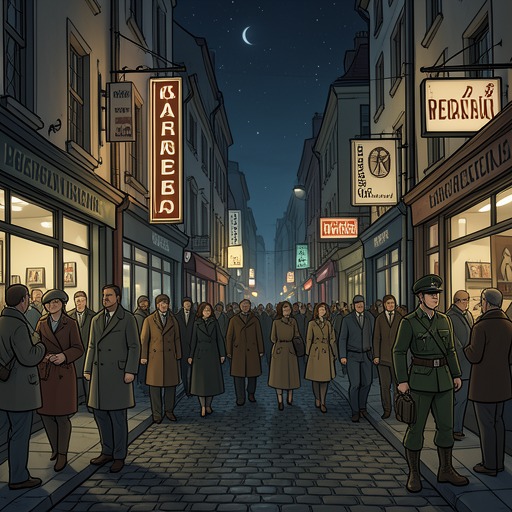
Order to detain Saint-Malo’s men
All the Light We Cannot SeeThe Order to detain Saint-Malo’s men turns the threat of mass internment into a mechanism of occupation: men considered old enough to fight are to be gathered and confined at Fort National, while locked gates and confiscated papers restrict movement and recourse. The account first gives the measure as an imminent danger, then describes its enforcement and the consequences for Etienne LeBlanc, who is unable to leave the fort to reach his niece.
Background and Announced Scope
As the danger to Saint-Malo grows, a resistance-related warning links the planned internment to the presence of men who might take part in resistance. The warning says that men between eighteen and sixty may be imprisoned at Fort National the following day, and stresses the urgency of supplying precise locations for the guns because doing so might save lives. Internment is thus presented not as an isolated administrative measure but as part of the immediate danger facing the city and those trying to protect it.
A later account describes evacuation orders and locked city gates, alongside the detention of every man between sixteen and sixty. The change in the stated lower age—from eighteen in the earlier warning to sixteen in the later report—shows the measure as it is relayed at different moments, rather than as a single, consistently stated rule. The reported procedure is specific: men are to assemble at the tower of the château and then be marched to Fort National at low tide.
Enforcement and Confinement
The order’s practical force lies in the combination of gathering, transport, and confinement. Men are called to a designated point in the city before being taken across to the fort, while the locked gates prevent ordinary departure. The report that authorities will check everyone’s papers makes documentation another instrument of control: a man’s ability to establish his status does not ensure that he can avoid detention.
Etienne LeBlanc’s experience at the fort gives the policy a personal consequence. He pleads with his jailers, the fort’s guardian, and fellow prisoners to let him reach his blind great-niece, who is alone. He says he is sixty-three, not sixty, disputes the confiscation of his papers, and insists that he is not a terrorist. His attempts to explain himself in German do not secure his release; the officer in charge does not help him. The scene shows how the order’s broad age classification and the loss of access to papers leave little room for an individual claim to change what happens.
Consequences and Significance
The order separates Etienne from the niece he is trying to protect at the same time that Saint-Malo is under immediate threat. His appeal makes clear that detention is not only a restriction on the men gathered at the château: it also prevents people outside the fort from reaching relatives who depend on them. The reported threat of imprisonment, the locked gates, and Etienne’s unsuccessful plea form a progression from warning to confinement and its human cost.
The episode distinguishes the language of procedure from the experience of compulsion. Authorities specify ages, papers, an assembly point, and the low-tide journey to Fort National, yet Etienne’s appeal over his age and confiscated documents receives no effective hearing. In the narrative, the internment order makes occupation legible as an administrative process while showing how that process can deny people both freedom of movement and the means to respond to an emergency.