The Siege and Liberation of Saint-Malo
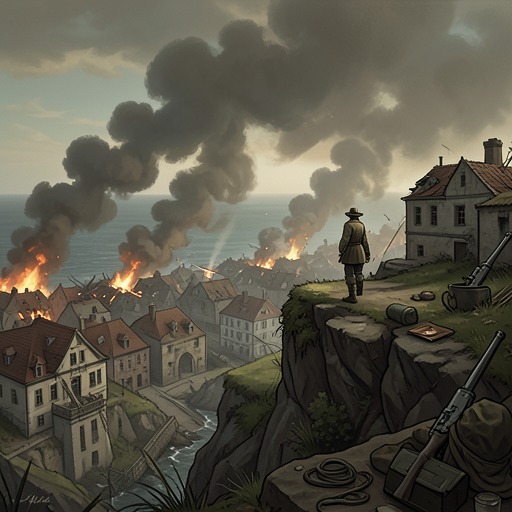
All the Light We Cannot SeeThe Siege and Liberation of Saint-Malo is the August 1944 crisis in which occupation authorities tightened their control of the old city, bombardment drove residents and soldiers into shelter, and American forces ultimately freed prisoners and ended the siege. Its course is marked not by a single decisive assault but by successive restrictions, military danger, and the slow unravelling of German control.
Occupation Controls and the Closing City
The siege takes place against a background of rules that made ordinary life subject to military authority. An earlier order required residents to surrender their radio receivers at 27 rue de Chartres by the following noon, threatening arrest as saboteurs for noncompliance. The demand made possession of a household device a matter of state enforcement, and it belongs to the same pattern of occupation measures that narrowed the population’s freedom of movement.
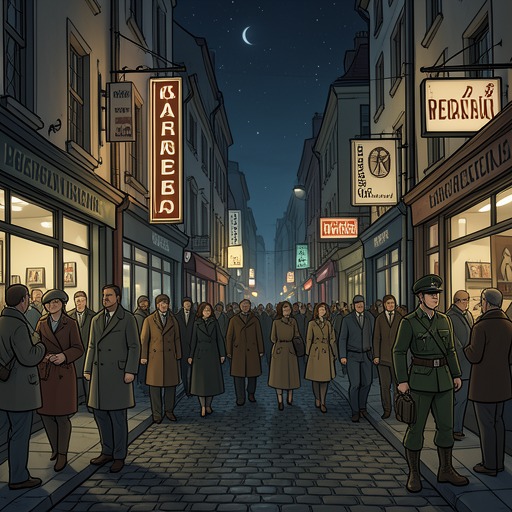
As the crisis escalates, the garrison commander posts new orders on doors, market stalls, and lampposts: no one is to leave the old city, and no one may walk in its streets without special authority. The posted notices turn the city itself into a regulated space. On 7 August 1944, residents are told that every man between sixteen and sixty is to be detained, assembled at the tower of the château, and marched at low tide to Fort National. The order identifies its targets by age and sex and assigns them a route and destination; the men’s removal is presented as an administrative procedure, though its effect is to place them in military custody.
The occupation’s pressure also appears in the treatment of individuals caught in its enforcement machinery. Daniel LeBlanc is seized outside Vitré while traveling toward Paris, bundled from a train by plainclothes policemen as passengers watch. French interrogators question him first, then German interrogators take over. They examine his notebook, tool case, seven skeleton keys, tiny files, saws, and architectural measurements, suspecting him of a plan to destroy the Château de Saint-Malo. The following morning, a second interrogation offers little explanation: the Germans deny him paper, linens, and telephone access, and appear more interested in their questions than his answers. His arrest is not itself the siege’s decisive military action, but it shows how suspicion and detention precede the more collective restrictions imposed on the city.
The Garrison and the Civilians
Military routine continues inside the occupied city even as civilian movement is constrained. Before dark, Austrian soldiers eat pork kidneys and whole tomatoes from hotel china bearing a silver bee on each plate. They sit on sandbags or ammunition boxes; Bernd falls asleep over his bowl, while Frank Volkheimer discusses the cellar radio with a lieutenant. Around them, the soldiers eat beneath their steel helmets. The scene sets an ordinary meal against the improvised military setting, and the men’s settled routine contrasts with the uncertainty imposed on the city beyond their perimeter.
The rules do not remove civilian vulnerability; they organize it. Men are directed toward Fort National, and residents are forbidden to leave the old city or walk its streets without permission. These orders make staying put compulsory at the same time that the military situation makes the city increasingly dangerous. The siege is therefore experienced both as a battle around fortified positions and as a narrowing of the choices available to those who remain within them.
Fort National and the Bombardment
On 12 August, the narrative places Etienne LeBlanc at Fort National. A stray American shell strikes the fort. The wounded call out from the munitions cellar, the dead are buried beneath rocks above the tide line, and Etienne stops talking. The account connects the attack not only to the fort’s military exposure but also to a lasting change in Etienne. The shell’s arrival is described as stray, a reminder that the effects of bombardment do not follow a neat distinction between intended targets and those caught nearby.
Elsewhere in the city, the air attack drives Werner Pfennig and Marie-Laure LeBlanc into the cellar of the house. Dozens of airplanes arrive; Werner shivers uncontrollably, and Marie-Laure leads him to the first floor, where ash and soot cover the furnishings. He pushes overturned furniture aside and opens the cellar door. They climb down as thirty bombers release their payloads overhead. From below, they feel the bedrock shake and hear detonations across the river. The scene gives the bombardment a domestic scale: the route to shelter passes through a damaged, ash-covered home, while the cellar offers protection without removing the force of the attack.
A cease-fire changes the immediate conditions in that cellar. Gritty summer light falls through the open trapdoor, and the guns are no longer firing. Werner watches Marie-Laure as she sleeps. The pause is brief in the account, but it marks a sharp contrast with the preceding explosions: the same underground shelter that had contained them during the attack now holds them in a moment of quiet, without making the wider outcome certain.
Liberation and Aftermath
That evening, Madame Ruelle finds Marie-Laure in a requisitioned school and holds her hand. Civil-affairs personnel have stacks of confiscated German chocolate in rectangular cartons; Marie-Laure and Madame Ruelle eat freely from them. The encounter brings a private reunion into the unsettled aftermath, with seized supplies serving as a small, concrete sign that control of the city is changing.
The next morning, American forces take the château and the last anti-aircraft battery and free the prisoners held at Fort National. Madame Ruelle pulls Etienne out of the processing queue, and he embraces Marie-Laure. Yet the siege does not end at once: a colonel in an underground stronghold across the river holds out for three more days. An American airplane called Lightning drops a tank of napalm through an air vent, and a white sheet is raised on a pole five minutes later. The account presents the strike as exceptionally unlikely, but makes the sequence clear: the remaining position capitulates, and the siege of Saint-Malo is over.
Afterward, sweep platoons remove as many incendiary devices as they can, army photographers enter with tripods, and a handful of civilians return from farms, fields, and cellars to move through the ruined streets. On 25 August, Madame Ruelle is permitted to return to check the bakery. Etienne and Marie-Laure travel in the opposite direction, leaving the city rather than joining those who return. The ending therefore pairs the formal end of the siege with two different movements through its aftermath: the cautious re-entry of residents and the departure of people whose lives have been altered by the fighting and occupation.