Von Rumpel returns to ruined Saint-Malo
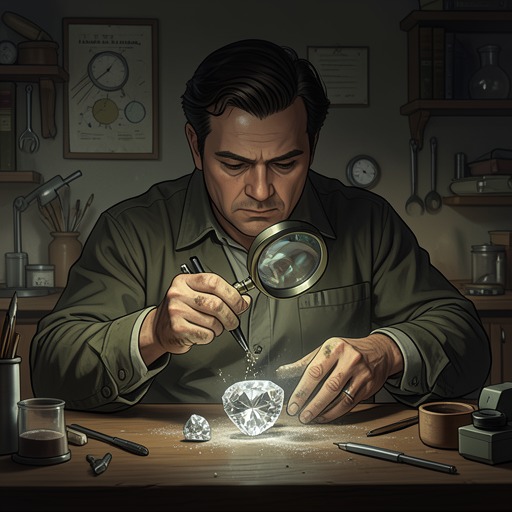
All the Light We Cannot SeeReinhold von Rumpel returns to ruined Saint-Malo after the shelling has paused, making his way to Number 4 rue Vauborel in pursuit of the diamond. The city around him has been violently broken, but the house he seeks remains nearly unscathed. That contrast gives the journey its tension: amid public devastation, von Rumpel narrows his attention to one private object, and to the risks he is willing to take for it.
The Pause After the Bombardment
The shelling has resumed sporadically after breakfast and, around six in the evening, has ceased. Its silence is not complete: somewhere a machine gun fires, its sound likened to a chain of beads passing through fingers. Von Rumpel carries a canteen, several ampules of morphine, and his field pistol as he crosses the seawall and causeway toward the smoldering bulk of Saint-Malo. In the harbor, the jetty has been shattered in several places, and a fishing boat drifts half submerged, stern up.
The city’s destruction is not presented as a single distant panorama. On the rue de Dinan, heaps of stone blocks, sacks, shutters, branches, iron grillework, and chimney pots have filled the street. Flower boxes are smashed; window frames are charred; glass lies broken. Some buildings still smoke. Von Rumpel presses a damp handkerchief over his mouth and nose, yet must stop repeatedly to catch his breath. The physical damage constrains his progress as much as it records what the bombardment has done.
A City of Dislocated Remnants
The route through the old city passes objects stripped of their ordinary use and setting: a dead horse beginning to bloat, a chair upholstered in striped green velvet, and the torn canopy of a brasserie. Curtains swing from broken windows. Swallows search for lost nests, while a distant sound might be a person screaming or might be the wind. Shop signs have been blasted from their brackets, leaving their supports hanging. These details place fragments of ordinary urban life among the ruins without suggesting that the city has returned to normal.
A schnauzer follows von Rumpel, whining. No one calls from a window to warn him about mines, and in four blocks he sees only one person: a dazed woman standing outside what had been the movie-house, holding a dustpan. Through the open door, rows of seats have collapsed under slabs of ceiling, but the screen remains unstained by smoke. The woman tells him, “Show’s not till eight,” an incongruously matter-of-fact remark amid the wreckage. Her words preserve the trace of a public routine even as the ruined auditorium shows how thoroughly that routine has been interrupted.
The Search at Number 4
On rue Vauborel, roof slates have slid into the street and detonated; scraps of burned paper drift overhead. Von Rumpel continues toward the house because he believes the diamond will still be there, imagining that he will pluck it from the ashes like a warm egg. His confidence is directed not toward the safety of the city or its residents but toward the survival of the object he wants.
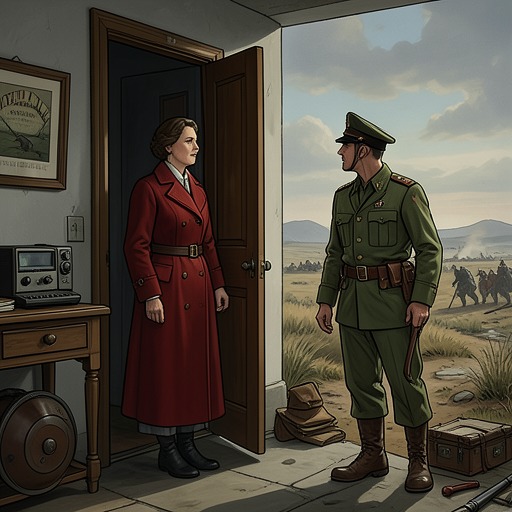
The tall, slender house is nearly unscathed. Eleven windows face the street, most without glass; the frames are blue, and the granite is gray and tan. Four of the six flower boxes still hang from the façade. On the front door, the mandated list of occupants remains in place, naming M. Etienne LeBlanc, aged sixty-three, and Mlle Marie-Laure LeBlanc, aged sixteen. In a street of blasted roofs and burned paper, the list is a surviving record of who is supposed to be inside. Its presence connects von Rumpel’s search for the diamond to the people whose address he has reached, without implying that he has yet found them.
Risk and Suspense
No one stops von Rumpel, and no shells whistle in as he approaches. The temporary lull makes the route seem passable, even safe; the narration compares such shelter to the eye of a hurricane. But it is only a pause within continuing danger, not evidence that the danger has ended. The house’s relative survival likewise offers no guarantee about what waits inside.
The scene’s force comes from the mismatch between scale and attention. Saint-Malo is a landscape of shattered infrastructure and displaced domestic things, while von Rumpel measures the journey by the possibility of recovering a single diamond. He accepts the dangers he encounters both for the Reich and for himself. The ruined streets make that double allegiance stark: public catastrophe surrounds him, but his purpose remains personal and specific.