Werner conceals the source of the Saint-Malo broadcast
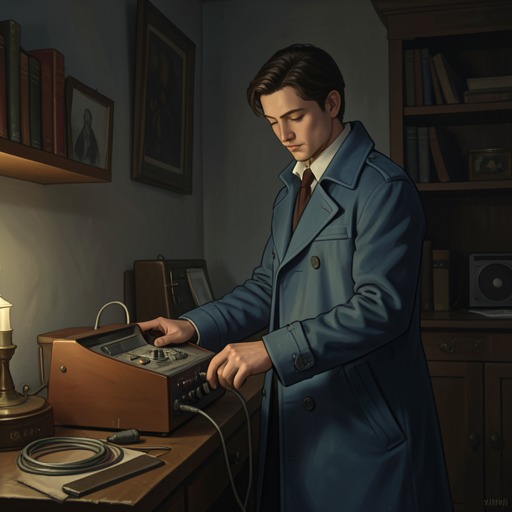
All the Light We Cannot SeeWerner conceals the source of the Saint-Malo broadcast at the moment his military search brings him back into contact with the radio world of his childhood. Hearing the French transmission and the familiar piano music, he recognizes the broadcaster but tells Frank Volkheimer that he has heard nothing. The lie protects the secret for a time; the scene makes its cost visible in Werner’s recollection of earlier choices and in his joy at hearing the signal again.
The patrol and the signal
The scene unfolds at night in the old city of Saint-Malo, where Werner and Volkheimer’s crew are searching for a transmitter. They work a section of the city tucked against the southern ramparts. Rain falls so lightly that it seems almost indistinguishable from fog. Werner sits in the back of an Opel while Volkheimer dozes on the bench behind him; Walter Bernd is supposed to monitor a transceiver from the parapet, but has not keyed his handset for hours. In the vehicle, the amber filament of Werner’s signal meter is the only light.
At first the spectrum holds only static. Then a burst parts it, and fragments of a Breton-accented voice come through, including the announcement of a Thursday broadcast at 2300. Werner recognizes the voice: its sound and the quality of the transmission match the French broadcaster he used to hear. The recognition is immediate, and the familiar music that follows confirms the force of the return. A piano plays three notes and then two; as the melody develops, Werner remembers listening with six-year-old Jutta, with Frau Elena kneading bread behind them and a crystal radio in his lap. The signal does more than identify a transmitter. For a moment it restores an earlier life, before he felt its bonds had been severed.
The choice to lie
Werner waits for Bernd to report hearing the broadcast, but nobody responds. Volkheimer remains asleep, and the men visible through the partition do not move. The music ends; static returns. Werner’s private recognition has not become shared knowledge. He could disclose what he heard, but instead removes his headset, slips past Volkheimer, and opens the back door.
Volkheimer opens one eye and asks whether there is nothing. Werner answers that there is nothing. The answer is a deliberate concealment, not a failure to identify the signal: the narration has already established that he recognized both the broadcaster and the music. Later, the account states the contradiction plainly—Werner heard the voice the crew was seeking, and lied. He understands that his concealment may put men in danger, yet remembering the broadcast makes him tremble with joy. The scene holds those responses together rather than resolving one into the other: the transmission gives him an intimate connection to the past, while his silence implicates him in the military operation against it.
Memory, guilt, and repetition
The broadcast also releases a reckoning with Werner’s previous conduct. In the rain beside the vehicle, he remembers Frederick’s insistence that they did not own their lives or have choices. Werner sees the claim as an excuse he himself had used: he watched Frederick tip the pail of water at his feet and fail to intervene, then watched the consequences fall. He also remembers Volkheimer moving from house to house in a recurring nightmare. These memories place the lie in a longer pattern. Werner’s present silence is a choice made under military pressure, but the scene refuses to let that pressure erase his responsibility for choosing it.
After answering Volkheimer, Werner looks toward the stone houses: their windows are dark, no lamps or antennas are visible, and rain that falls almost soundlessly seems to roar to him. This contrast between an invisible signal and a seemingly silent city gives the concealment a physical setting. The broadcast has reached him, but its source and the people behind it remain hidden from the patrol. His short denial closes the exchange without ending his awareness of what he has heard.
The antenna and the house
The search continues amid the wider war. In Normandy, beaches consume soldiers and bombers pulverize towns, while Saint-Malo’s dune grass grows and German sailors drill in the harbor. At the Hotel of Bees anti-aircraft strongpoint, an Austrian anti-aircraft lieutenant installs eight men; the Austrians use a crane to lower an 88-millimeter cannon onto a bastion on the ramparts. Against this military activity, the task of locating a small radio antenna seems modest, but the transmitter remains the object of the patrol’s search.
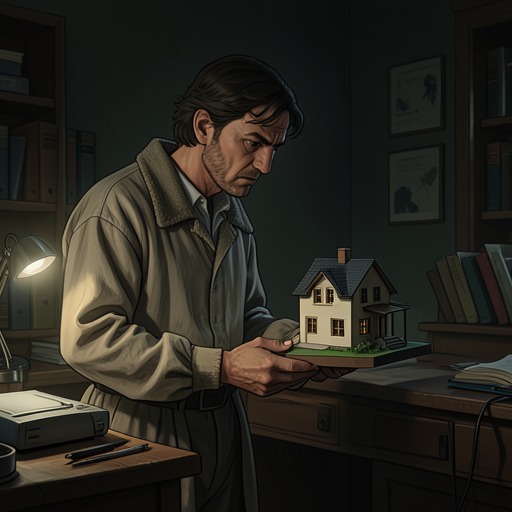
Werner suspects the broadcaster may be using one of the city’s many chimneys. He walks the rue des Forgeurs and rue de Dinan, studying shutters and gutter lines for cables fixed to brickwork. At 2300, close to where the Opel is parked, he sees an antenna rise beside a chimney. It is about twelve meters high and unfolds into a simple T, nearly invisible from street level. The house is tall and narrow, with eleven windows, orange lichen, and moss at its foundation: Number 4 rue Vauborel. Werner returns quickly to the hotel, without disclosing what the discovery means.
The location gives the earlier lie a sharper consequence: Werner has not merely kept a moving signal from his crew; he has found the fixed place from which the broadcasts come. The episode therefore turns recognition into a test of allegiance. The music momentarily reconnects him with Jutta and Frau Elena, while the search and his false answer bind him to a force that would silence the transmission. Its tension lies in that unresolved interval between hearing, knowing, and deciding what to reveal.