Austrian Ministry of the Interior
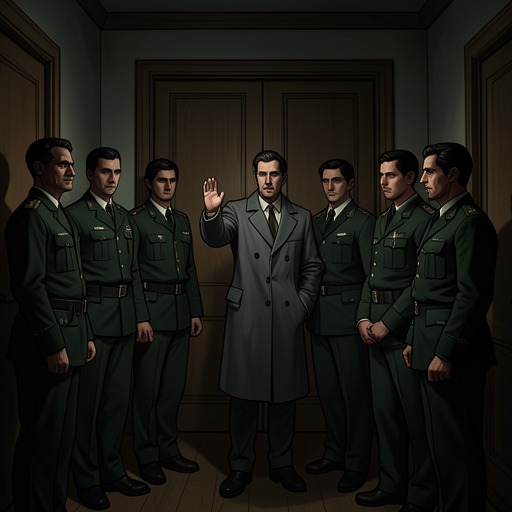
All the Old KnivesThe Austrian Interior Ministry is a key Austrian government counterpart during the hijacking of Royal Jordanian Flight 127, but the crisis exposes how necessary cooperation can be obstructed by the Agency’s suspicion of its foreign partners. The ministry transmits the hijackers’ demands and is positioned to act on the ground; the American station debates whether to trust it with intelligence and how far to advise an assault before the deadline. Its role is therefore defined less by independent action on the page than by the urgent decisions its proximity and perceived unreliability create.
Role and Operational Context
The ministry enters the crisis against a warning that an airline-related attack may occur within seventy-two hours on a flight headed to Austria or Germany. That warning comes from TRIPWIRE, a source reporting to Damascus station, and identifies Aslim Taslam as the group involved. The Agency’s background assessment describes Aslim Taslam as a breakaway from Somalia’s Al-Shabaab that received financial and logistical help from Ansar al-Islam. This context makes an Austrian government partner essential to handling a threat on Austrian soil, even though the warning itself reaches the Vienna station through American intelligence channels.
The anticipated target becomes Royal Jordanian Flight 127, which departs Amman and lands in Vienna carrying 120 passengers and crew. The hijackers reveal their affiliation in calls to the control tower and ORF, Austria’s national radio and television outlet. The Austrian account identifies four attackers; after the aircraft lands, Suleiman Wahed shoots stewardess Raniyah Haddadin when she tells him to sit down. These events establish the ministry’s operational setting: an unfolding hostage crisis in which the Austrian authorities must weigh the captives’ safety, the hijackers’ demands, and the risks of a forced entry.
Information and Negotiating Stakes
A briefing sent by the ministry gives the station the hijackers’ terms: the release of five prisoners, two held in Austria and three in Germany, within forty-eight hours. The same briefing reports that seventeen Americans are aboard, though that figure is still being verified. The demands thus cross national boundaries, and the ministry’s message gives the American officers a concise account of the deadline and the prisoners whose release is sought.
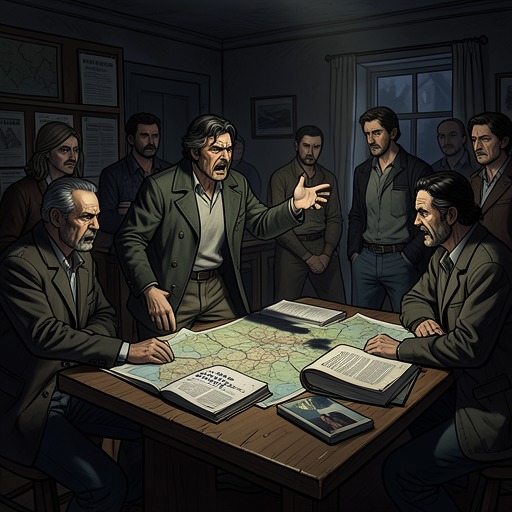
The station’s discussion also turns on the political difficulty of compliance. Vick considers whether the German and Austrian governments might yield, noting the number of German passengers and the pressure facing Austrian president Heinz Fischer over immigration. The debate frames the ministry’s decisions as part of a wider political crisis, not simply a technical negotiation: conceding could invite domestic criticism, while refusing could leave the passengers exposed to the hijackers’ threat to kill them.
Cooperation and Distrust
The relationship between the station and the ministry is burdened by an earlier false lead. In 2004, TRIPWIRE reported an al-Qaeda cell in Salzburg, prompting the station to spend considerable time with the Interior Ministry trying to persuade it to raid a warehouse. The warehouse was empty. Bill remembers that failure when the new warning arrives and estimates an eighty-percent chance that TRIPWIRE is again telling a fabricated story. His skepticism reflects the cost of acting on unverified intelligence and the damage a bad source can do to cooperation with Austrian officials.
During the current crisis, the Agency’s suspicion becomes an operational obstacle in its own right. The Americans have received a text from Ahmed Najjar, a courier aboard the aircraft, describing the captives’ positions, dwindling water, two critically injured women, and a possible assault through the rear landing gear. Yet the Austrians have not been told about Ahmed. When Celia suggests asking them to check a matter on the ground, Bill explains that the station is keeping the courier’s presence secret; Vick adds that they are unsure they can trust the ministry because its personnel have not been vetted. The disagreement makes the division plain: the station possesses information that could assist the response but withholds it from the government best placed to act locally.
Celia argues that the Americans have taken the operation as far as they can alone and must begin trusting the Austrians if they want to save anyone. Bill supports her, while Vick asks for the room’s opinions rather than immediately endorsing the change. The exchange presents cooperation as a consequential choice under pressure: secrecy protects the source and the Agency, but it may also leave Austrian officials working without intelligence that could affect the outcome.
Rescue Decisions and Public Exposure
The station considers whether the aircraft must be stormed before the forty-eight-hour deadline if Germany and Austria refuse the demands. Owen Lassiter argues that the passengers will otherwise die and asks how such an assault could be carried out. Vick draws a boundary around the American role: the station will advise the Austrians, not storm the plane itself. The ministry and Austrian authorities are thus the prospective actors on the ground, while the Americans debate what advice to give and what information to share.
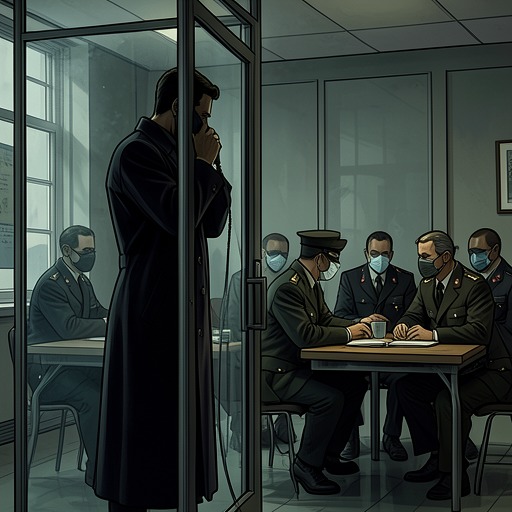
Celia also points out that ORF’s television cameras are watching from the perimeter. Because the hijackers contacted the media deliberately, the cameras make the crisis visible beyond the negotiation room: ordering reporters away could itself prompt speculation that the government is preparing an assault. The ministry’s response therefore exists within a public scene as well as a security operation, where attempts to control information may draw attention to the very action they are meant to conceal. Across the crisis, the ministry’s central significance lies in this dependence and hesitation: the Americans need Austrian capacity, but their institutional instinct to withhold and distrust threatens the cooperation on which a rescue would depend.