Celia’s alienation after leaving the intelligence world
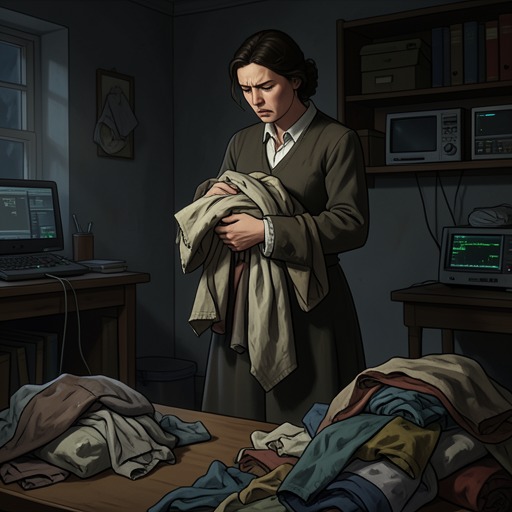
All the Old KnivesCelia Favreau’s alienation after leaving the intelligence world is the gap between the life she deliberately chose and the life she initially experiences. She moves to Carmel-by-the-Sea to raise a family and escape the Central Intelligence Agency, but the promised calm gives way to disconnection and unhappiness. Her account makes the change more complicated than a simple rejection of her former work: she sees family as the condition of feeling whole, yet describes intelligence work as an addiction whose excitement had kept her from recognizing that need.
Building a Life After Vienna
After Celia Favreau’s move from Vienna, her new life takes shape through family, work, and carefully chosen routines. Henry Pelham’s account identifies Drew Favreau, their children Evan Favreau and Ginny Favreau, and the family’s home on Vista Street. Celia Favreau takes photographs for the Carmel Pine Cone and volunteers at the Sunset Center, where traveling musicians perform for retirees. By the time she is pregnant for a second time, she has also taken a part-time job at the Stevenson School, where Evan Favreau attends. The work is modest beside her former secret career, but it is not aimless: Henry Pelham reads it as evidence that she knows how to lay groundwork for her own future or her child’s.
Her connections to the former life weaken in parallel with these new commitments. For six months after the move, Celia Favreau maintains a Facebook page featuring beaches, quaint restaurants, and upscale parties; Henry Pelham says the images feed jealousy in Vienna and that her fate becomes a topic of discussion at the embassy. Then she shuts the page down. Old friends receive increasingly delayed email replies, often beginning with an apology that she has been busy. A friend, Sarah, complains that Celia Favreau seems too occupied to answer even a brief check-in. Henry Pelham doubts that her schedule alone explains the silence. He interprets it as a decision to leave the old existence behind.
That withdrawal becomes a project of self-definition. Henry Pelham describes a contrast between Celia 1, the woman shaped by Vienna, and Celia 2, who is trying to shed the previous self’s baggage. Her weekly appointments with therapist Leon Sachs are part of this effort; Henry Pelham cannot access the therapist’s notes, but believes she is using therapy to prevent European fears from entering her American life. The distinction suggests both agency and strain: Celia Favreau is not merely starting over but actively trying to control what the past is allowed to mean in her new surroundings.
Family as Destination, Intelligence as Addiction
Celia Favreau later explains that raising children in America had long been her destination, not simply a convenient reason for leaving the Agency. Her parents, before they died, taught her to value family, and she says that without its security she feels only partly a person. In retrospect, she believes the deeper question is why she did not make this choice ten years earlier. This account answers the suspicion that she left on a whim or married Drew Favreau for money by presenting family life as an old aspiration that her career had postponed.
She also describes why it was postponed. The years with the Agency had the force of an addiction: secret knowledge and the thrill of the next experience absorbed her attention, leaving little room to consider what would make her feel whole. Leaving the work therefore does not instantly undo its hold. The former career remains a measure against which the quieter life is felt, even as Celia Favreau insists that family, rather than professional excitement, is what she needs. Her explanation turns departure into a delayed choice, not a clean break from the desires and habits formed in the job.
Disappointment, Treatment, and Disconnection
The move also requires Celia Favreau to readjust to a country she says she hardly knows anymore. She tells Henry Pelham that marriage and relocation have turned her life upside down, and recalls visiting her primary doctor with a sensitive stomach after completely changing her diet. When the doctor asks whether she has been upset, she answers that she has; he writes a prescription for Xanax. Her anecdote becomes a criticism of what she sees as a culture quick to medicate distress, with mood-altering drugs handed out casually.
Yet she does not present the medication as useless. She says Xanax works, and that she stopped taking it during both pregnancies; those periods, she first calls the worst eighteen months of her life, then acknowledges that she is exaggerating. The qualification matters: her account moves between candid distress and self-aware performance. She describes anxiety and dependence without treating either as the whole truth of her life, and jokes that Americans also use the word love for things they merely like. Her caution to Henry Pelham not to take people at face value gives the story a further edge: even her plainest explanations arrive with a reminder that presentation and feeling may not match.
Celia Favreau later names expectation as the source of her unhappiness in California. She had anticipated relaxation, some luxury, intellectual stimulation, a safe place to raise her children, and, above all, complete escape from the Agency. Instead, after about two weeks, Karl Stein contacts her about Bill Compton. He says Bill is selling secrets to Islamist groups and asks Celia Favreau to return to Vienna, draw Bill out, and entrap him, invoking the lingering significance of the Flughafen for the Austrians. Celia Favreau refuses to overturn her life or Bill Compton’s on a stranger’s speculation; she says she will act on evidence and what she knows. The call makes the old world intrude almost as soon as she has arrived, frustrating the escape she had made central to her hopes.
The Limits of Escape
Celia Favreau’s refusal does not restore the peaceful life she expected. She tells Henry Pelham that the approach soured California for her: the place no longer feels as relaxed or peaceful as she had imagined, and she becomes darker, disconnected, and ghostlike. Although her life is good, she cannot see its goodness while measuring it against the complete escape she had demanded. She interprets her unhappiness not as proof that the family life itself has failed, but as the consequence of expecting a new place to provide everything at once.
Her account points to a change associated with Evan Favreau, but the evidence here stops before explaining it. Celia Favreau says her misery continued even with Xanax, then adds that it lasted until Evan Favreau, asking Henry Pelham whether he knows why. The question marks a turning point without supplying its explanation. What is clear is the pattern that precedes it: the career’s pull, the deliberate construction of a new domestic identity, the fading of old friendships, medical treatment, and the return of Agency business all complicate her attempt to leave the past behind. Her alienation is not simply homesickness or regret; it grows from the collision between a chosen future and the impossible demand that the future erase everything that came before.