Ginny Favreau
All the Old KnivesGinny Favreau, the young daughter of Celia Favreau, is presented through a sharp contrast between the shelter of family life and the violence of the hijacking. Her small gestures and dependence on her mother make the later discovery of her body aboard the plane a particularly intimate consequence of the disaster.
Identity and Introduction
Ginny is still a very young child in the domestic scenes: at one point she is described as not quite two. Her needs are immediate and physical—comfort, sleep, food, and the presence of her mother. The narrative gives her little independent speech or action, but its attention to her face, hair, breathing, and grasping hands makes her presence concrete rather than incidental.
During the hijacking, Ginny is in Celia’s lap when a hijacker shoots a stewardess in front of the passengers. Ginny jerks and begins to cry. Celia turns toward her and Evan Favreau, draws their faces close, and tells them to stay seated and quiet because a dangerous man is on the plane. Ginny and Evan cling to their mother, pulling her closer; Celia understands their movement as an attempt to return to the safety of the womb. She promises that she will protect them, an assurance that reveals both her maternal resolve and the limits the surrounding violence will impose on it.
Family Life
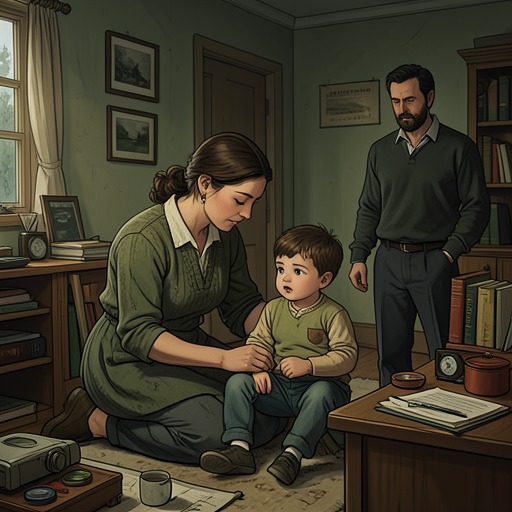
In a separate scene at home, Ginny wakes from a bad dream and calls for her mother. Celia ends a telephone conversation with Bill Compton and goes to her daughter’s room. Ginny is sitting up in a white IKEA bed with raised sides, her hair tangled across her damp face as she breathes in quiet sniffles. The detail of the bed’s protective sides gives the scene a domestic scale: Celia can respond to a child’s frightened waking, even while her own attention has been occupied by a troubling call.
The next morning offers a brief, ordinary milestone. At the breakfast table, Ginny clearly says the numbers one, two, three. Drew Favreau drops the newspaper and urges her to say them again, smiling with delight. Ginny, however, turns back to her bread, her cheeks glazed with peanut butter. The scene gives her a small moment of accomplishment without making her suddenly more articulate or self-aware than the evidence supports; her speech, her family’s excitement, and her immediate return to eating remain in gentle comic balance.
Death and Narrative Significance
The narrative later returns to the airplane’s aftermath. Celia steps over Omar Ali’s corpse and sees six children at the front of the cabin, their pale faces marked by blood from their noses. She runs down the aisle, counting rows, until she reaches row 22. Evan’s sneaker and limp foot protrude into the aisle; Ginny lies curled in the seat above him, in a dark puddle. The scene confirms that both children have died, without giving Ginny a final action or speech.
That discovery reverses the promise Celia made while trying to keep her children calm: she had told Ginny that nothing would happen to her, but could not make the promise true. The narrative’s movement between the children’s small domestic moments and the plane’s aftermath makes Ginny’s vulnerability central to the personal cost of the violence. Her brief first words and her frightened reaching for her mother are not separate from the catastrophe; they are the ordinary life the catastrophe destroys.