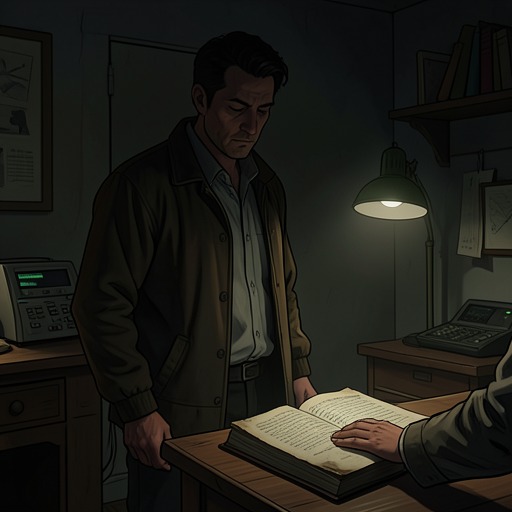
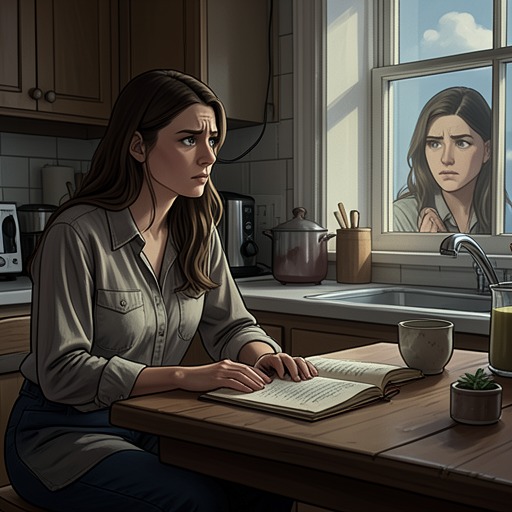
Henry Pelham and Celia Favreau’s romantic relationship
All the Old KnivesHenry Pelham and Celia Favreau’s romantic relationship turns a private hope into a shared life, then breaks when Henry asks to make that life permanent through a home together. Its course is shaped by unequal approaches to intimacy: Henry pursues a future with Celia, while she is drawn both to him and to the danger surrounding his work, and finally recoils when their imagined future becomes an immediate choice.
Beginnings and Uneven Courtship
Celia’s admission that she had become a fan of rave music while in Dublin gives Henry an occasion to take her around Vienna. He brings her to Flex, the Rhiz, and the Pratersauna, relying on mixed drinks and Advil to endure the volume and the underaged crowds. In time he comes to enjoy the music himself. Dancing with Celia feels to him like evidence that Vienna has changed him: he believes he has found a more peaceful place and, for the first time in his memory, is learning to enjoy himself.
Their closeness does not immediately become a settled romance. They sometimes make out behind clubs after drinking, but Celia keeps Henry at arm’s length. He realizes that while she is giving him something of herself, she is giving much more to other men. His response is to learn to set aside jealousy and, in his own account, to learn not to possess a woman. The relationship therefore begins not with mutual certainty but with Henry adapting himself to Celia’s limits and to an intimacy that remains partial.
The transition from friendship to love is difficult for Henry to explain. He imagines that whatever changed happened in Celia’s mind, while a change in their working arrangements gives their time together a new scarcity: she moves to an embassy desk under Bill Compton, and they see each other half as often. Henry is accustomed to longing for her, but he suspects the distance makes Celia more inclined toward him. At a Turkish restaurant in Wieden, she asks him to take her home; only when they reach her apartment does he understand the full import of the request.
A Clandestine Shared Life
The relationship fulfills the hope Henry had formed when he first met Celia in Vick’s office. For more than a year, they make a life together by fitting their hours around the secrecy of work in a foreign country. Henry describes himself as satisfied, a rare condition in his account. Their happiness is real, but it is built within constraints rather than outside them: the time they can share is pieced together under cover of their clandestine lives.
The risks of Henry’s work are part of what draws Celia and part of what makes domestic life difficult to imagine. She enjoys the prospect of being with a field agent who sometimes arrives with bruises he will not explain, or fails to appear because of last-minute matters that may threaten his survival. At the same time, she wonders whether ordinary domesticity would kill what they have. The danger does not remain an abstraction: she imagines enemies learning where she lives and the possibility of sudden departures in the night. Their relationship holds both the excitement of proximity to risk and the vulnerability that such proximity creates.
The Proposal and Its Imagined Future
Henry eventually raises the possibility of moving in together. At the table, he reaches across to hold Celia’s hand and tells her he has been thinking. He offers several arrangements: one of them could move into the other’s home, or they could find somewhere larger in the Innere Stadt, down by the river. His plan is not entirely settled, but he sees few next steps available after the time they have already spent together.
Celia does not agree immediately. She asks to think about it, and Henry says that her caution is exactly what he expected and something he loves about her. Her own assessment is more divided. She does not consider herself careful, and suspects Henry knows that she is thrilled by the danger of his work. She also wonders whether sharing a home would domesticate their relationship, even as the thought of cohabiting, with its risks and possible sudden separations, excites her.
Her mind carries the proposal far beyond the immediate decision. She pictures sharing a mortgage, towels, orange juice, friends, and a Facebook account; vacation photographs from Martinique or Dubrovnik; a ceremony in a chapel; and eventually one or two children. This is a projected future, not a record of what the couple actually does. Its accelerating sequence makes the choice feel enormous to Celia: a practical move threatens to become a commitment extending through marriage, family, and a lifetime. Henry’s proposal is modest in form, but in her imagination it opens onto an entire shared biography.
Withdrawal and Retrospective Account
The imagined future does not become their life together. Henry recalls that the morning after he left, Celia disappeared, ending the relationship just as they had decided to move in together. When the two later revisit this history during an interrogation, Celia objects to bringing their relationship into the questioning. Henry insists that he is going through their history and describes her as having left him.
Celia explains that she got cold feet while standing in Henry’s kitchen as he showered. The prospect of the two of them together, joined at the hip, suddenly felt as if it might last forever, and she panicked. Her explanation identifies the reversal not as the result of an argument in the proposal scene, but as a fear that became overwhelming once the imagined arrangement confronted her in a domestic setting. The kitchen, an ordinary place, makes the future feel immediate rather than hypothetical.
Henry contrasts that retreat with what followed: within seven months Celia had gone to California with Drew Favreau. He challenges the apparent contradiction between being frightened by the idea of sharing an apartment with a man she had known for years and going away with someone she had barely known. Celia confirms that she went with Drew, but the exchange does not resolve the contrast. The relationship’s ending is therefore presented through both Henry’s sense of abandonment and Celia’s account of panic, without either perspective erasing the other.
Significance of the Relationship
The romance is defined by the mismatch between Henry’s wish to convert intimacy into a durable shared life and Celia’s ambivalence about what permanence would demand. She is not simply indifferent to him: the relationship lasts more than a year, and the proposal prompts a detailed vision of a life they might share. Yet her attraction to the danger of his work coexists with fear of its consequences, while the ordinary signs of commitment make the relationship’s future feel like an irreversible enclosure.
The book also sets the couple’s private crisis against the renewed anxieties of 2006. In the two months before the Vienna Airport debacle, news from Moscow revives Henry’s fear and shame about earlier events. Rather than prompting him to reconsider the relationship, these reminders make him more desperate to preserve it. During the Flughafen situation, he asks Celia to move in with him, but later recognizes that it was too little, too late. The proposal thus carries more than domestic hope for Henry: it is an effort to secure their life together at a moment when his wider world is becoming more frightening. Celia’s withdrawal and Henry’s renewed pursuit leave that attempt unresolved, and the relationship ends not in a negotiated future but in separation.