Henry Pelham and Ilyas Shishani’s intelligence relationship
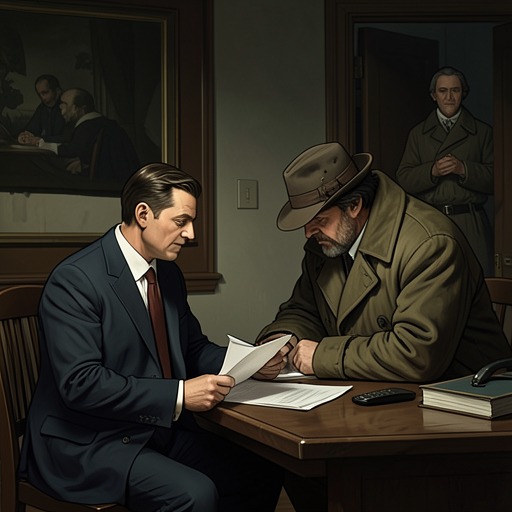
All the Old KnivesHenry Pelham and Ilyas Shishani’s intelligence relationship is defined by a reversal of control: Henry’s service once treated Shishani as a target whose identity could be disclosed, but Shishani later turns Henry into a compelled source. Their connection moves from threat assessment and institutional reporting to a private reckoning in which orders, secrecy, and personal attachment offer no clean defense.
Identification and Operational Context
The relationship enters the immediate operational picture through a warning from Damascus station. A source code-named TRIPWIRE reports that an airline-related event may occur within seventy-two hours on a flight bound for Austria or Germany, and identifies Aslim Taslam as the group involved. The report is urgent but not self-authenticating: Bill Compton recalls that TRIPWIRE had supplied a false lead about an al-Qaeda cell in Salzburg in 2004, wasting time with the Interior Ministry over an empty warehouse. He estimates an eighty-percent chance that the new warning is another fabrication.
A message from Europol changes the weight of that assessment. It reports that Mashood Al-Fakeeh, traveling on a Saudi passport, arrived in Barcelona from Jordan two days earlier. Analysts believe that this identity belongs to Ilyas Shishani, a Chechen radical reported to have joined forces with Ansar al-Islam. The possibility that Shishani is among the operational planners Ansar al-Islam has lent to Aslim Taslam links the suspected individual to the warning, but the evidence remains an analytical inference rather than confirmation that he planned the threatened attack or was TRIPWIRE.
The broader context makes the inference consequential. Aslim Taslam split from Somalia’s Al-Shabaab over an ideological dispute; reports suggested that the dispute concerned the use of drug money to finance operations. The group subsequently approached Ansar al-Islam for support, and Ansar al-Islam shared financial and logistical resources, networks, and operational planners. Langley had watched their growing cooperation with anxiety, while Aslim Taslam was associated with deaths and explosions in Rome, Nairobi, and Mogadishu. Shishani’s suspected position matters because it could connect a person sought by analysts with a network capable of organizing violence across borders.
Intelligence Flow and Its Limits
The threat material shows how information about Shishani moves through several institutions without becoming certainty. Damascus station supplies TRIPWIRE’s warning; Langley forwards it to the Vienna staff; Europol supplies the separate Barcelona arrival report; analysts connect the travel identity to Shishani; and Bill reconsiders the threat when he sees the new message. Each link adds context, but the chain still depends on a source with a record of a false report and on an identification described as an analytical judgment.
A separate report from Ahmed Najjar gives the crisis a more immediate human and operational dimension. Five hours after the hijacking began, Ahmed sends an emergency Langley number a text describing four attackers, two guns, children in first class, dwindling water, and two women in critical condition. He recommends an attack through the rear landing gear. The message reaches Vick and is treated as valuable because Ahmed is a courier and, as Vick explains, one of their own. When Celia suggests allowing the Austrians to check the situation, the staff hesitates: the Austrians do not know about Ahmed, and the Americans are unsure whether they can trust the Interior Ministry. These details do not establish that Shishani directed the hijacking; they show the broader intelligence environment in which his suspected connection is being assessed, and the tensions between sharing information and protecting sources.
Betrayal and the Question of Trust
The later confrontation reveals that Henry and Shishani’s connection is not merely an analyst’s association of a name with a threat. Henry has betrayed Shishani by giving information about their relationship to the Russian side. Shishani tells Henry that his interrogators knew things about their relationship that surveillance could not have uncovered. Faced with that knowledge, Henry acknowledges the truth: he acted under orders during a politically difficult period, protested, and later wrote a letter of complaint to Langley.
Henry’s explanation makes the institutional and personal versions of the betrayal collide. In intelligence work, he reflects, a person may betray someone only to organizations expected to keep the secret, because preserving an appearance of innocence can matter more than innocence itself. The Russian service did not protect him. His protest and subsequent complaint may document his objections, but they do not undo the disclosure or restore what Shishani lost. Shishani’s bitter response to the letter exposes the gulf between an internal record of dissent and the consequences experienced by the person betrayed.
The exchange also unsettles the usual allocation of moral authority. Henry recognizes that Shishani would have had reason to retaliate brutally, yet Shishani has come to talk. Henry interprets the conversation as evidence that Shishani is a better man than he is. That judgment does not erase the threat that follows; instead, it makes the relationship harder to reduce to a simple opposition between an agent and an enemy. Their shared history gives Shishani knowledge of Henry’s private life, while Henry’s own account makes clear that his earlier action was both institutionally directed and personally consequential.
Coercion and Reversed Control
Shishani’s proposed arrangement converts the history of disclosure into a new intelligence channel. Henry must provide a number for an untraceable phone. Shishani will call from numbers that will not lead Henry back to him, ask for information, and expect Henry to answer. The terms are deliberately plain: Henry is to become a source for the person he once betrayed, without a reliable way to identify or locate the caller.
The demand is enforced through a threat against Celia Favreau. If Henry refuses to answer Shishani’s questions, Shishani says that Celia will die in a heartbeat. The threatened harm makes the proposed exchange coercion rather than cooperation. Henry is not offered a reciprocal relationship or a freely chosen role; his compliance is tied to the safety of the woman he shares his life with. Shishani’s power rests not only on his ability to make contact anonymously but also on what he knows about Henry’s attachments.
The contrast with Henry’s earlier disclosure is sharp. Then, Henry acted under orders and later appealed to institutional channels; now, Shishani dictates the terms directly and makes refusal carry an immediate personal cost. Yet the two moments are linked by the same vulnerability: confidential knowledge about relationships becomes usable intelligence. What begins as a service’s effort to identify and assess Shishani ends with Henry caught in a private arrangement shaped by the consequences of that earlier decision, and with no assurance that either secrecy or compliance can restore trust.