Henry’s call to Shishani and disclosure of Ahmed’s information
All the Old KnivesHenry Pelham’s call to Ilyas Shishani and disclosure of Ahmed Najjar’s information turn a suspected leak into a betrayal with a personal motive: Henry later says he acted to save Celia Favreau. The narrative builds to that admission through fragments rather than a witnessed call—a suspicious change in the messages from Flight 127, the restricted circle that knew Ahmed’s identity, and a missed call on Henry’s anonymous Siemens phone. His explanation then binds private love to a decision whose consequences were catastrophic.
The messages and the leak
During the Flight 127 crisis, Celia Favreau returns to the evidence rather than the increasingly tempting story that Ahmed Najjar might himself be deceiving the Agency. The information available to her consists of four text messages. The first three relay urgent details: four attackers have two guns; passengers are divided by cabin and seating position; two women are critically injured; water is running out; and the powerless aircraft has no working cameras. The final message reverses the emerging tactical picture, noting a camera on the undercarriage and advising that the hijackers’ demands be met rather than attempting a rear assault.
The change is not merely in the recommendation. When Celia compares the messages, she notices that the final one uses complete sentences, articles, and the more deliberate phrase “it is” instead of “it’s.” The contrast in grammar makes the message sound as though it came from someone other than Ahmed. Celia concludes that Ahmed has been discovered, though she cannot yet determine whether his own mistake exposed him or someone else supplied the hijackers with his identity. That distinction matters: the texts establish a warning and a likely change of author, but do not by themselves identify the source of the leak.
Celia therefore tests the possibility of an insider. Ahmed works solely for the Agency, and his name does not appear in records outside it. Ernst Pul has said he did not share Ahmed’s identity with the Austrians. The remaining known circle is small: Celia, Victor Wallinger, Leslie MacGovern, Ernst, Bill Compton, Owen Lassiter, Henry, and Gene Wilcox, whose data-entry work necessarily brought him into contact with the information. A leak from Langley remains possible, but Celia cannot monitor it; her immediate investigation is limited to the Vienna office. Since the hijacker’s message is in Russian and Henry is the office’s only fluent Russian speaker, the evidence directs her suspicion toward him without yet proving his involvement.
The phone in Henry’s coat
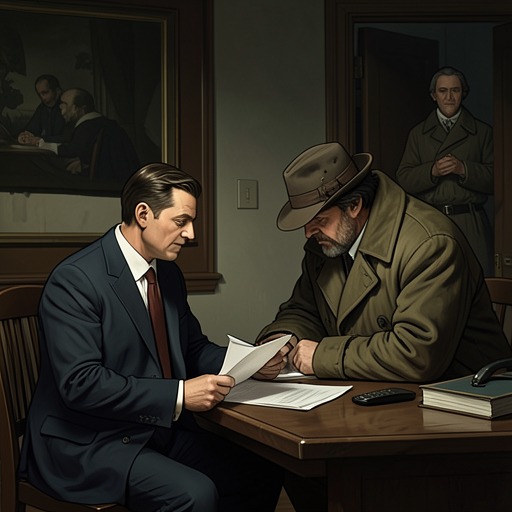
The later discovery comes during an intimate, ordinary moment, not an interrogation. After Henry has showered, Celia goes to make coffee. A phone rings briefly; it is neither hers nor Henry’s familiar Nokia. She finds a hard lump in the breast pocket of his coat and takes out a gray Siemens phone she has never seen before. Its screen shows a missed call and a number beginning +9626. The device resembles the anonymous prepaid second phones used by field agents, though Celia cannot tell whether this particular handset is an operational phone or a disposable burner.
At first, she barely registers the number. Then she recognizes the country and area codes as Jordan and Amman. The digits recall her earlier effort to make the number associated with Bill Compton’s betrayal rearrange itself into proof of his innocence; now a number from Amman appears on Henry’s spare phone. The handset does not display the contents of a call, and a missed-call record alone cannot establish what Henry said. Its force comes from its convergence with the earlier clues: Henry’s Russian, the suspected warning to the hijackers, and the possibility that Shishani was the person receiving information.
When Henry returns, Celia tells him only that Ahmed was killed. His smile falters; he repeats “Shit,” squeezes her elbows, and turns away without letting her see his face. She considers confronting him with the conclusion that the hijackers knew about their spy, but fear stops her. She instead makes coffee and waits. The restraint preserves the uncertainty of the moment: Celia has recognized the significance of the phone number, but has not yet forced Henry to account for it.
Confession and motive
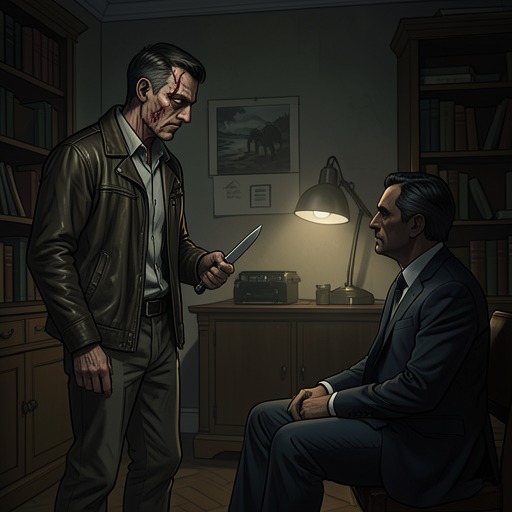
Henry’s later explanation supplies what the phone and the messages could not. In a conversation with Celia, he says, “I did it for you, Celia.” When she asks him to explain, he specifies that he did it to save her life. He acknowledges the scale of the consequence in the same breath: “What I did killed many more, and in a way it killed me, too.” He says he believed they would be together and that he acted because he thought he was saving her; her departure followed. The confession establishes his stated motive, but it does not make the disclosure less consequential or undo the deaths he admits it caused.
The admission arrives after the phone that had been recording is no longer recording. Henry says the words in what he imagines to be a quieter space, where evidence matters less and the masks can fall away. That shift gives the confession a double character: it is a personal explanation to Celia, and a belated account of an action whose operational details remain outside the scene. The reader learns why Henry claims to have acted, but not the precise wording or full circumstances of the call to Shishani.
Consequences and significance
The call joins two kinds of betrayal. Operationally, Ahmed’s identity reaches the hijackers, and the text-message sequence changes from a report by the endangered source to a warning that the source has been exposed. Personally, Henry presents his disclosure as an attempt to preserve Celia and their anticipated life together. His claim makes affection inseparable from the decision that caused wider loss: the person he says he meant to save becomes the person who must confront what he did.
The evidence also shows how Celia’s discovery is assembled rather than delivered as a single proof. She first detects an authorial shift in the messages, then narrows the possible source of the leak, then finds the missed call, and finally hears Henry’s admission. Each clue revises the meaning of the previous one. The call itself remains unseen, but its disclosure, destination, and consequence become legible through those stages. Henry’s justification does not resolve the moral conflict; it sharpens it, setting his private claim of rescue against the many deaths he acknowledges and the relationship he believed that sacrifice would secure.