Henry’s disclosure of Ilyas Shishani’s identity to the Russian Federal Security Service
All the Old KnivesHenry’s disclosure of Ilyas Shishani’s identity to the Russian Federal Security Service was both a specific betrayal of a source and part of a broader policy of cooperation with Russian security services. Henry acted under orders, but the consequences remained personal: Ilyas disappeared, and Henry never learned exactly what became of him. Years later, Henry still wondered whether handing over Ilyas’s name had helped drive him toward radicalism.
Background and the Order
After the Dubrovka Theater disaster, Washington and the embassy publicly condemned the Russian Special Forces for the deaths of hostages, including an American who had traveled to meet his Russian fiancée. The political response shifted as Vladimir Putin emphasized the threat of international terrorism. Within the embassy, Henry’s station chief, George Lito, warned that easing pressure would allow Russia to intensify its campaign in Chechnya. Russian operations soon expanded, even as the United States relaxed its stance.
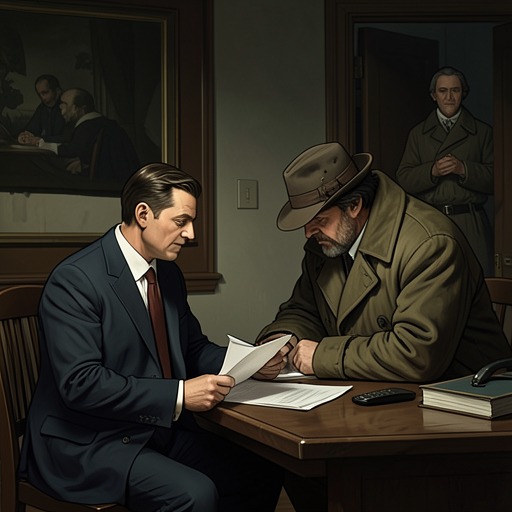
Cooperation continued alongside the criticism. Under orders, Henry and his colleagues helped the Russian Federal Security Service identify anti-Putin and pro-Chechen activists in the United States. Henry also met with Russian agents to discuss the station’s dealings with human-rights organizations that challenged official accounts. Under George’s direct orders, he gave up Ilyas Shishani, a Chechen source who had provided privileged access to Moscow’s closed Chechen community over the preceding year. The disclosure was not an incidental loss of contact: Henry supplied the service with the identity of someone whose trust and access had made him valuable to the station.
Disappearance and Uncertainty
Soon after Henry handed over his source, Ilyas disappeared. Henry later recalled that he tried to contact him about a week after the disclosure, but no one knew what had happened. The gap between those events marked the limit of what Henry could establish: the timing made the handover impossible for him to dismiss, but he had no proof of Ilyas’s fate or of what the Russian service had done.
The institutional response sharpened Henry’s disillusionment. In Moscow, a group of politicians, journalists, and former security officers investigated the Dubrovka Theater disaster and concluded that the Russian Federal Security Service had used at least one agent provocateur to direct the terrorists to the theater. After the liberal politician Sergei Yushenkov interviewed the alleged agent, Yushenkov was shot dead; the agent later died in a car accident in Chechnya. Henry was furious. George treated the deaths as the consequence of a political decision already made, while Henry sent an angry cable to Langley and requested a transfer to a quieter posting. In a later account, Henry said that being ordered to hand over his sources was one reason for the letter. The leak was therefore bound up with a larger conflict: he had complied with the institution, then tried to make a record of his opposition to the policies that compliance served.
Ilyas’s Fate and Henry’s Guilt
Henry was transferred to Vienna, where he initially experienced agent management as a relief from Moscow. But the apparent quiet did not settle the question of Ilyas. Henry later told Celia Favreau that Ilyas had lived in Moscow for at least fifteen years and had baked bread there; Henry could see no obvious reason for him to leave. He had eventually heard that Ilyas was in Tehran, but this report did not resolve what had happened between the disclosure and his disappearance.
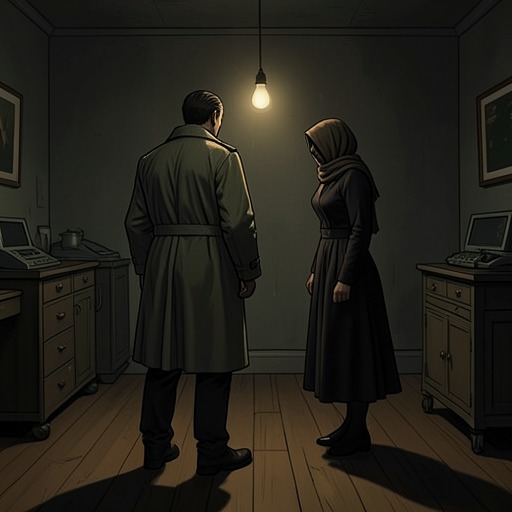
Henry remembered that Ilyas had not been a radical when he knew him. He wondered whether giving the Russian service Ilyas’s name had pushed him toward extremism. That possibility remained a suspicion, not an established account of Ilyas’s later choices. Henry’s uncertainty is central to the act’s aftermath: he cannot claim that the disclosure caused a particular outcome, but neither can he separate his decision from the disappearance that followed. When Celia recognizes his self-blame, Henry does not offer a resolution or a defense.
Later Echo in the Flight 127 Investigation
The unresolved betrayal acquired new force during the later crisis aboard Royal Jordanian Flight 127. A message attributed to the trapped source Ahmed included a recommendation to abandon a proposed assault on the aircraft’s rear landing gear. Its grammar differed from the earlier messages: the text used complete sentences and more formal constructions. Celia noticed the shift and concluded that someone else had written it, although she acknowledged that the investigators never established exactly when Ahmed had been discovered. The change made the messages evidence not only about the aircraft but about the compromised source’s situation.
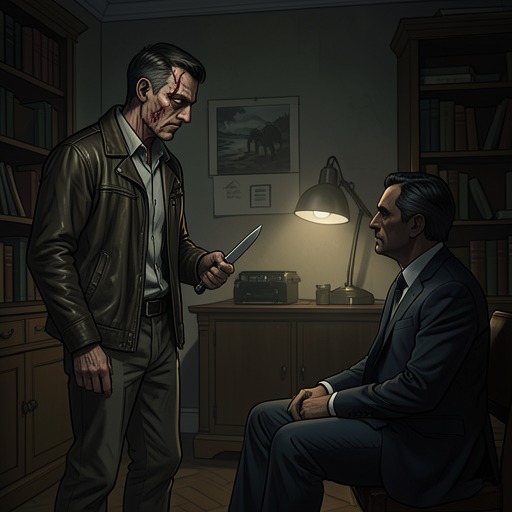
During Henry’s later interrogation of Celia, he returned to Ilyas by accusing her of having called him and told him about Ahmed. Henry said he had evidence that Celia had seen a crucial phone call and had not brought it to Bill Compton. He framed the alleged disclosure as the destruction of the operation’s only chance to get the passengers out alive, and justified his own decision to act against her through the agency’s practice of dealing with suspected traitors without trial. Celia’s response does not establish whether she made the call. The episode therefore remains an accusation, not confirmation that she repeated Henry’s earlier act.
That later confrontation makes the original disclosure more than a piece of Henry’s Moscow history. Henry had once obeyed an order to expose a source and then lived with the possibility that the act helped ruin that source’s life. In Vienna, he confronts Celia over an alleged exposure of Ahmed, treating secrecy and betrayal as grounds for irreversible punishment. The recurrence links his guilt to his judgment: the earlier failure to protect Ilyas does not lead Henry away from institutional logic, but shadows his attempt to enforce it against someone else.