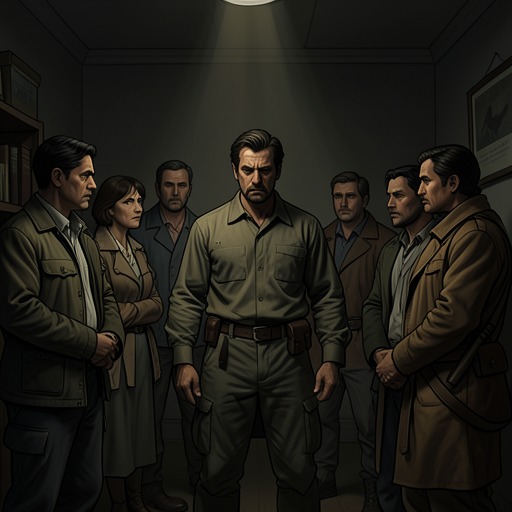
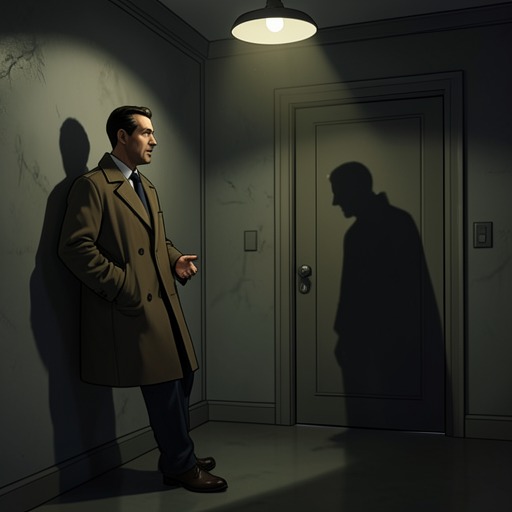
Henry’s renewed leak investigation and interrogation of Celia
All the Old KnivesHenry Pelham’s renewed leak investigation converts an old intelligence failure into a personal reckoning with Celia Favreau. By tracing a concealed embassy phone call to information about Ahmed Najjar, Henry accuses Celia of helping expose the one source who might have enabled a rescue aboard Flight 127. The confrontation does not produce a confession; instead, it ends with Celia’s guarded response and Henry’s conviction that he has found the culprit.
From Warning to Crisis
The investigation’s background lies in a warning from Damascus station. A source called TRIPWIRE predicted an airline-related event within seventy-two hours on a flight heading to Austria or Germany, with Damascus, Beirut, and Amman among the possible departure points. The source named Aslim Taslam, a group that had broken from Somalia’s Al-Shabaab and received financial, logistical, and operational assistance from Ansar al-Islam. Its recent record of deaths and explosions in Rome, Nairobi, and Mogadishu made the warning difficult to dismiss, despite uncertainty about the likely attackers and the route.
The warning arrived with a credibility problem. Bill Compton recalled that TRIPWIRE had previously misled the station about an al-Qaeda cell in Salzburg, prompting wasted efforts with the Interior Ministry over an empty warehouse. He estimated an eighty-percent chance that the new report was another fabrication. A message about Mashood Al-Fakeeh’s arrival in Barcelona from Jordan complicated that judgment: analysts believed the traveler was actually Ilyas Shishani, a Chechen radical associated with Ansar al-Islam. His presence offered a possible link between the organization and the predicted airline operation, and Bill immediately returned to Vick’s office to act on the lead.
Ahmed and the Withheld Information
Five hours after the hijacking began, Ahmed Najjar sent Langley a single text message. It described four attackers with two guns, children in first class, Muslim passengers separated from others in economy, two women in critical condition, dwindling water, and a loss of power that disabled the cameras. Ahmed also proposed an assault through the aircraft’s rear undercarriage. Vick identified him as a trusted courier who happened to be aboard the flight. The message therefore carried operational detail as well as a possible plan for reaching the hostages.
The information was not being shared freely with the Austrian authorities. When Celia suggested that they might be better placed to check a lead, Bill explained that the Austrians did not know about Ahmed and that the station was trying to keep his presence quiet. Vick added that they did not know whether the Interior Ministry could be trusted because its personnel had not been vetted. The resulting secrecy forms the stakes of Henry’s later accusation: the issue is not simply whether a call was made, but whether information about the source and his intelligence reached Shishani while the people aboard Flight 127 remained in danger.
Henry Reopens the Record
Years later, Henry’s inquiry reaches Celia through a sequence that she recounts to Bill. Henry had come to London and put Bill through an intense questioning. He said that someone in Lyon wanted a full report, but Bill made calls and concluded that this was a lie: the inquiry was internal. Henry’s explanation for the deception, as Bill understood it, was that it would relax him. Instead, Henry accused him of contact with the Chechen and used the pressure to turn the discussion toward Celia.
The embassy phone logs become the central documentary clue. Henry asked Bill whether Celia had requested them, then told him that a call from Bill’s phone to Jordan had been made on the first evening of the crisis. Bill understood the accusation as part of Henry’s effort to push him into a particular account. The question of who requested the logs thus acquires a second significance: it points both to the call itself and to Celia’s possible knowledge of it. Henry’s investigation is no longer confined to the original communication; it is also examining who saw the record and who kept it from being reported.
The Interrogation
Henry presses Celia to explain whom she had been protecting: Bill, or herself. He warns that if the question is left unanswered, it may return years later in the hands of someone who does not love her. Celia connects the inquiry to her departure from Vienna and to the trauma of the Flughafen. She describes the secrecy, distrust, and guilt that followed the deaths of a hundred and twenty people, explaining why the crisis made ordinary life in Vienna feel irreconcilable with recovery.
Henry then makes the personal accusation explicit. He asks whether Celia wants his report to say that she protected herself rather than Bill. When she calls his approach diversionary and questions whether it can change the outcome, Henry replies that he wants her to acknowledge that she called Ilyas Shishani and told him about Ahmed. He frames that disclosure as the destruction of the only chance to get the people aboard the aircraft out alive. Celia answers with a brief question—“Did I?”—rather than a clear admission or denial. Her expression hardens, and the exchange supplies Henry with no confession.
Evidence, Judgment, and the Unresolved Ending
Henry’s certainty rests on a specific chain of records and testimony. He says that Gene Wilcox gave him the direction to investigate the logs; the logs showed that Celia had seen the call; and Bill acknowledged that she had never brought it to him. Henry also refers to a recording stored on his computer in Vienna. Together, these points persuade him that Celia found crucial evidence and deliberately kept it under wraps. The account establishes what Henry believes and why; it does not independently resolve every uncertainty about the call or Celia’s purpose.
The scene’s tension comes from the difference between an investigative conclusion and an answer from the person accused. Henry treats the concealed call as sufficient to identify Celia as the culprit, though he recognizes that the evidence might not meet a courtroom standard. He invokes the Agency’s practice of neither prosecuting suspected traitors nor letting them go, and casts his judgment as the inevitable consequence of Agency logic. Celia’s silence leaves the original leak question entangled with a new one: whether Henry is seeking truth, a justification for his decision, or both. The interrogation ends with accusation and resistance, not resolution.