Memory and the deliberate erasure of the past
All the Old KnivesMemory and the deliberate erasure of the past is the tension at the center of Celia Favreau’s account of herself: she has repeatedly stripped away the objects that could preserve her history, yet now fears that the same practice is making the history itself disappear. Her effort to leave a record for her children does not simply reverse that erasure. It exposes how forgetting, family inheritance, secrecy, and the stories people tell about who they are have become entangled.
Erasure as a Practice
Celia distinguishes people who collect from people who discard, tentatively calling the latter jettisoners and placing herself among them. Her apartment on Salmgasse had once seemed spare to Henry Pelham; she corrects that impression by describing it as empty. Whenever she moved, she reduced her possessions to the basics. Unlike people who retain a family attic or rent storage space in Queens, she let things go, including old letters and photographs. The disposal brought a small pleasure: with each item went a piece of history, a circle of friends, or an embarrassing memory that might otherwise be found by someone searching through her belongings.
That pleasure was bound to an orientation toward the future. Celia’s account makes the act more deliberate than ordinary tidying: discarding objects also limits who can recover the past and how it can be retold. The losses accumulate, however. Her children have begun asking about the family history that their friends encounter through home movies, photograph albums, and stories from older relatives. Celia diverts their attention rather than offering a comparable inheritance. In her stark formulation, other children receive a long history while hers receive nothing.
The idea that the past is another country gives her a way to speak about that distance, but the metaphor does not make the absence harmless. Celia is forty-five, and her children’s questions make the consequences of her earlier choices newly visible. Her silence has been passed on not as a detailed family story but as a gap: there are no albums or old letters to open together, and little history for her children to place themselves within.
From Discarded Evidence to a Private Record
Celia now identifies a direct cost in the practice that once pleased her: when a person throws away the evidence of the past, that person may begin to forget the past itself. She has started taking notes because, however unflattering the material might be, it is what she has. The proposed book is therefore not described as a bid for publication or public recognition. She imagines keeping a few copies in a safe-deposit box for her children to read when they come of age, or perhaps only after her death.
The imagined audience and timing matter. Celia wants to leave her children something she has not given them while raising them, but she considers withholding it until they are adults or until she is no longer alive. The notes would preserve a record without requiring her to expose it immediately. Henry asks whether the material is difficult; Celia’s answer, accompanied by an exhalation, confirms that the writing concerns something emotionally fraught, though the conversation does not disclose the full contents of the notes.
Her plan thus turns preservation into a carefully bounded act. Objects once destroyed to prevent discovery may be replaced by a record placed beyond ordinary reach. The book would carry what the family has lacked, but its deposit in a safe-deposit box would also keep the account concealed for a time. Celia’s attempt to repair the absence does not erase the conflict between protecting herself from the past and giving her children access to it.
Family, Work, and the Two Selves
Celia explains her move with Drew Favreau and her decision to raise children as a return to a destination she had long imagined. Before her parents died, she says, they taught her to become like them; without the security of family around her, she feels only half a person. This account reverses the suspicion that she left her former life because she was marrying for money: family, in her explanation, was not an incidental benefit but what she had wanted. Looking back, she wonders not why she made that choice, but why she did not make it ten years earlier.
The delay, she says, had to do with her years in intelligence work. She compares that life to an addiction: the thrill of secret knowledge kept her focused on the next high rather than on what might make her whole. The contrast connects her habitual attention to the future with the demands of the work she left behind. The pursuit of the next revelation had displaced the slower work of building a family life, while the discarded objects of her earlier life left little material record of the person who had pursued it.
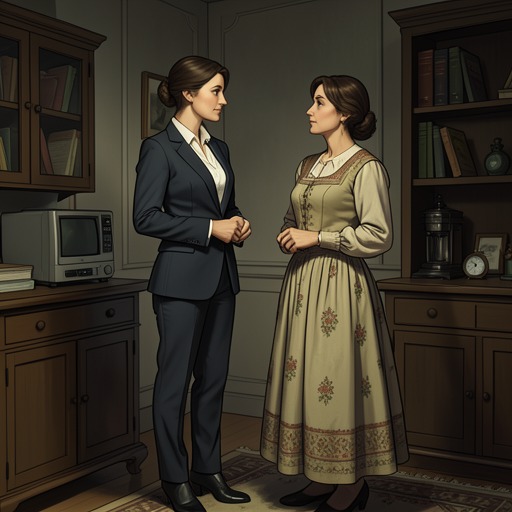
As Celia speaks, Henry hears what he calls Celia 1: a fluent, commanding conversationalist able to shape a story, improvise, and make fabrication feel authentic. He sets this figure against Celia 2, whom he experiences as disarmingly earnest. The distinction makes even her confession uncertain to him. Her present openness could be the truer self emerging from behind an old professional construction, or it could be another performance controlled by that practiced storyteller. Her account of memory therefore raises a second question: not only what has been forgotten, but whether the person remembering can be known apart from the stories she makes.
Henry’s uncertainty reaches into his own memories of loving her. He wonders whether he loved the manipulative persona, sensed a more vulnerable person beneath it, or fashioned an image of Celia from his own desires. He does not resolve those alternatives or share this full self-questioning with her. During their conversation, a cell phone in his pocket records their words as he weighs his assignment against the emotional force of seeing and hearing her again. The recording may retain what she says, but it cannot settle for him which version of Celia those words reveal.
Shared Memories and Unanswered Questions
Henry’s recollection of their life in Vienna gives the theme a more intimate register. He remembers their visits to restaurants, including Zum Schwarzen Kameel, Mraz & Sohn, Kim Kocht, Steirereck, and Restaurant Bauer. They were not defined by expertise about food; they appreciated good meals and were willing to pay for them. Restaurant Bauer stands apart because they visited only once, in the anxious hours before the final catastrophe at Flughafen.
That dinner became part of Henry’s memory of an ending. It was their last meal out together, and later that night they had sex for the final time. He remembers the encounter as neither the best nor the worst, then measures it against what he knows afterward: had he understood that it would be their last time, he believes he would have paid closer attention and committed more of it to memory. In retrospect, the ordinary meal and the intimacy that followed acquire their weight from the knowledge that there would be no repetition. Memory preserves the scene, but only after the chance to live it again has passed.
The same evening contains a more consequential gap. Celia later asked Gene Wilcox for the phone logs and discovered a call to Amman from her boss’s phone. Henry recalls that she never shared this information with the others, and identifies her silence as one of the mysteries he has come to investigate. The remembered dinner is therefore not only a private landmark in their relationship: it sits beside an undisclosed discovery whose meaning remains unsettled in this account. Together, the missing family history, the proposed private book, and Henry’s incomplete memories show that the past is neither simply preserved nor simply lost. It survives unevenly—in notes, recordings, remembered gestures, and withheld information—each form offering evidence while leaving something beyond reach.