Parental Love versus Romantic Love
All the Old KnivesParental Love versus Romantic Love is the distinction Celia Favreau draws between the enduring, life-organizing love she feels for her children and the romantic passion she once shared with Henry Pelham. For Celia, becoming a parent is not simply another attachment added to an existing life: it remakes the scale by which love, ambition, and personal safety are measured. Henry hears that account as a verdict on their past, but his interpretation reveals as much about his need to remain central as it does about Celia’s changed priorities.
Celia’s account of parental love
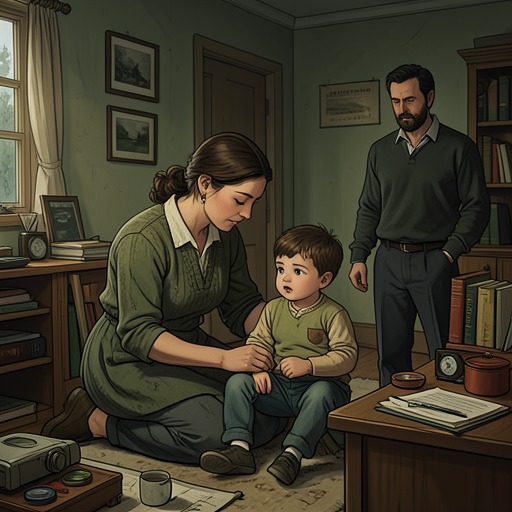
Celia describes parenthood as a relationship that becomes most vivid once a child has a distinct personality. She likens the meeting to a familiar romantic cliché, then shifts its meaning: the feeling of having waited all one’s life to meet someone, she says, applies to children, especially after infancy, when their characters have become well defined. Her emphasis is not on the child as an extension of the parent, but on the astonishing recognition of a particular person. In her description, this bond is singular and incomparable: “There’s nothing to compare to it.”
When Henry asks whether she means that parental love surpasses romantic love, Celia resists treating the two as competitors on a single scale. She calls them “Apples and oranges.” Romantic relationships, she says, may involve declarations, plans, and intense feeling, but parenthood is a “different animal”: it has no ego getting in the way, is “evolutionary,” and feels “complete.” She describes passion and personal aspirations as diminished beside a parent’s love for a child. The distinction is therefore not merely that one love is stronger. In Celia’s account, parenthood changes the frame of reference, making the self-directed ambitions and romantic drama that once seemed decisive appear smaller.
Henry’s interpretation of the distinction
Celia’s explanation lands on Henry as a lesson about their former relationship. His stomach hurts and his eyes water; he reaches for wine to hide his reaction. He understands her words to mean that what they had, and what they lost, means nothing to her now, and that she had been incomplete with him but is whole without him. That is Henry’s interpretation of her speech, not a conclusion Celia explicitly states. His uncertainty makes the distinction painful: he wants to ask whether she truly means their past was nothing, yet fears either answer. If she confirms his fear, he will see his defining choices as both reprehensible and senseless; if she denies it, he believes she would be lying.
The scene thus separates Celia’s account of a new, present attachment from Henry’s demand that it settle the value of an old one. She speaks about the nature of raising children; he hears a judgment on his place in her life. Her claim that parental love is not comparable to romantic love does not, by itself, prove that the earlier relationship had no meaning. The gap between her stated distinction and his absolute reading exposes how thoroughly he measures the past by what it can still mean to him.
Parenthood as responsibility and renewed purpose
Later, Celia applies the same changed priorities to danger and decision-making. While considering Henry’s e-mail and a card bearing Karl Stein’s name, she has already sought Bill Compton’s advice. Bill urges her not to meet Henry, but she understands his answer as the preference of someone who wants peace in retirement. She, too, wants a quiet life; what changes the calculation is that she has children. As she puts it, “once you have children your life begins all over again.” Health and welfare acquire a new imperative: to stay alive and protect them. A quick escape from a problem is no longer adequate; threats must be confronted and neutralized.
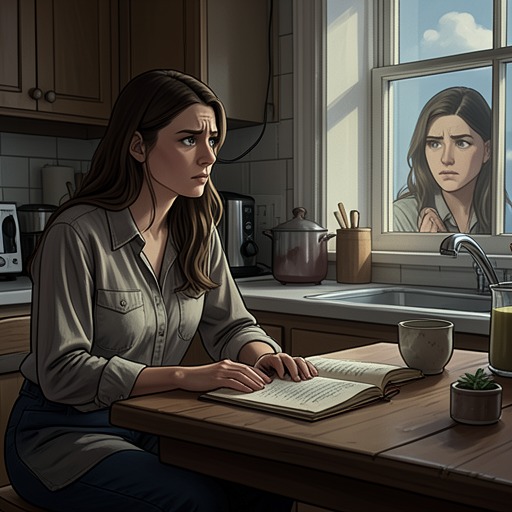
That reasoning makes her hesitation over the call more than a choice between quiet and confrontation. The calm she has built her life around feels fragile, and she knows that calling will shatter it. Yet she expects that withdrawing will not keep Henry away: desperate, he will follow her and threaten more than the silence she values. Parenthood makes preservation of her present life inseparable from protecting her children’s future, so she chooses to face the danger rather than rely on avoidance.
The bond’s aftermath and the novel’s contrast
During a later conversation with Henry, Celia imagines the night’s memory returning throughout her remaining life: while putting Ginny Favreau to bed and watching Evan Favreau’s ballet recitals. She does not claim that parenthood will erase the pain. Instead, she expects to carry it and to keep it from suffocating her, because her children compel her to continue. The love she has described as complete is also practical: it gives her a reason to endure what cannot be undone.
Celia recognizes that Henry is not chiefly haunted by the murders connected to his deal with Ilyas Shishani; he is haunted by the end of their relationship. She sees the self-absorption in that emphasis, even as she refrains from saying so aloud. Later, as Henry is dying, his own thoughts return to Celia’s children as the force that took her from him. He recalls her comparison—“Beside it, romantic love is cute.”—but turns her account into a grievance, imagining her love for him reduced to a shadow beside her love for them. The contrasting recollections make the concept central to their estrangement: for Celia, parental love is a new responsibility and a reason to go on; for Henry, it becomes proof that he has been displaced. The book leaves that contrast unresolved rather than restoring romance to its former supremacy.