Royal Jordanian Flight 127
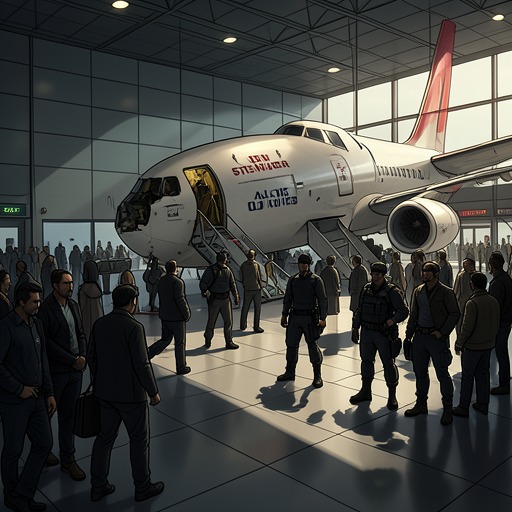
All the Old KnivesRoyal Jordanian Flight 127 is the passenger aircraft at the center of a hijacking that turns an ordinary arrival in Vienna into a hostage crisis. Its passenger cabin becomes both a place of confinement and a stage for the hijackers’ demands, while the presence of children and vulnerable passengers makes any attempt to intervene carry immediate human stakes.
Aircraft and Route
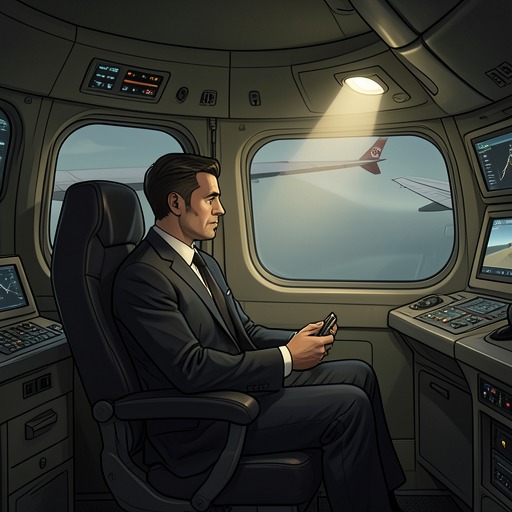
The aircraft was an Airbus 319 with seating for 138. On the day of the hijacking, it carried 120 passengers and crew. It departed Amman at 10:35 a.m. and landed in Vienna at 1:25 p.m.; the journey lasted three hours and fifty minutes and, according to the passenger manifest and the pilot’s account, passed without incident until the aircraft touched down. That uneventful flight makes the sudden shift in the cabin especially stark: immediately after landing, four men stood up and began the seizure.
The first to act was Suleiman Wahed, a Pakistani national seated near the rear. When a flight attendant rose, waved at him, and asked him to sit down, Wahed drew a pistol and shot her in the chest. The attendant was identified as Raniyah Haddadin. The killing marked the end of the flight’s ordinary routine and the beginning of a crisis in which the aircraft itself became the hijackers’ instrument for holding passengers and crew.
The Cabin as a Stronghold
The four hijackers—Suleiman Wahed, Ibrahim Zahir, Omar Ali, and Nadif Guleed—were identified as members of Aslim Taslam. Their first announcement to passengers, made in Arabic and English, set out the terms of their control: they said they would kill anyone who disobeyed, but did not intend to use the aircraft as a weapon. Instead, they would hold it as a safe house until their demands were met, then fly elsewhere and release everyone. The distinction did not make the threat less coercive; it defined the aircraft as a prison whose occupants’ safety depended on compliance.
The hijackers quickly arranged the cabin to strengthen that control. They moved nine children, aged five to twelve, to the front of the aircraft, both as protection against a forced entry and as leverage over anyone attempting to intervene. They warned the passengers that a child would be killed each time someone interfered with their work. The children’s placement turned any rescue attempt into a choice burdened with the prospect of immediate harm to the hostages themselves.
Five hours after the hijacking began, Ahmed Najjar sent a text message to an emergency Langley number, and it was forwarded to the team assessing the crisis. His report counted four attackers and two guns, located the children in first class, and described the division of the remaining passengers: Muslims on the starboard side, everyone else opposite, with Ahmed among the Muslims toward the rear. He also reported two women in critical condition, dwindling water, and a loss of electrical power that left the aircraft without camera coverage. His proposed point of entry was the rear landing gear. Vick explained that Ahmed, traveling on a Lebanese passport, was a courier working for the Americans; his presence aboard gave the team an unusually direct account of conditions inside the cabin.
The hijackers had also called the control tower and ORF, Austria’s national radio and television outlet. The cameras gathered at the airport fence made the crisis visible beyond the aircraft: as Celia observed, the hijackers had wanted outside eyes on the plane. That visibility complicated any plan to storm it. Cordon off the broadcasters, and the restriction itself could become news; speculation that authorities were preparing an assault could reach the hijackers and change the danger facing the hostages.
Demands and the Limits of Intervention
The hijackers gave the aircraft a deadline as well as a purpose: five prisoners, two held in Austria and three in Germany, were to be released within forty-eight hours. A message from the Interior Ministry also reported that seventeen Americans were aboard, though their identities were still being verified. The demands made the passengers’ confinement part of a wider political negotiation, while the threatened deadline left governments little room to treat the plane as a contained airport emergency.
The prospective decisions in Vienna and Germany were uncertain. Vick weighed the number of German passengers—twenty-nine—against the newness of Angela Merkel’s government, and considered whether that might make the Germans more willing to yield. Austria presented a different political calculation: President Heinz Fischer, Vick observed, was already being criticized by the right and the Social Democrats as weak on immigration, so accepting the demand could intensify that pressure. The aircraft thus held not only its passengers but also the governments outside it to competing risks of concession and refusal.
If Austria and Germany rejected the terms, Owen Lassiter argued, the alternative was to storm the aircraft before the deadline; the danger was that refusal would leave everyone aboard dead. Vick immediately distinguished the American role from direct intervention: the Americans would advise the Austrians, not storm the plane themselves. That distinction did not lessen their influence over the crisis, but it exposed the gap between shaping an operation and carrying it out—and the urgency of finding a way to advise an assault without making the threat more immediate.
The cameras at the airport fence made secrecy impossible. The hijackers had contacted ORF because they wanted attention outside the plane, and Celia recognized that ordering the broadcasters away would itself become a story. Reporters could interpret a cordon as evidence that an assault was imminent, carrying speculation to the hijackers and potentially endangering the hostages. Flight 127’s public visibility therefore became part of its physical danger: any move around the aircraft could be watched, interpreted, and used to alter the crisis inside it.
The Flight's Afterlife in the Investigation
After the immediate crisis, Royal Jordanian Flight 127 remains the measure of what Henry believes was lost: he accuses Celia Favreau of calling Ilyas Shishani and revealing Ahmed Najjar’s information, thereby destroying the only chance to get the passengers out alive. The accusation rests on a concealed call record. Henry says Gene Wilcox pointed him toward it, the logs showed Celia had seen the call, and Bill Compton confirmed that she had never brought it to him; a recording, he says, is on his computer in Vienna. These details make the aircraft’s hostage crisis the center of a later dispute over what its rescuers knew and what they did with that knowledge.
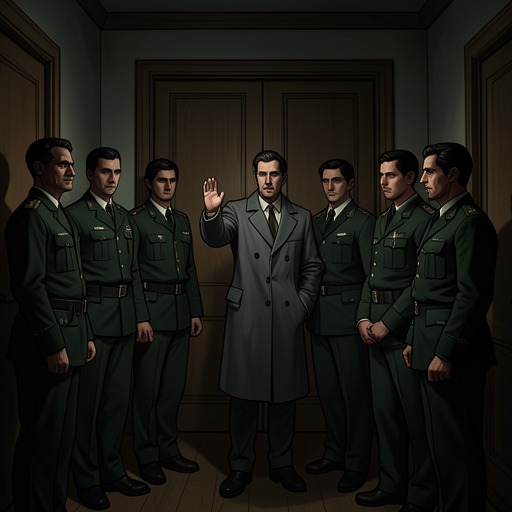
Henry does not treat the accusation as a matter for a court. He has already decided that Celia will not be around to defend herself, and wants her to confirm the call so he can use her answer if Vick or someone at Langley traces his actions. His stated rationale is institutional: suspected traitors cannot be excused, he says, but neither can they be prosecuted, so he is following Agency logic to its conclusion. Celia’s brief response, “Did I?”, leaves the accusation unanswered in the exchange. The flight’s significance thus extends beyond the hijacking itself: it becomes the justification Henry invokes for turning an unresolved question about a call into a sentence without trial.