Sarin
All the Old KnivesSarin is the substance identified as the cause of the deaths aboard the Flight 127 aircraft. Its importance in the account lies not only in the mass killing it explains, but in the way it is recognized: the engine is running, the aircraft has not moved, and the pilots have died without being shot. That combination leads Henry Pelham and his colleagues to suspect that the ventilation system has spread the poison. The diagnosis changes the meaning of the aircraft’s apparent inactivity and gives the Austrian authorities an urgent, but still uncertain, basis for action.
Identification and the unfolding crisis
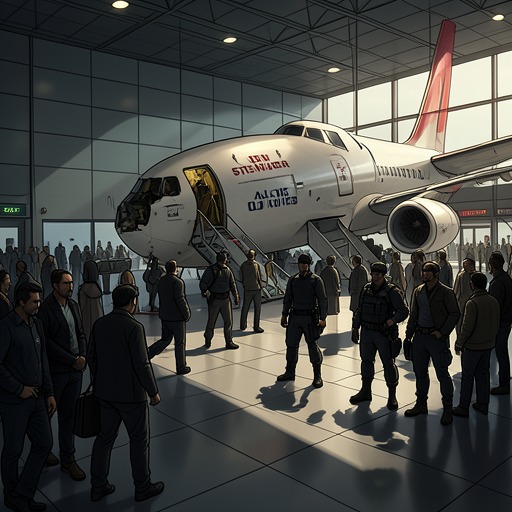
The substance is named during a discussion of the Austrian response to the hijacking. The aircraft’s engine has been started, but the plane has not gone anywhere and has not lit up. At the same time, the Austrians begin receiving signals. A message states that Aslim Taslam does not negotiate. The threat and the aircraft’s mechanical state therefore arrive together: the plane is active in a limited, ominous way, but there is no visible movement toward a resolution.
The cockpit cameras provide the crucial evidence. High-resolution images record both pilots dying in their seats. Henry Pelham asks whether they were shot; his colleagues say that no one touched them and describe their deaths as suffocation, or respiratory failure. These details distinguish the deaths from an immediately visible act of violence, while leaving the means of killing initially unresolved. Sarin enters the conversation as a diagnosis, not as something the characters have directly seen or handled.
The ventilation-system inference
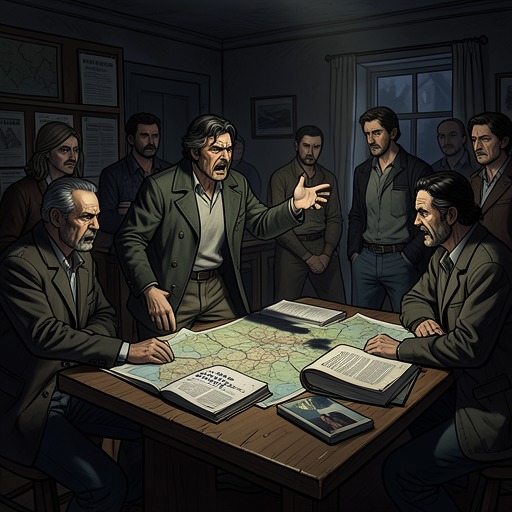
Henry Pelham then connects the engine to the pilots’ deaths: he realizes that the hijackers may have started the aircraft in order to start its ventilation system. A colleague agrees that this is what both the team and the Austrians think, while emphasizing that they cannot enter if they do not know what they are facing. The inference is consequential but not yet certain. The running engine is no longer merely a sign that the aircraft has been powered up; it may be part of the mechanism by which the danger has spread inside.
Ernst Pul names sarin and calls for doses of atropine and pralidoxime to be ordered immediately. Another colleague remains cautious, answering that this is only a possibility. Henry Pelham’s sense of the exchange is that Ernst Pul is right. The scene preserves the difference between a suspected agent and a confirmed diagnosis: the crew’s deaths, the engine, and the apparent role of ventilation support the conclusion, but the authorities still face the risk of acting without certainty. The proposed antidotes make that uncertainty urgent. The text records the order being called for, not whether the medicines are administered or what effect they have.
Deaths and the later evidence
Sarin’s full significance emerges through the retrospective images Henry Pelham remembers from footage watched in Vick’s office. The first Austrian cameraman enters the Flight 127 aircraft and finds bodies frozen in their chairs, people scratching at the windows, and bodies lying in the corridor. These images enlarge the earlier report from two pilots to a scene of deaths throughout the aircraft. They also preserve different traces of the victims’ final moments: stillness in the seats, desperate movement at the windows, and bodies in the passageway.
The later account leaves no doubt about the outcome. Henry Pelham remembers a final call from Ilyas Shishani after the sarin had killed everyone, in which Ilyas tells him that he has helped the cause of God and will be rewarded in Heaven. The call joins the physical evidence of the aircraft to the human relationship behind the disaster: the deaths are not an accident inferred from a malfunction, but the result of an act whose consequences Ilyas frames as a cause served. Henry Pelham’s recollection immediately ends in disbelief in Heaven, refusing the promised reward as a consolation for what has happened.
Narrative significance
Sarin is first made legible through consequences rather than through a description of the substance. The audience sees the running engine, hears that the pilots suffocated, and follows Henry Pelham’s realization about the ventilation system before the diagnosis is asserted. This sequence makes recognition itself part of the crisis: the same machine that might appear to prepare the aircraft for movement may instead have carried danger through it, and the inability to confirm the threat delays action.
The substance also links the immediate emergency to Henry Pelham’s later reckoning. The images of bodies in the aircraft return among memories of his work and of Ilyas Shishani’s final call, placing the deaths within a personal history of trust, guilt, and cooperation. Sarin thus marks both the physical means of the killing and the point at which the consequences of that relationship become impossible to abstract away. Its presence is established through the victims’ deaths and the surviving images of them, not through any account of the substance’s appearance.