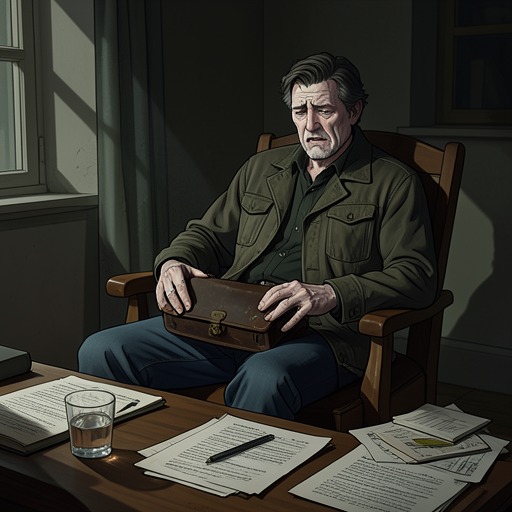
Vienna
All the Old KnivesVienna is the setting where Celia Favreau and Henry Pelham’s professional histories converge, and where a Royal Jordanian passenger flight is seized after landing. The city first appears as a young operative’s ideal of civilization and a capital of apparent stability; the embassy’s pressured routines and the violence of the 2006 hijacking steadily unsettle that image. In later recollection, Vienna is not merely a posting but a place whose crisis becomes a code for suspicion, guilt, and an unresolved internal investigation.
Arrival and the city’s two faces
Celia Favreau arrived in Vienna in 2002 after a successful posting in Dublin, having requested the city because she regarded it as the most civilized city on the Continent. She would later revise that judgment. Henry Pelham came from the opposite direction: after transferring from Moscow in 2003, he carried the grinding memories of the Moscow Theater Hostage Crisis at the Dubrovka Theater. During that siege, more than fifty Chechen militants took over a performance of Nord-Ost and held 850 people for 57 hours. Russian forces pumped gas into the theater before entering; nearly all the militants and 129 hostages died, many from the gas and the failure to tell treating doctors exactly what they had inhaled. Henry’s move to Vienna therefore joined two sharply different arrivals: Celia’s early confidence in the city and Henry’s experience of state violence and its human cost.
By December 2006, Vienna’s public atmosphere seemed to confirm Celia’s first impression, though with qualifications. The city was experiencing economic growth and a sense of belonging to the European Union; its prevailing mood appeared to be one of dull stability, before Western mortgage failures had shaken the economy. That calm had anxieties at its edges. Right-wing voices invoked Austria uber alles, while public unease attached to immigration from Turkey and the former Eastern Bloc. The contrast matters: Vienna’s composure is not an absence of conflict, but a surface beneath which political and institutional tensions remain visible.
The Vienna station
The American station operated almost entirely under diplomatic cover. In 2006, as later, it was led by Victor Wallinger, with a small group of senior officers around him. Leslie MacGovern handled collection management; Ernst Pul and Bill Compton served as operations officers; Owen Lassiter worked with codes. Celia’s account presents this as a compact workplace of distinct personalities rather than an abstract intelligence apparatus. Victor maintained morale and kept strong temperaments from clashing destructively, while Bill’s authority had become compromised by his wife Sally’s influence. The office’s internal relationships shaped how the station functioned as much as its formal hierarchy did.
Owen’s fate gives that workplace an especially stark history. He lasted eight months in Vienna before taking a pistol from the storeroom, bringing it home, and shooting himself. He was related to a senator from Wyoming, a fact that made the death more shocking to colleagues who had expected a prep-school stereotype and encountered a gloomy man instead. His suicide also becomes part of the station’s background when Celia wonders why Interpol is interested in the old case. Vienna’s diplomatic routine thus carries its own buried failures, not only the crises arriving from outside.
The hijacking and the city as a code
The decisive rupture came when Royal Jordanian Flight 127 landed in Vienna. The Airbus A319 had left Amman at 10:35 a.m. and arrived at 1:25 p.m.; it carried 120 passengers and crew, though its seating capacity was 138. According to the Austrian account, the four hijackers caused no trouble during the three-hour-and-fifty-minute flight. They rose immediately after touchdown. Suleiman Wahed, seated near the rear, drew a pistol and shot a stewardess in the chest when she asked him to sit down. The hijackers identified themselves as members of Aslim Taslam, and the station learned that another stewardess, Raniyah Haddadin, had already been killed. The landing transformed Vienna from a setting of orderly arrival into the scene of an armed crisis.
The event also tied the city to Henry’s earlier intelligence relationship with Ilyas Shishani. Celia later remembered being surprised that soldiers in Afghanistan, rather than Henry, had tracked Shishani down. She speculated that Shishani might have chosen Vienna because Henry worked at the embassy: perhaps to provoke him, seek his help, or surrender to him. The transcript does not resolve that possibility; Celia explicitly does not know why Shishani might have done so. Vienna’s significance here lies partly in that uncertainty: the city’s selection seems personal to her, but remains an interpretation rather than an established motive.
Afterlife of the crisis
Years later, the hijacking continued to organize how Vienna was remembered. When Henry told Celia that someone in Lyon wanted a full report, she made calls and concluded that the demand was a lie: the investigation was internal. Henry used “127” as his own code for the Flughafen, making the flight number stand in for the crisis and the inquiry surrounding it. Celia’s recollection returns her to Vienna, to the embassy, and to the call to Amman whose Russian-speaking voice she recognized as Shishani. The old location and the unresolved question of who had betrayed whom become inseparable in her mind.
The station’s return to ordinary work is equally revealing. At half past four in the morning, after leaving an apartment and reconsidering where to go, Celia returned to the embassy. Bill was still absent; Victor was in his office making calls to America, Ernst was asleep at his desk, and Owen was in the break room. Celia told Owen that she was like a dog who always came back. The line makes Vienna’s pull less a matter of civic affection than of professional habit: even under strain, she returns to the institution where the crisis is being processed. Across these episodes, Vienna’s narrative role is to hold together a polished public image, a fragile workplace, and a disaster whose consequences persist as memory and code.