1972 Democratic presidential primaries
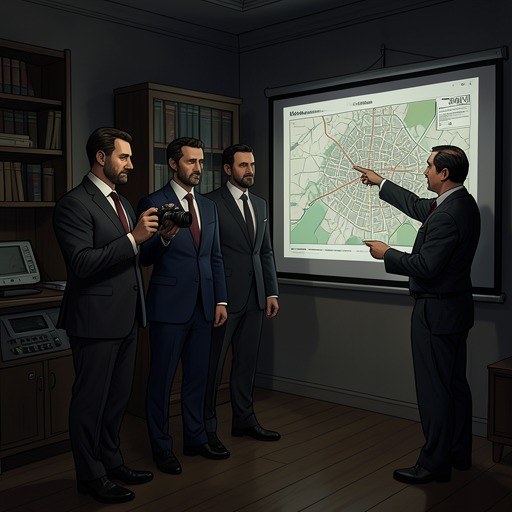
All the President's MenThe 1972 Democratic presidential primaries became a target of an effort to disrupt the Democratic campaign from within: operatives were proposed to interfere with rallies, gather intelligence through political infiltration, and leave the party too divided to reunite after its contests. The reporting traced a path from recruitment attempts and suspicious travel across primary states to sabotage described by Edmund S. Muskie’s staff, while also connecting the operation to funds controlled by senior campaign aides. The evidence established important links without resolving every question of responsibility for each reported act.
A campaign targeted for disruption
In the summer of 1971, Alex Shipley was approached about joining the Nixon campaign while he was still serving in the Army. The initial account of the approach described a proposed crew that would disrupt the Democratic campaign during the primaries, with virtually unlimited money available. One example was deliberately mundane: an operative could learn that a candidate had rented a hall, then tell the owner that the event had been rescheduled, disrupting the rally’s arrangements. The proposal treated the ordinary logistics of campaigning as a point of attack.
Shipley later described a more elaborate pitch from Donald Segretti, whom he had driven to Dulles Airport on June 27, 1971. Segretti proposed that an operative pose as a supporter of one Democratic candidate, win the confidence of that candidate’s workers, and steer them toward work for another campaign, collecting information under false pretenses. He identified Nixon as the beneficiary. The strategy was aimed not simply at helping one Democrat defeat another: Segretti described the larger purpose as creating enough disorder that Democrats could not come together after a bitter primary contest. When Segretti renewed the offer the following week, Shipley sought advice from people associated with former Senator Albert Gore. Their counsel was to avoid committing himself while learning more; Shipley said he was not interested, though he considered whether playing along might help Democrats.
A trail across primary states
Credit-card records gave the proposed operation a geographic dimension. During the latter half of 1971, Segretti crossed the country more than ten times, generally staying in each city for only a night or two. His recorded stops included Miami, Houston, Manchester, Knoxville, Los Angeles, Chicago, Portland, San Francisco, New York, Fresno, Tucson, Albuquerque, and repeated visits to Washington. Several were in states central to the approaching presidential primaries. In New Hampshire, Florida, Illinois, and especially California, the records showed him moving among cities where Democratic contests would be fiercely fought. The itinerary supported Shipley’s account of a traveling political operation, though the records alone did not establish what Segretti did in each place.
The primaries also became the setting for a series of attacks recalled by Muskie campaign staffers. After speaking with Shipley, Carl Bernstein contacted them one by one. They described stolen documents, counterfeit campaign literature, canceled rallies, abusive calls placed to voters in the names of Muskie campaign workers, disruptions to schedules, and the Canuck Letter. The incidents had seemed sufficiently persistent and coordinated to suggest an organized effort, but the staffers did not know who was behind them. Some suspected supporters of Hubert Humphrey or George Wallace. Their account identified the pattern of harm without, by itself, proving the identity of the perpetrators.
The staffers also resisted a single-cause explanation for Muskie’s political decline. They believed his campaign had largely undermined itself through his vacillation on issues and what they regarded as his ineptitude. At the same time, they thought the attacks were vicious and excessive. The distinction matters to the history of the primaries: the reported sabotage added pressure and confusion, but it did not erase the campaign’s own weaknesses or establish that the attacks alone determined its course. Bernstein, who had known Muskie slightly from reporting on his 1968 vice-presidential campaign, wanted to speak with him before the newspaper published an account suggesting that the presidential bid had been sabotaged.
Money, authorization, and the limits of proof
The account of disruption appeared against the background of a concealed campaign-fund system. A report by The Washington Post said that funds for the Watergate espionage operation were controlled by several principal assistants to John Mitchell, Nixon’s former campaign manager, and kept in a special account at the Committee for the Re-election of the President. The fund held more than $300,000 earmarked for sensitive political projects; G. Gordon Liddy had received money from it, records concerning the account had been destroyed, and Hugh Sloan had resigned as treasurer after becoming suspicious about Watergate. The report gave the suspected primary-period activity an institutional and financial context, although the existence of a secret fund did not independently prove which specific acts it had paid for.
Sloan described how authority over the fund had worked. When first approached for money, he called Mitchell at the United States Department of Justice and received instructions to distribute it. The calls began in 1971, and Sloan said Mitchell initially had sole authority to approve expenditures before that power passed to others, including Jeb Stuart Magruder. In the reporters’ understanding, Sloan’s account implicated Mitchell in authorizing campaign-fund spending for apparently illegal activity against the political opposition while Mitchell was Attorney General. Sloan nevertheless cautioned that this did not prove Mitchell knew about the Watergate bugging; he allowed for the remote possibility that others had acted independently, though he doubted it. The testimony therefore strengthened the evidence of authorization over campaign money while leaving a distinction between control of the fund and proof of knowledge about every operation it supported.
The primaries in the larger investigation
The reporting eventually placed the primary-season disruption within a wider political-espionage story. A later account of the Watergate operation described fund control, payments to Liddy, destroyed records, and Sloan’s resignation; the inquiry then sought to determine what the secret money had financed and who in the campaign had answers. The investigation also exposed the hazards of treating raw information as established fact. Federal Bureau of Investigation interview forms could contain facts, hearsay, suspicions, and personal complaints together; an allegation’s appearance in such a report was not enough to substantiate it. The Post’s editors accordingly adopted an evolving practice of withholding a specific criminal allegation unless two sources confirmed it.
That evidentiary caution helps define what the primaries reveal in the book. Shipley’s account described the proposed methods and their intended strategic effect; credit-card records corroborated Segretti’s movement through important primary states; Muskie staffers supplied accounts of repeated disruptions but could not identify their authors; and Sloan’s testimony illuminated the funding structure without proving the destination of every payment. Taken together, these strands made the primary contests more than a backdrop for the later Watergate investigation. They showed how the political struggle could be attacked through deception, logistical interference, intelligence gathering, and concealed money, while preserving the difference between a persuasive pattern and proof of individual responsibility.