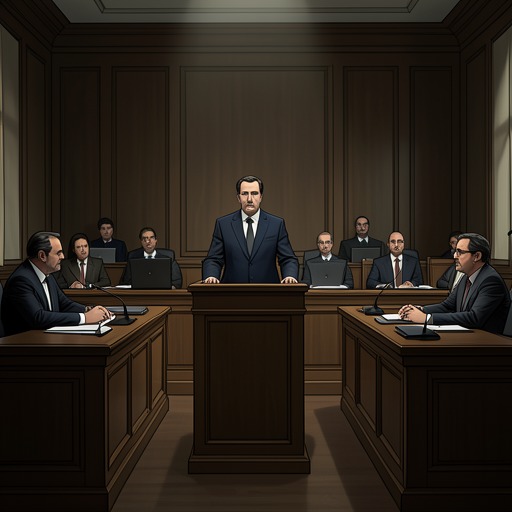
Alexander Butterfield
All the President's MenAlexander Butterfield’s disclosure of the White House taping system turned an obscure investigative lead into a revelation with consequences for the presidency. The reporters had encountered his name months before they understood its significance: when Butterfield finally told the Senate committee what he knew, the information opened a new path into conversations that had previously been beyond investigators’ reach.
An Unchecked Name
The route to Butterfield began in the reporters’ accumulated records. Since June 17, 1972, Bob Woodward and Carl Bernstein had saved notes and memoranda, periodically reviewing them to identify leads they had not pursued. By the time the Senate hearings opened on May 17, 1973, their reporting habits had shifted: nighttime visits to people connected with the Committee for the Re-election of the President had become less frequent, and they increasingly relied on access to the committee’s staff investigators and attorneys. Yet one name remained unchecked on both reporters’ lists: presidential aide Alexander P. Butterfield.
Butterfield was not a wholly new name to them. Deep Throat and Hugh Sloan had both mentioned him, and Sloan had said, almost in passing, that Butterfield was in charge of “internal security.” That phrase gave the lead a specific point of inquiry, but the reporters did not yet know what the job involved or what its connection might be to Watergate. In January, Woodward had gone to Butterfield’s house in a Virginia suburb; no one came to the door. The missed visit left the question open rather than resolving it.
In May, Woodward asked a Senate committee staff member whether Butterfield had been interviewed. The staff member said the committee was too busy. Weeks later, Woodward raised a narrower question with another staffer: did the committee know why Butterfield’s duties in H. R. Haldeman’s office were described as “internal security”? The staffer did not know, but agreed it might be worth interviewing him and said he would raise the matter with Sam Dash, the committee’s chief counsel. Dash initially put it off. After the staffer agreed to press again, Dash approved an interview for Friday, July 13, 1973. The delay was part of the story: information that would prove consequential depended first on an old note, a reporter’s renewed question, and a committee decision to make time for an interview.
The Interview and the Revelation
On Saturday, July 14, Woodward received a call at home from a senior member of the Senate committee’s investigative staff. The caller congratulated him and said the committee had interviewed Butterfield, who had told the whole story. When Woodward asked what that meant, the staffer answered: “Nixon bugged himself.” The abrupt formulation recast Butterfield’s title and the earlier, unexplained reference to internal security. He had not merely supplied another detail about campaign operations; what he disclosed was that the President’s own conversations were being recorded.
The staffer said only junior members of the investigative staff had been present. During the interview, someone had read an excerpt from John Dean’s testimony about an April 15 meeting with Richard Nixon. Dean had recounted that Nixon rose from his chair, went behind it to the corner of his office, and spoke barely audibly about having been foolish to discuss Howard Hunt’s clemency with Charles Colson. Dean had wondered whether the room might be bugged. That recollection supplied a specific setting for the committee’s questioning, but the decisive new information came from Butterfield: the recording system existed.
Butterfield was reluctant to be the person who exposed it. He knew that this was probably the one thing Nixon would not want revealed, and the interrogators had to press him before the account emerged. His hesitation marks the personal risk implicit in the disclosure without establishing motives beyond what the reporting records: he recognized the importance of the information and resisted bringing it into the open. The resulting revelation disturbed the presidential world because it meant that conversations could potentially be checked against recordings, rather than reconstructed only from participants’ statements.
From Private Knowledge to Public Testimony
The taping system had been known only to a small group: Nixon, H. R. Haldeman, Larry Higby, Alexander Haig, Butterfield, and the several Secret Service agents who maintained it. At first, the information remained strictly off the record. For Woodward and Bernstein, that status did not make the discovery straightforwardly publishable. They worried that disclosure could allow the White House to produce doctored or manufactured tapes to exculpate Nixon and his associates. They also considered whether a President who knew the conversations were being recorded might have induced Dean or someone else to make incriminating statements, then later claimed ignorance. The possibility of recordings therefore promised evidence while also raising questions about how that evidence could be used or manipulated. The reporters decided not to pursue the story immediately.
That pause ended when the Senate committee moved quickly. On Monday, Butterfield appeared on national television and reluctantly laid out the story of the tapes to the committee and the country. The change in setting was decisive: information first obtained in a closed investigative interview, and temporarily held off the record, became public testimony. Butterfield’s disclosure gave the committee and the public knowledge of a recording system that had previously been confined to the President and a handful of aides and technicians.
Narrative Role and Significance
Butterfield’s part in the reporting is defined less by a long public career in the account than by the sequence through which his name became evidence. He first appeared as a neglected entry on two lists, linked to “internal security” but not yet understood. The months between Woodward’s unanswered visit and the July interview show how a consequential revelation could depend on patient follow-up through reporters and committee staff. The decisive information was not found by the reporters at Butterfield’s home; it surfaced when the Senate committee finally questioned him.
His reluctance and eventual testimony also create a contrast between secrecy and disclosure. The system had been restricted to a very small circle, while the interview brought it into the committee’s inquiry; Butterfield’s televised appearance then carried it into public view. In the larger investigation, this was a change in the available evidence, not simply an additional accusation about Watergate. Once the existence of presidential recordings was known, the question of what had been said could no longer be confined to competing recollections. Butterfield’s testimony made that possibility visible, even as the reporters’ initial caution showed that recordings could not be treated as self-interpreting proof.