Ben Bradlee
All the President's MenBen Bradlee was the executive editor of The Washington Post during its Watergate investigation, and his importance lay not simply in authorizing stories but in continually testing what the reporters could responsibly claim. He could demand harder proof, press for publication before an investigation was complete, and defend the paper against coordinated attacks. Those impulses coexisted with caution about anonymous sources, legal boundaries, and the damage an error could do.
Identity and Editorial Temperament
Bradlee’s authority in the newsroom was inseparable from a cultivated mixture of formality and informality. He had been a Boston Brahmin, a Harvard graduate, a World War II Navy veteran, a press attaché at the U.S. Embassy in Paris, a police-beat reporter, a political reporter for Newsweek, and that magazine’s Washington bureau chief. At fifty, he was also an intimate friend of President Kennedy, a connection that made him especially sensitive to reporting about the Kennedy family.
His manner could be as theatrical as it was decisive. In meetings he tossed a small sponge-rubber basketball toward a hoop suction-cupped to the picture window; the gesture suggested both a short attention span and studied informality. He cultivated an image that joined streetwise newsroom impatience to polished social ease: he might tell a reporter to find real cops rather than question desk-bound officers, then greet a visiting dignitary in flawless French. The contrast was not incidental to his editorship. Bradlee was comfortable moving between institutional ceremony and blunt newsroom judgment, and he expected reporters to keep moving too.
Testing Stories and Choosing What to Publish
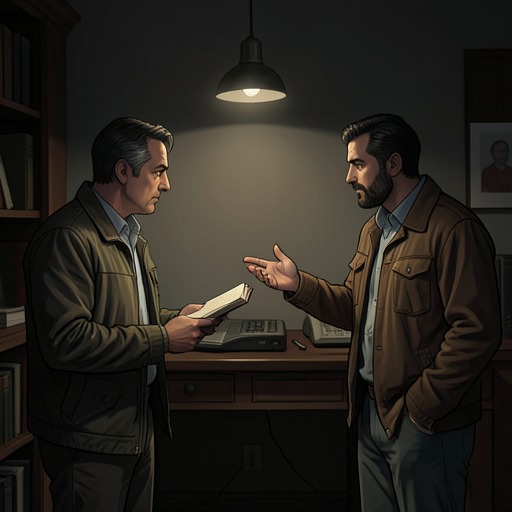
His early response to Bob Woodward and Carl Bernstein’s reporting on E. Howard Hunt’s interest in Edward M. Kennedy showed how sharply he separated an intriguing lead from a publishable conclusion. The proposed account linked Hunt’s White House employment under Charles Colson with an investigation of Kennedy. Bradlee, whose friendship with President Kennedy made him particularly alert to the subject, saw a weak evidentiary foundation: the librarians and secretary could establish that Hunt had looked at a book, but not the larger political investigation the reporters believed they had uncovered. He told them, “You haven’t got it. A librarian and a secretary say this fellow Hunt looked at a book. That’s all.”
Woodward answered that a responsible White House source had explicitly described Hunt as conducting an investigation. Bradlee did not accept the source’s standing as an adequate substitute for establishing it. He asked whether the source was at the level of Assistant to the President; Woodward, uncertain about titles, described the person’s position instead. Bradlee remained unconvinced. He rewrote the lead to say only that Hunt “showed a special interest” in Kennedy and the Chappaquiddick accident, struck the paragraph about the White House’s attitude toward a Kennedy candidacy, and rejected the request to put the story on the front page. His parting instruction was, “Get some harder information next time”. The episode set an enduring standard: a serious allegation could not be made stronger by the reporters’ confidence in what a source had told them.
That skepticism did not mean waiting for a definitive account. As the reporters pursued the identities of those controlling the secret campaign fund, Bradlee interrupted their plan to explain how they would eventually establish every transaction. He asked whether they were certain about John Mitchell, made them confirm their confidence, and then asked, “Can you write it now?” The reporters understood that he believed a daily newspaper could not wait until every strand of a developing story had been tied off. Once they said they could, he ended the discussion: “Well then, let’s do it.”
Bradlee also made specific judgments about what a story should say. When Bernstein read a proposed insert for a third time, Bradlee approved it with one pointed deletion: “Leave everything in but ‘her tit,’” he instructed. In a later meeting on reporting about the Canuck Letter and Donald Segretti’s political espionage and sabotage, he asked what the reporters had and how they intended to present it. The plan had changed from three stories to two: Woodward was writing about the letter and Clark MacGregor’s alleged role, while Bernstein was preparing an account of Segretti and the broader operation. Bradlee’s questions treated framing and substantiation as editorial decisions, not finishing touches.
Defending the Reporting, Protecting Sources
When administration figures attacked the paper’s Watergate coverage, Bradlee did not answer only with general claims about press freedom. After Ron Ziegler accused the Post of relying on hearsay and innuendo, and Clark MacGregor issued a forceful denunciation of its reporting, Bradlee drafted a public statement. He said the investigative stories’ factual claims had not been successfully challenged and insisted that the accusations of malicious reporting had not been matched by contrary evidence. His response turned the dispute toward what could be tested: the facts on the record.
The pressure intensified after The Washington Post published its account tying H. R. Haldeman to the secret fund. Ziegler called the coverage shabby and absurd, said John Dean had told him there was no secret fund, and described the story as character assassination. When the reporters returned unable to establish whether Hugh Sloan had testified about Haldeman before the grand jury, Bradlee refused Woodward’s suggestion that they could name sources if the reporting proved wrong. “You’re not even sure whether you’ve got it right or wrong,” he said. Naming sources, he argued, would not resolve the uncertainty: they could simply deny the information, leaving the paper with no better footing. He stated the rule plainly: “Look, fellas, we don’t name our sources. We’re not going to start doing that.”
Bradlee’s refusal to expose sources did not settle what the paper should publish next. Bernstein wanted to return to the sources, including Deep Throat and Sloan, and establish what had happened before deciding how to correct the account. After the reporters later agreed on a story that would acknowledge the uncertainty about Sloan while reaffirming Haldeman’s authority over the fund, Bradlee and the other editors did not want to run it; in their view, the immediate controversy was cooling. The sequence reveals the tension in his practice: he would protect the reporting relationship even when challenged, but publication and correction still had to be weighed against what the newsroom could substantiate and what the moment demanded.
Risk, Restraint, and the Newsroom’s Boundaries
Bradlee’s leadership also involved decisions about methods, not just copy. When the editors and reporters considered approaching members of the Watergate grand jury, the group privately questioned the propriety of the venture. Bradlee was desperate for a story, but his doubts were eased by legal advice. The plan was bounded: the reporters would identify themselves, explain that an anonymous mutual acquaintance believed the juror knew something, and leave unless the juror volunteered information without prompting. Bradlee’s final instruction was, “No strong-arm tactics, fellas. Right?” The directive acknowledged the danger of crossing a line even as the newsroom chose to approach it.
That mixture of appetite and unease gives his editorial authority a more complicated shape than a simple posture of defiance. In a separate reporting failure, an October 6 story wrongly said that Alfred Baldwin had named Robert Odle and others as recipients of wiretap memoranda. The reporters later concluded that the documents Baldwin had seen were routine security memoranda, not records of wiretap conversations; the mistaken front-page accusations harmed three men, and Odle struggled to find work. The account does not make Bradlee the author of that error, but it places the newsroom’s demand for speed alongside the consequences of publishing before the evidence was clear. Bradlee had urged extra caution even while saying he would not go on the defensive against attacks.
Narrative Role and Legacy in the Investigation
Bradlee appears as both an editor of individual sentences and a steward of the paper’s willingness to continue investigating. His interventions could narrow a claim, elevate a consequential story, remove a phrase, preserve a source’s anonymity, or set limits on how reporters approached a grand juror. Around him, editorial conviction was never entirely settled: he had private doubts about the juror approach, pressed for a story before every detail was known, and later faced the consequences of reporting that had outrun its evidence.
The book’s portrait therefore rests on contrasts rather than a single defining trait. Bradlee’s impatience with delay did not erase his insistence on harder information; his defense of the paper did not mean that every story was right; and his willingness to take risks did not make him indifferent to the boundary between inquiry and coercion. His decisive contribution was to make those competing demands part of the newsroom’s daily work, where the choice to publish, the wording of a lead, and the protection of a source could each alter the scope and credibility of the Watergate investigation.