Bob Woodward–Carl Bernstein reporting partnership
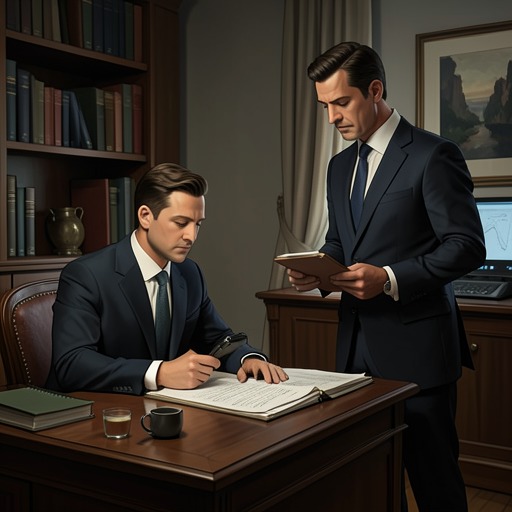
All the President's MenBob Woodward and Carl Bernstein’s reporting partnership transformed an early contest over the Watergate story into a joint investigation that combined separate networks, complementary work habits, and relentless argument. Their collaboration did not eliminate distrust or disagreement: it made those tensions part of a working method, with each reporter able to challenge the other’s evidence and stop a story from running.
Rivalry Before Partnership
When Woodward began making calls about the Watergate burglary, he discovered that Bernstein was investigating it too. Woodward resented the prospect that Bernstein might take over a promising story, recalling newsroom tales about his colleague’s ability to insert himself into a report and secure a byline. Bernstein, watching Woodward from across the newsroom, formed an equally unflattering view. He regarded Woodward as a political operator whose rapid rise owed more to establishment credentials than reporting ability, and doubted that a background of Yale, Navy service, and privilege had prepared him for investigative work. Their first shared assignment was thus shadowed by mutual suspicion, not an assumption of teamwork.
The contrast extended to their professional histories. Bernstein had left college, started as a copy boy at the Washington Star at sixteen, become a full-time reporter at nineteen, and worked at The Washington Post since 1966. He had covered courts and city hall, done investigative series, and favored expansive writing about Washington’s people and neighborhoods. Woodward knew Bernstein also wrote about rock music and reviewed classical music, activities that did not fit his dismissive image of Bernstein as a counterculture journalist. Their initial judgments were partial and competitive, but the differences that irritated each man would later make collaboration useful.
From Shared Byline to Shared Method
The decisive shift came with the August 1 story about the Dahlberg check. Until then, each reporter worried that the other might pursue a lead alone and take the rest of the story. If one went after a lead at night or over a weekend, the other felt compelled to follow. The Dahlberg story carried both names; the next day, Woodward asked Barry Sussman to put Bernstein’s name on the follow-up even though Bernstein was still in Miami and had not worked on it. From then on, Watergate stories appeared under both bylines. Colleagues blended the names into Woodstein, turning a joint credit into a shorthand for the partnership.
The change was practical as well as symbolic. The investigation’s breadth, risks, and need for caution favored two reporters. By splitting assignments and sharing what they learned, Woodward and Bernstein enlarged their pool of contacts. They kept separate master lists of telephone numbers and called their contacts at least twice a week. Eventually, the combined lists held several hundred names, with fewer than fifty duplicated. Keeping many sources divided between them helped avoid duplicated work and allowed each reporter more time to develop a personal relationship with confidential contacts. Even a source’s failure to answer or return a call could register as information.
They also preserved their reporting trail. Bernstein, despite being the less organized reporter in other respects, kept neatly labeled manila folders for people they encountered, alongside subject files. Woodward’s system was more informal, but both followed the same rule: discard nothing. They retained notes and early drafts, eventually filling four filing cabinets. That accumulated record supported an investigation whose leads multiplied and whose claims required repeated checking.
Drafting, Disagreement, and Editorial Restraint
Their writing process made the partnership’s differences visible. Woodward, the faster writer, usually produced a first draft; Bernstein then rewrote it, sometimes revising only the first half and leaving Woodward’s remaining section comparatively untouched. The work could consume most of the night. They argued openly over individual words and sentences, sometimes for fifteen minutes at a time, and one might stalk away from the other’s desk before the article was settled. The quarrels were not incidental to the final copy: they were how the pair tested emphasis and reached wording they could both accept.
The same friction shaped consequential decisions about whether to publish. After receiving information about John Mitchell and Charles Colson, Woodward drafted a story reporting that federal investigators believed the two men had direct knowledge of the wider political espionage operation. Bernstein rewrote it three times, incorporating what the reporters had learned over seven months and arguing that the investigation had been narrowed in a way that let senior figures avoid prosecution. Woodward remained unconvinced that the evidence was strong enough. Bernstein believed the paper could report investigators’ conclusions, including those reaching as high as L. Patrick Gray; Woodward feared publication without better proof would expose the paper to a damaging attack.
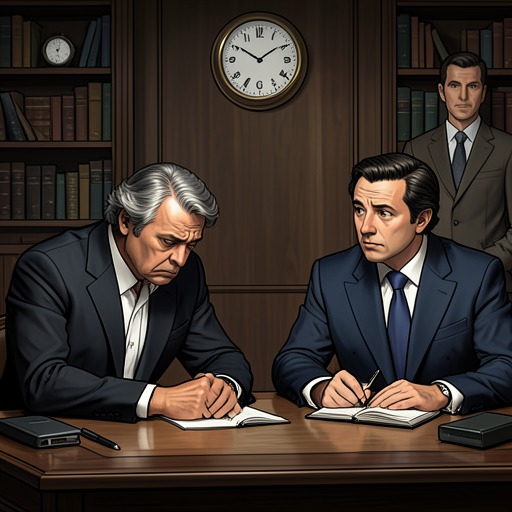
Their dispute grew heated enough that they retreated to the newsroom vending-machine room to shout at each other. Bernstein accused Woodward of helping the White House by withholding the article; Woodward accused Bernstein of inviting a counterattack by pushing it into print. Yet their established rule resolved the immediate question: if either reporter objected to a story, it did not run. Cooperation did not mean consensus in advance. It meant that neither could convert a disputed judgment into a joint report without the other’s assent.
Pressure, Risk, and the Partnership’s Reach
As the investigation expanded, Woodward and Bernstein became increasingly absorbed in it. They often stayed in the newsroom late, checking information, reading clippings, mapping next steps, and comparing theories; over time, they tentatively became friends. Their working relationship operated within a larger reporting effort directed by Sussman. After Richard Nixon’s reelection, editors Ben Bradlee and Howard Simons asked Sussman for a memorandum describing the reporters’ intended course. Woodward was angered by the request, which he and Bernstein saw as pressure for a story that might rebut the perception that The Washington Post had favored George McGovern. Sussman’s memo instead explained that the reporters would revisit old sources and approach new ones, while acknowledging that some of their strongest stories had emerged unexpectedly rather than from a preset line of inquiry.
Their growing ambition also brought ethical strain. When editors and reporters considered approaching Watergate grand jurors, the room’s private doubts differed: Woodward questioned whether a journalist could entice someone across a legal boundary while remaining safely outside it; Bernstein, who was more open to selective civil disobedience, nevertheless regarded grand-jury proceedings as inviolable. Their planned approach was limited: identify themselves, explain that an anonymous mutual acquaintance had suggested the juror might know something, and leave unless the juror volunteered to talk without prodding. Bradlee reinforced the boundary by ordering them to use no strong-arm tactics. The episode showed that their disagreements concerned not only proof and timing but also the limits of reporting.
The partnership’s value appeared in the scale and persistence of its work. During the stalled final weeks before the election, more than a dozen reporters intermittently joined a Post investigation, yet Woodward and Bernstein continued to pursue sources as new information became available. When James McCord’s allegations involving John Dean emerged, Bernstein called more than forty people in a single day—senators, committee staff, lawyers, campaign and White House sources, Justice Department officials, McCord’s acquaintances, and even his minister—without obtaining confirmation. The next morning, the reporters found three people on Capitol Hill who supported the account. Later, Seymour Hersh’s report that McCord had testified that hush money came directly from the Committee for the Re-election of the President connected an inside account to earlier information from Hugh Sloan about a secret fund that had survived the arrests. Woodward and Bernstein had known about Sloan’s account but had not published it without confirmation of the amount and use of the money. Their shared caution could delay a story; it also kept an unconfirmed lead from being presented as established fact.
The partnership’s significance lay in that combination: separate contacts and pooled information increased the investigation’s reach, while argument and a mutual right of refusal constrained what they claimed. Their disagreements persisted alongside their growing friendship, and their public work remained vulnerable to pressure and error. After Richard Nixon’s April 30 address, Ron Ziegler apologized publicly to The Washington Post and to Woodward and Bernstein for earlier criticism of their Watergate reporting, acknowledging that the White House had been wrong. The apology marked a reversal in the conflict surrounding their reporting, not a simple resolution of the partnership’s tensions. Woodward and Bernstein had become a durable reporting team precisely without becoming interchangeable: their different instincts kept the work contested, and their shared byline carried that contest into the paper.