Howard Hunt's investigation of Edward Kennedy
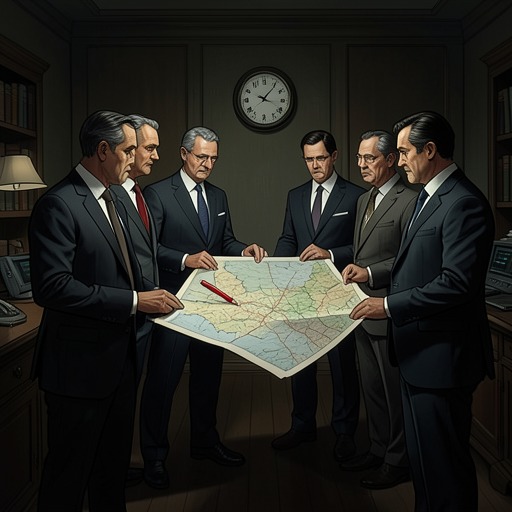
All the President's MenHoward Hunt’s investigation of Edward M. Kennedy’s private life was an effort to locate politically damaging personal material during Hunt’s employment at the White House. Its trail ran from an alias and a search for Kennedy-related scandal to an interview with Clifton DeMotte, and eventually to a front-page report. The evidence reveals an attempt to investigate Kennedy, but does not establish who authorized this particular inquiry or that it uncovered usable material.
The inquiry and its political setting
A source who knew Hunt recalled that, not long after Hunt went to work at the White House, Hunt spoke of plans by Charles Colson and others to damage Edmund Muskie’s campaign and said he would be working on that effort too. When Bob Woodward asked about research on Edward M. Kennedy, the source described a separate visit: Hunt had gone to the Boston area to meet someone who supposedly knew about Kennedy’s sexual escapades. The recollection connected Hunt’s work to the broader search for political vulnerabilities, but did not establish that the Kennedy inquiry itself was part of Colson’s plan against Muskie.
The episode was later reported as an investigation of Kennedy’s personal life during a period when the White House most feared a Kennedy candidacy. That context gives the inquiry its political significance: the object was not ordinary biographical research, but the search for scandal-type material that might matter in a presidential contest. The account, however, does not identify a specific order from a senior official for this particular assignment.
The approach to Clifton DeMotte
Hunt visited Clifton DeMotte in July 1971, within a week or two of being hired at the White House. He introduced himself as Ed Warren, said he was a writer, and claimed to represent a group he would not identify. DeMotte, then forty-one, had been public-relations director at the Yachtsman Motor Inn in Hyannis Port in 1960, when the hotel served as a press and staff headquarters for candidate John Kennedy. Hunt asked whether DeMotte had heard stories about the Kennedy family, including women-chasing or other scandal material, and asked him to do research on Chappaquiddick.
Hunt gave DeMotte Jack Olsen’s The Bridge at Chappaquiddick to see whether it would prompt his memory. It did not. DeMotte offered only hearsay about Kennedy staff members’ behavior in 1956, including stories of parties and a state-police car being sent to obtain more liquor. He regarded this material as old and tried to persuade Hunt that the inquiry was a waste of time. DeMotte nevertheless recalled Hunt as presenting himself as someone engaged in a serious undertaking, without disclosing the organization behind it. After dinner, Hunt was gone by the next morning.
How the encounter was identified
The account reached the reporters through a friend of Hunt who was initially uneasy about sharing more information before becoming better acquainted with them. The friend recalled the alias and the Boston-area meeting, but could not at first remember the man’s name. Later he identified him as DeMotte. That recollection gave Woodward a concrete lead to check rather than a name to accept on trust.
Woodward spent two hours trying to locate DeMotte, first through Boston telephone directories and then through personnel locators at federal agencies. A woman in the GSA personnel office found Clifton DeMotte, a GS-12 assigned to the Navy construction battalion center in Davisville, Rhode Island. Woodward reached him at work the next morning. DeMotte said the interview was confidential and that he was not supposed to discuss it with the press. He had not known his visitor was Hunt: he learned that identity only after the Federal Bureau of Investigation showed him photographs and told him that Ed Warren was Hunt. The Bureau had interviewed DeMotte after finding his number in Hunt’s toll-call records.
Publication and significance
DeMotte’s account supplied a specific, independently checkable instance of Hunt seeking information about Kennedy’s private life while working at the White House. The Washington Post’s February 10 editions reported that Hunt had investigated Kennedy during the period of White House concern about a possible Kennedy candidacy. Ben Bradlee placed the story on page one. The report made the inquiry publicly visible, but the evidence described in the article remained limited: DeMotte’s material was hearsay, the book had not stirred a memory, and the account does not show that Hunt obtained consequential information from him.
The episode also illustrates how the investigation of covert political activity could be reconstructed from small, separately testable details. A remembered alias led to a name; federal personnel records located DeMotte; DeMotte recognized the encounter and explained how the Federal Bureau of Investigation had identified Hunt. That chain strengthened the account of the meeting without answering every question about its sponsorship or purpose. The distinction matters: the reporting established that Hunt had pursued Kennedy-related personal material, while the available evidence stopped short of proving who directed him or what political use, if any, followed.