Nixon administration domestic wiretapping program
All the President's MenThe Nixon administration’s domestic wiretapping program turned national-security claims into a rationale for electronic surveillance without court authorization, and its reported evolution linked monitoring of reporters and government officials to surveillance of political opponents. As reporters traced the program’s history, they found a contested chain of authority, an alleged parallel operation beyond normal channels, and a connection between the White House’s surveillance apparatus and the campaign operation that included E. Howard Hunt and G. Gordon Liddy. The Watergate arrests threatened to reveal more than the break-in: they might expose the larger system from which it had emerged.
Policy and Legal Context
Under the Nixon administration’s national-security wiretap policy, officials claimed sweeping authority to conduct electronic surveillance. The Justice Department used warrantless eavesdropping against people suspected of domestic subversive activity until the Supreme Court declared the practice illegal on June 19, 1972, two days after the Watergate arrests. The dispute centered not only on the absence of court authorization but also on who could be classified as a domestic security threat: radicals and civil libertarians had argued that subversive could serve as a label for people who dissented forcefully from administration policy.
The policy formed the legal and political background to a surveillance campaign whose targets, according to later accounts, changed over time. The controversy thus reached beyond the legality of individual taps. It concerned the government’s asserted power to monitor political dissent and the widening use of that power as the election approached.
Targets and Chain of Authority
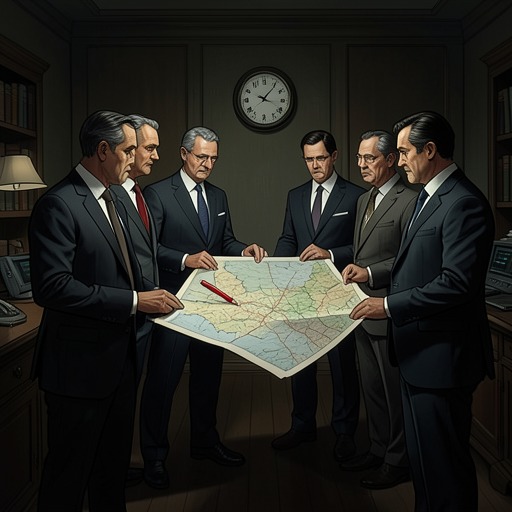
A detailed account in Time reported that the FBI had tapped the telephones of about half a dozen reporters and twice as many White House and government aides for domestic-security reasons. The taps began in 1969 under J. Edgar Hoover, who was described as reluctant, and continued under acting FBI director L. Patrick Gray III until the Supreme Court decision. According to the account, Hoover permitted agents to install a tap only after John Mitchell authorized it in writing. When the administration tried to force Hoover to retire in 1971, he resisted by threatening to disclose details of the wiretapping campaign.
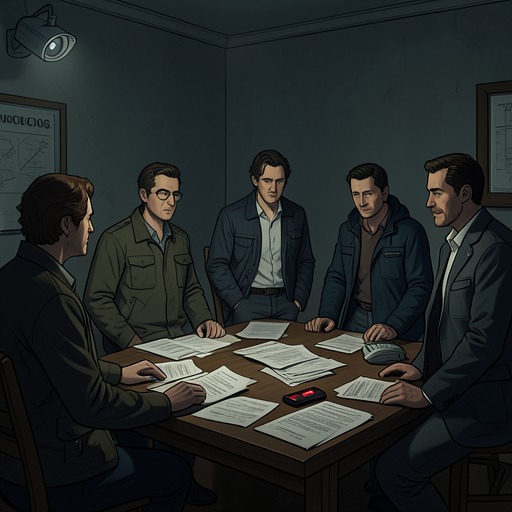
Information subsequently provided to Bob Woodward by Deep Throat described an additional, out-of-channels operation. Deep Throat said that former FBI and CIA agents had been hired outside normal procedures to conduct wiretaps, and that Robert Mardian had handled the Justice Department end of the operation for the White House. He identified Hedrick Smith and Neil Sheehan of The New York Times as targets after that newspaper published the Pentagon Papers, while stressing that the surveillance had begun earlier. Deep Throat also said that the records had supposedly been destroyed. These claims expanded the picture beyond the formal FBI taps reported by Time, suggesting that more than one channel of surveillance had operated.
Deep Throat described a progression in the program’s focus: reporters and administration employees suspected of disloyalty were early targets; attention then shifted toward radical political opposition during antiwar protests; near the election, Democrats became targets. In his account, the Watergate break-in endangered the administration because it could uncover the broader program. That explanation cast the burglary not as an isolated operation but as a possible point of exposure for surveillance activities with a longer history.
From White House Surveillance to Campaign Operations
Deep Throat further described an election-strategy meeting at which H. R. Haldeman pressed John Mitchell to establish a wiretapping operation for the campaign. Mitchell was reluctant, but Haldeman insisted that part of the existing vigilante operation be moved from the White House to the campaign. Deep Throat connected that transfer to E. Howard Hunt and G. Gordon Liddy. The account provided a proposed link between the administration’s earlier surveillance effort and the campaign operation; it did not, by itself, establish every step of authorization for each subsequent action.
The reporting on campaign money supplied a separate, concrete strand of the developing picture. A cashier’s check for $25,000, payable to Kenneth H. Dahlberg, was deposited on April 20 with four Mexican checks, bringing the deposit to $114,000. Four days later, Bernard Barker withdrew $25,000, and the remaining $89,000 was withdrawn separately. Later, The Washington Post reported that funds for the Watergate espionage operation were controlled by principal assistants to John Mitchell and held in a special account at the Committee for the Re-election of the President. Hugh Sloan said that he had called Mitchell at the Justice Department beginning in 1971 to request money and that Mitchell told him to distribute it; Sloan also said that authority later passed to others, including Jeb Stuart Magruder. The financial evidence concerned campaign espionage funds, not proof that every domestic wiretap was paid for through that account, but it helped reporters trace how surveillance and political operations could be connected across institutional boundaries.
Exposure, Denial, and Political Significance
The reporters’ first inquiries into whether colleagues in the news media had been wiretapped reached a dead end. Officials offered unconvincing denials, declined to discuss the matter, or admitted sharing the reporters’ suspicions. Bob Woodward drafted a story stating that Hunt and Liddy had received information from national-security wiretaps routed to them by David Young, an aide to Henry Kissinger who also worked on the Plumbers’ project. The article noted the Plumbers’ role in investigating news leaks and left readers to draw conclusions. White House spokesman Gerald Warren said that a thorough check found no basis for the report, but would not characterize that response as a flat denial.
Two weeks later, Time published its account of the FBI taps, giving the story details about the number and types of people monitored, the period covered, and Mitchell’s alleged written authorizations. The administration’s broader response to accusations of political espionage was to attack the newspapers publishing them without directly addressing their substance. One White House aide told reporters that the administration was not worried about press coverage because it believed the public regarded the Eastern press as elitist, anti-Nixon, and pro-McGovern. The dispute therefore involved both the surveillance itself and the contest over whether the reporting that exposed it would be believed.
The program’s significance in the Watergate narrative lies in the widening scale of the alleged operation. A policy defended as national security had reached journalists, government employees, antiwar opponents, and, according to Deep Throat’s account, Democrats; a campaign operation was said to inherit part of the apparatus. The break-in’s arrests threatened to bring that history into view, while reports of destroyed records and official denials made the chain of responsibility harder to establish. The reporting connected distinct pieces of evidence without making them interchangeable: formal FBI authorizations, alleged off-channel surveillance, campaign fund control, and the proposed transfer to campaign operatives each illuminated a different link in the larger system.