Sam Ervin
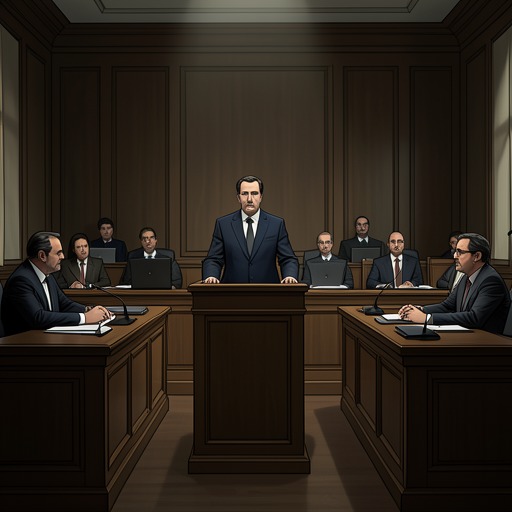
All the President's MenSam Ervin’s decisive role in the Watergate story was to turn a growing scandal into a test of Congress’s investigative authority. A 76-year-old constitutional scholar and formidable figure on Capitol Hill, he approached the inquiry not merely as a search for individual wrongdoing but as a constitutional process: a Senate committee should be able to summon witnesses and records, including from the executive branch, and compel answers when voluntary cooperation failed.
Identity and Entry into the Inquiry
Ervin entered the investigation as the Senate’s answer to the limits of preliminary inquiries. Since October 1972, Edward M. Kennedy’s Judiciary Subcommittee on Administrative Practice and Procedure had been examining Watergate. Kennedy warned that unless a congressional body quickly used subpoena power to obtain records in areas federal investigators appeared to be overlooking, the chance for a comprehensive investigation could disappear. Ervin’s later appointment gave that concern a more powerful institutional vehicle.
On January 11, at the request of Senate Majority Leader Mike Mansfield, Ervin agreed to preside over a thorough investigation of Watergate and the 1972 presidential campaign. His reputation mattered to the reporters following the affair: they describe a seasoned constitutionalist, not a senator casually lending his name to a preliminary inquiry. The question was whether Congress could establish an investigation broad enough to follow evidence beyond the immediate break-in and beyond the boundaries set by executive officials.
Constitutional Method and Investigative Reach
Ervin explained his approach through the separation of powers. He believed that the relevant constitutional provision meant what it said about congressional authority, and intended to secure a resolution giving a special select committee the broadest possible subpoena power. With that authority, the committee could call for the documents and testimony it needed from the Executive Branch and elsewhere. The design was concrete: investigation would depend not only on witnesses choosing to speak, but on Congress’s capacity to require their appearance.
He also presented a summons as an opportunity to answer, not simply an accusation. Ervin said that everyone named in Bob Woodward’s and Carl Bernstein’s accounts should be invited to appear and clear their names; if they declined, the committee would subpoena them so they could do so. The formulation joined scrutiny to a stated offer of exoneration. It also made clear that being mentioned in the reporting would not, by itself, settle anyone’s guilt.
Ervin was willing to begin with a narrower question even while building a broad investigative framework. When Woodward described the many names and episodes still requiring verification, the importance of tracing secret campaign cash, and the reporters’ suspicion of a large H. R. Haldeman operation, Ervin replied that he would be content if the inquiry established Jeb Stuart Magruder’s role. The contrast is revealing: the reporters feared they had only glimpsed an extensive operation, while Ervin identified a specific, testable responsibility as a meaningful result. The book also characterizes him as an expert on government violations of people’s rights, especially the right to privacy, a concern that gives the inquiry’s constitutional language a substantive civil-liberties dimension.
From Resolution to a Senate Investigation
Ervin’s stated intentions became a legislative proposal. On February 5, he introduced a resolution allocating $500,000 for a Senate Select Committee on Presidential Campaign Activities to investigate the Watergate break-in and related allegations. The Senate Democratic Policy Committee gave it unqualified support. The remaining uncertainty, as the account presents it, was whether a last-minute White House-Republican maneuver would obstruct the measure.
On February 7, the day of the vote, Woodward went to Capitol Hill early to see whether such a maneuver was developing. A Republican senator’s administrative assistant predicted that an amendment would broaden the inquiry to include the 1964 and 1968 campaigns. The account records the aide’s forecast, not the amendment’s eventual fate. What it does establish is the political contest surrounding Ervin’s plan: the scope of an investigation into the current scandal could itself become a subject of maneuver before the committee’s work began.
Journalists, Sources, and Political Pressure
Ervin’s investigation also intersected with the reporters’ struggle to assemble evidence without exposing confidential sources. In a conversation with Woodward, Ervin asked about the Watergate reporting. Woodward refused to identify sources, but said Hugh Sloan had indicated he would cooperate with a legitimate investigation. He emphasized that the published accounts contained names and incidents needing further verification, and argued that tracing the secret campaign cash was central to understanding what had happened. Ervin’s committee thus appeared to the reporters as a possible route from fragmentary disclosures to compulsory documentary inquiry, though Woodward cautioned that the reporting had not yet uncovered the full story.
The investigation’s political vulnerability appeared again in a later account from a Committee for the Re-election of the President associate. The associate claimed that John Dean had reached Ervin and the prosecutors and was trying to secure immunity by offering to implicate Charles Colson. This was the surrogate’s characterization of Dean’s conduct, not an independently established account of what Ervin himself believed. Its inclusion nevertheless shows how the prospect of testimony before Ervin’s inquiry became entangled with negotiations among people implicated in the scandal.
The material reaching the reporters suggested why the inquiry could not be reduced to the break-in alone. A later briefing by Deep Throat characterized the cover-up as chiefly an effort to protect covert operations. That was a source’s account, not evidence that Ervin had received or accepted that specific explanation. It does, however, clarify the wider stakes against which the committee’s demand for access to executive-branch records took shape: the investigation might have to follow connections extending beyond the crime that first drew public attention.
Place in the Constitutional Crisis
Ervin’s importance rests on the method he proposed and the institutional authority he sought to mobilize. He aimed to give the Senate inquiry the power to test claims against witnesses and records rather than leave the investigation wholly dependent on voluntary disclosures. His emphasis on separation of powers made the committee’s reach part of the subject under investigation: Congress had to determine not only what had happened, but whether executive privilege could prevent it from finding out.
The book’s closing constitutional frame looks beyond investigation toward possible impeachment. It distinguishes the House of Representatives, which would decide whether to try a president for high crimes and misdemeanors, from the Senate, which would sit in judgment if the House impeached. Ervin is identified in the accompanying roster as the senator. That framing places him within the institution that might ultimately judge the case, but the evidence here does not assign him a particular vote or a later individual action. His documented contribution is more specific: he pressed for an inquiry with the authority to summon people and records, and grounded that demand in Congress’s constitutional role.