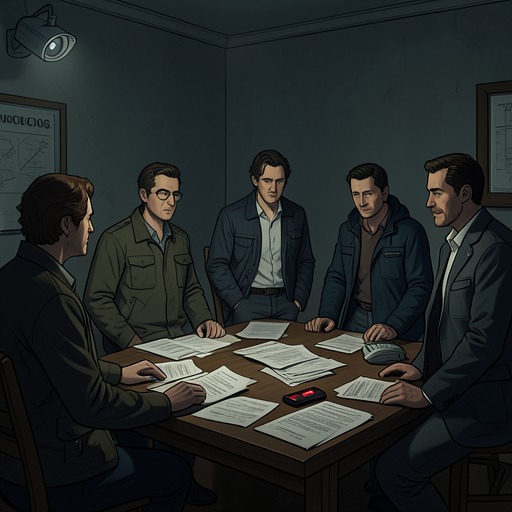
The Nixon administration’s national-security wiretapping operation
All the President's MenThe Nixon administration’s national-security wiretapping operation was a widening system of electronic surveillance that reached from reporters and government officials to antiwar protesters and political opponents. Its significance lay not only in whom it monitored, but in the way its justifying language, White House channels, and eventual connection to the campaign made the Watergate break-in appear capable of exposing a much larger program.
Policy and Expansion of Targets
The administration defended warrantless electronic surveillance under a national-security policy also known as the Mitchell Doctrine. Until the Supreme Court declared the practice illegal on June 19, 1972, the Justice Department used electronic eavesdropping without court authorization against people suspected of domestic subversive activity. Civil-libertarians and radicals had long argued that subversion was being used as a label for forceful dissent from the administration’s policies.
The surveillance expanded over time. According to Deep Throat, the first aggressive wiretapping in 1969 targeted reporters and administration figures suspected of disloyalty. The emphasis then shifted to radical political opposition during antiwar protests; near the 1972 election, the Democrats became targets. That progression turned a policy presented as a national-security measure into a means of monitoring domestic political opposition.
Channels, Records, and White House Connections
The public account of the surveillance involved both official procedures and activity outside ordinary channels. A later report in Time described FBI taps on the telephones of about half a dozen reporters and twice as many White House and government aides. The taps began in 1969 under J. Edgar Hoover and continued under acting FBI director L. Patrick Gray III until the Supreme Court’s June 19, 1972 decision. According to the magazine, Hoover allowed agents to install them only after John Mitchell authorized each tap in writing. Time also reported that Hoover resisted pressure to retire in 1971 by threatening to disclose details of the wiretapping campaign.
Deep Throat described a separate, out-of-channels group of wiretappers made up of former FBI and CIA agents hired outside normal procedures. He said its targets included New York Times reporters Hedrick Smith and Neil Sheehan after the Pentagon Papers were published, though the operation had started earlier. Robert Mardian, he said, had managed the Justice Department end of the operation for the White House. Deep Throat added that the records had supposedly been destroyed, leaving the reporters with an account of the program but not a surviving documentary trail in the material described to them.
Another reported channel linked surveillance information to the White House Plumbers. Two staff sources told the reporters that David Young, a former appointments secretary to Henry Kissinger and a deputy on the Plumbers’ project, had regularly routed transcripts of wiretapped conversations to E. Howard Hunt and G. Gordon Liddy in 1971 and 1972. The sources also suspected that reporters and people thought to be leaking to them had been tapped. Kathleen Chenow, a former Plumbers secretary, declined to discuss the material Young had forwarded. The Post reported the transfers and Young’s role, while leaving readers to draw conclusions about the Plumbers’ work investigating leaks.
The Campaign Link and the Watergate Risk
Deep Throat connected the older surveillance activity to the 1972 campaign by describing an election strategy meeting at which H. R. Haldeman pressed John Mitchell to establish a wiretapping operation for the campaign. Mitchell was reluctant, according to this account, but Haldeman insisted that part of the vigilante operation be moved from the White House to the campaign. Hunt and Liddy were the personnel named in that transfer. Deep Throat’s explanation made the Watergate arrests consequential beyond the break-in itself: the arrests, he said, sent the administration into alarm because the break-in could uncover the broader program.
The campaign’s money and authorization structure formed a related, but distinct, evidentiary trail. Hugh Sloan described a special fund at the Committee for the Re-election of the President controlled by Mitchell and other principal assistants, with more than $300,000 earmarked for sensitive political projects; G. Gordon Liddy received money from it, records were destroyed, and Sloan’s suspicions about Watergate contributed to his resignation. Sloan said that beginning in 1971 he had called Mitchell at the Justice Department for authorization to distribute money. Mitchell initially authorized the expenditures himself, later passing authority to others, including Jeb Magruder. These accounts establish a chain of control over campaign espionage funds; they do not, by themselves, establish that this fund paid for the national-security wiretaps.
Reporting, Denial, and the Limits of the Record
The Post’s investigation advanced through guarded sources, official refusals, and qualified denials. When the reporters asked whether journalists had been monitored, some officials denied knowledge unconvincingly, others refused to discuss the subject, and some shared the reporters’ suspicions. Woodward’s initial story described Hunt and Liddy receiving information from national-security wiretaps through Young, but the reporters could not establish the full extent of the surveillance. The White House said it could find no basis for the report; when asked whether that was a flat denial, spokesman Gerald Warren said he could say nothing else. The article noted that he had not flatly denied it.
Time’s more detailed account then supplied figures, dates, and the reported requirement for Mitchell’s written authorization. Deep Throat subsequently affirmed that Gray had known about taps on reporters and aides, while cautioning that he himself did not know everything about the subject. The distinction between what the reporters could document, what their sources alleged, and what official statements would confirm remained central: the operation’s outline emerged, but the supposed destruction of records and the sources’ own limits left important particulars unresolved.