White House Plumbers leak investigations
All the President's MenThe White House Plumbers leak investigations were a White House effort to find and stop leaks to the news media, but the operation’s concealed communications and links to political espionage drew it into the Watergate story. Testimony from a former secretary, a disguised telephone line in the Executive Office Building, and records connecting operatives helped reporters expose an organization that had worked in secret and reported through senior White House aides. The investigation’s public consequences reached beyond the original break-in: it sharpened questions about surveillance, political responsibility, and the administration’s attempts to control the damage.
Origins and Scope
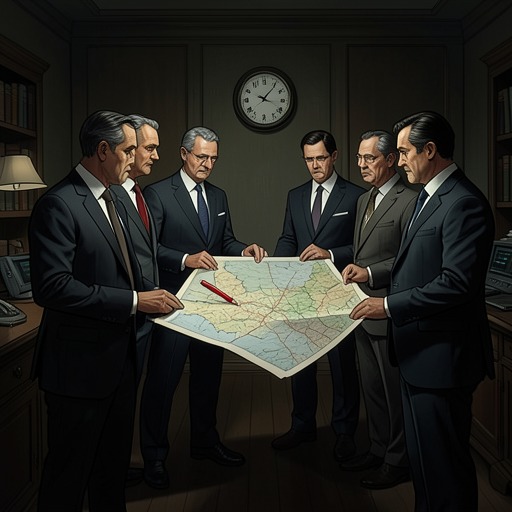
The operation began after the Nixon administration sought to compare the published New York Times version of the Pentagon Papers with the classified documents and then determine how the papers had reached the press. The search for leaks broadened. The Plumbers examined State Department disclosures, including embassy cables and the desks through which they had passed. E. Howard Hunt reviewed State Department cables concerning the Pentagon Papers. The operation also scrutinized Jack Anderson’s columns about the administration when they appeared in December; Robert Mardian of the Justice Department visited the basement office during this period.
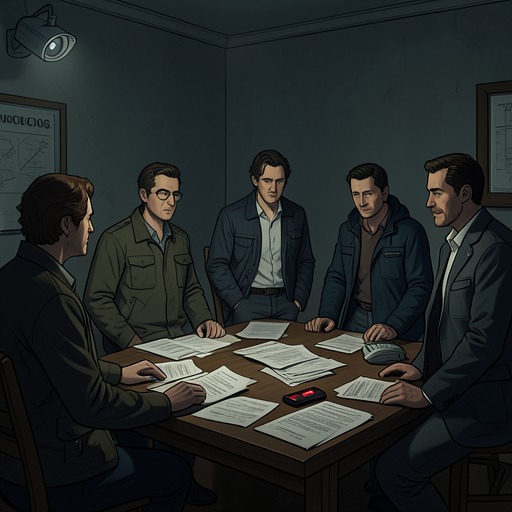
The investigations were not confined to one leak or one department. The evidence Kathleen Chenow recalled included a meeting in Egil Krogh’s office attended by Krogh, Hunt, Gordon Liddy, Mardian, and several people she did not recognize. David Young spoke with John Mitchell, though Chenow did not know the subject or frequency of those conversations. She identified the Plumbers as Hunt, Liddy, Young, and Krogh, and said they investigated leaks to the news media and reported to John Ehrlichman. Young, formerly an appointments secretary to Henry Kissinger, had been loaned from Kissinger’s office to Ehrlichman’s staff; Krogh was one of Ehrlichman’s principal deputies. Young regularly reported on the progress of the investigations.
Hidden Lines of Communication
A routine legal stipulation supplied the reporters with a concrete route into the operation’s concealed structure. It recorded that a telephone had been installed on August 16, 1971, in room 16 of the Executive Office Building and disconnected on March 15, 1972. The line was listed under Chenow’s name and Alexandria, Virginia, home address, although no Chenow appeared in the phone book. A directory led Bernstein to a former roommate, and from there to Chenow, who had moved to Milwaukee.
Chenow explained that the telephone was Hunt’s, installed so she could answer it and take messages. Bernard Barker was its most frequent caller; the line rang about once a week, sometimes two or three times. Hunt and Barker were friendly on the telephone, and Hunt sometimes spoke Spanish. Chenow remembered Hunt calling Barker and Barker’s wife. Liddy may also have used the line to speak to someone Hunt had called. Most calls came between August and November; by the time the phone was removed in March, it had not been used for a long time.
The arrangements concealed the line’s White House connection while allowing the operation’s participants to use it. Bills went to Chenow’s home, and she passed them to John Campbell, another Ehrlichman deputy, so the White House would pay them. She understood that Hunt, Young, and Liddy had arranged the payment. The account thus joined an apparently private subscriber, a White House office, and payments handled through staff. Chenow said those involved apparently wanted the phone in her name to avoid ties to the White House, although she did not know why. Its cover did not erase the connection; it made the route of communication a subject for investigation.
Surveillance and Political Connections
The Plumbers story widened when reporters learned that David Young had regularly routed transcripts of wiretapped conversations to Hunt and Liddy in 1971 and 1972. Two sources, one a former and one a current White House staff member, independently described this arrangement. Both thought that reporters and people suspected of providing information to reporters might themselves have been tapped. When Woodward asked Chenow about the data Young had forwarded, she declined to discuss it.
These claims sat within the Nixon administration’s broader national-security wiretap policy, also known as the Mitchell Doctrine. The Justice Department had asserted authority to conduct electronic surveillance without court authorization against people suspected of domestic subversive activity. The Supreme Court declared the policy illegal on June 19, 1972, two days after the Watergate arrests. The distinction mattered: evidence of a general surveillance policy did not, by itself, prove that particular reporters had been tapped. But the possibility that journalists and suspected sources were targets connected the leak investigations to a larger conflict over dissent, surveillance, and executive power.
Separate reporting also exposed links between Hunt and Donald Segretti. Segretti told his former associate Larry Young that Hunt had called him repeatedly, given him instructions, and been identified through telephone records. Young did not know which events the instructions concerned, and the account specifically did not connect them to the Watergate bugging. Segretti described working for a wealthy California Republican lawyer with national connections and being paid through a special lawyer’s trust fund. These details placed Hunt within a wider network of political activity while leaving the precise relationship between particular instructions and particular operations unresolved.
The financial evidence likewise required careful distinctions. Reporters found that funds for the Watergate espionage operation were controlled by several principal assistants to John Mitchell and held in a special account at the Committee for the Re-election of the President. The account contained more than $300,000 for sensitive political projects; Liddy received money from it, related records had been destroyed, and Hugh Sloan’s resignation followed his suspicions about Watergate. These facts did not make every political operation identical, but they gave investigators a financial context for the covert activities and a reason to keep pursuing the people who might explain them.
Exposure and Political Consequences
The disclosure process became a contest over who could define the Watergate story. After Democratic Party chairman O’Brien sued the Committee for the Re-election of the President for $1 million, he cited Colson’s possible involvement and charged that the developing facts pointed toward the White House. His questions about whether other attempts had occurred were allegations and challenges, not proof of additional operations. They nevertheless put the administration’s broader conduct, rather than the break-in alone, into public dispute.
When the Chapin connection brought Watergate to the doors of the Oval Office, the White House selected The Washington Post as a target even though Time had developed similarly damaging information. The ensuing public attack on the paper had an unintended effect: newspapers across the country reported the administration’s anger, and the dispute gave the Post’s allegations more visibility. The New York Times then published telephone-record evidence showing at least half a dozen calls from Segretti’s telephone or credit card to the White House and Dwight Chapin’s home, as well as at least 21 calls to Hunt’s home and office. The records made it harder to dismiss the reported connections as hearsay, without proving what each call concerned.
The Plumbers evidence also shaped the reporters’ method. Woodward and Bernstein maintained separate telephone lists, called sources repeatedly, and divided their contacts so they could build trust and avoid overlapping inquiries. Their growing network allowed them to compare accounts and follow links among offices, telephone lines, money, and people. Their partnership could be contentious, but pooling information and checking leads made it possible to assemble a structure that no single source had fully described.
By the time Nixon spoke on April 30, 1973, the crisis had reached the White House’s senior ranks. He announced that he had accepted the resignations of H. R. Haldeman and John Ehrlichman, said that responsibility belonged at the top, and credited the grand jury, prosecutors, Judge John Sirica, and a vigorous free press with bringing facts to light. The next day, press secretary Ronald Ziegler apologized to The Washington Post and its reporters for his earlier criticism, acknowledging that the administration had been wrong. The apology marked a reversal in the public argument: the paper once dismissed by the White House had become one of the institutions Nixon named as helping expose the facts.
The investigations’ significance lies in the chain of evidence they made visible, not in any single telephone call or concealed account. A leak inquiry led reporters from the Pentagon Papers and State Department cables to a basement office, from a disguised phone to Hunt and Barker, and from Young’s routing of wiretap transcripts to questions about surveillance and political operations. As those links accumulated, the Plumbers could no longer be treated simply as an isolated search for leaks. Their exposure helped turn Watergate from a narrowly framed burglary into a widening inquiry into secret activity, its White House connections, and the effort to contain its consequences.