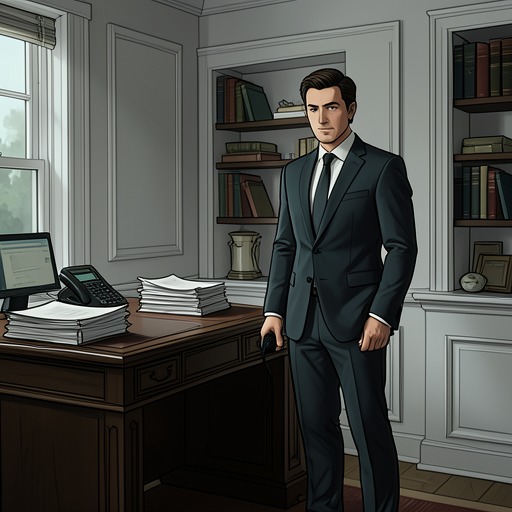
Elliot Richardson
All the President's MenElliot Richardson is presented through two consequential changes in the federal response to Watergate: his move from the Defense Department to become Attorney General, and his later resignation after the firing of special prosecutor Archibald Cox. The account gives little personal detail, but his appearances mark a period when the handling of the investigation reshaped senior government offices.
Appointment During the April 30 Upheaval
On April 30, amid a rapidly unfolding round of White House departures, Richardson was moving over from the Defense Department to become Attorney General. H. R. Haldeman and John Ehrlichman had resigned, John Dean had been fired, and Attorney General Richard Kleindienst had also resigned. Richardson’s appointment was thus reported as part of a broader change in the administration’s leadership, not as an isolated personnel decision.
Resignation After Cox’s Dismissal
Later, after President Richard Nixon fired special prosecutor Archibald Cox, Richardson and his deputy, William D. Ruckelshaus, resigned. The account places these departures in the aftermath of the firing and amid a wider crisis over the presidential investigation. It does not elaborate on Richardson’s private reasoning or describe the mechanics of his decision; the resignation itself is the stated fact.
Role in the Narrative
Richardson’s brief appearances trace a sharp movement from appointment to departure as the Watergate investigation strained the government’s leadership. First he enters the account as the official moving into the Attorney General’s office during the April 30 upheaval; later he leaves that office after Cox’s dismissal. The contrast gives his role institutional weight while the text offers no fuller personal portrait.