Nixon’s April 30, 1973 address on Watergate
All the President's MenRichard Nixon’s April 30, 1973 address on Watergate was a televised attempt to confront a crisis that had outgrown the White House’s earlier dismissals and denials. Nixon announced the resignations of H. R. Haldeman and John Ehrlichman, acknowledged an effort to conceal facts, and declared that responsibility belonged to him. The speech presented accountability as a presidential duty, even as its careful distinctions between the President and those around him left unresolved how far that responsibility extended.
The Broadcast and Its Immediate Setting
At nine that night, Bernstein and Woodward watched Nixon’s address in Howard Simons’ office with Simons and Katharine Graham. The scene followed a day of intense activity at The Washington Post newsroom: Ben Bradlee had praised Woodward’s work, while Simons cautioned the staff not to gloat. The reporters’ attention to the speech placed the President’s words beside the investigation that had helped make them necessary.
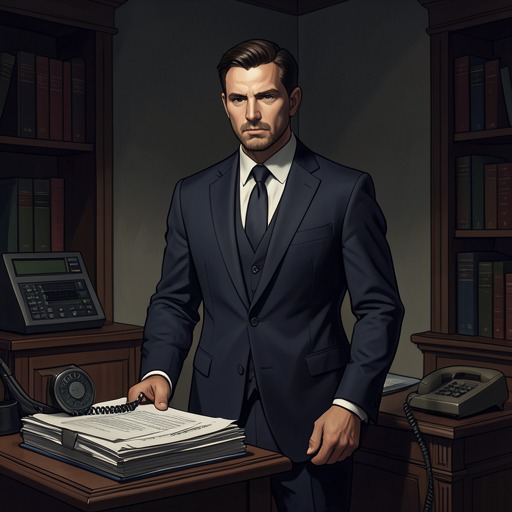
Nixon appeared at his desk, with a picture of his family on one side and a bust of Abraham Lincoln on the other. He opened by speaking from the heart and said there had been an effort to conceal facts from the public and from him. He also said he had wanted to be fair. Those assertions framed the address as both an acknowledgment of concealment and a claim that the President himself had been kept from the truth.
Resignations and Presidential Responsibility
Nixon said that, in one of the most difficult decisions of his presidency, he had accepted the resignations of H. R. Haldeman and John Ehrlichman, whom he described as two of the finest public servants he had known. He acknowledged that he could blame those to whom he had delegated responsibility for running the campaign, but rejected that as cowardly. His declaration, “The man at the top must bear the responsibility,” culminated in the words, “I accept it.” The formulation widened accountability to the presidency while stopping short of a detailed account of the President’s own knowledge or actions.
The speech’s language of responsibility stood against the organization’s earlier calls for silence. Hugh Sloan recalled that no one had directly ordered him not to talk, but that the message had been clear: “Hold ranks,” or “Keep the ship together.” Other committee employees had described fear and pressure; one trembled while asking Bernstein to leave, and another burst into tears. The contrast was stark: Nixon now spoke publicly of responsibility, while people within the campaign had faced informal demands to maintain unity and avoid disclosure.
The Investigation, the Press, and the White House’s Changing Account
By the time of the address, reporting had connected the Watergate espionage operation to money controlled by principal assistants of John Mitchell, Nixon’s former campaign manager. The Washington Post reported that the fund held more than $300,000 for sensitive political projects, that G. Gordon Liddy had received money from it, and that records relating to the account had been destroyed. The investigation’s significance was not only the existence of a secret fund: its findings suggested that the indictments had not ended the conspiracy and that campaign workers still held answers.
That reporting had met a sustained White House counterattack. Earlier, Ronald Ziegler had dismissed the break-in as a “third-rate burglary attempt.” As the Post’s stories widened, Ziegler accused the paper of shabby journalism and characterized its reporting as hearsay, innuendo, and character assassination; he also said he had been told by John Dean that no secret fund existed. The April 30 address did not simply replace that rhetoric with a full public accounting. Instead, it acknowledged concealment while leaving the evidence and the extent of responsibility to the investigation and to the press that Nixon expressly credited.
Claims of Accountability and Their Aftermath
Nixon praised the system that had brought facts to light, naming the grand jury, prosecutors, Judge John Sirica, and a vigorous free press. He insisted, “There can be no whitewash at the White House,” and closed with an appeal to the country. The statement elevated the institutions investigating the administration at the same moment that the President sought to define his own relationship to the concealment and to the departing aides.
The next day, Ziegler publicly apologized to The Washington Post and two of its reporters for his earlier criticism of their Watergate reporting. Coming after weeks of attacking the paper’s sources and credibility, the apology gave the reversal a concrete public consequence. Nixon’s address had promised that there would be no whitewash; the apology did not resolve the remaining questions, but it underscored how markedly the administration’s treatment of the investigation had shifted.